
Dog Chew Manufacturing Process Explained: A Private Label Buyer’s Guide
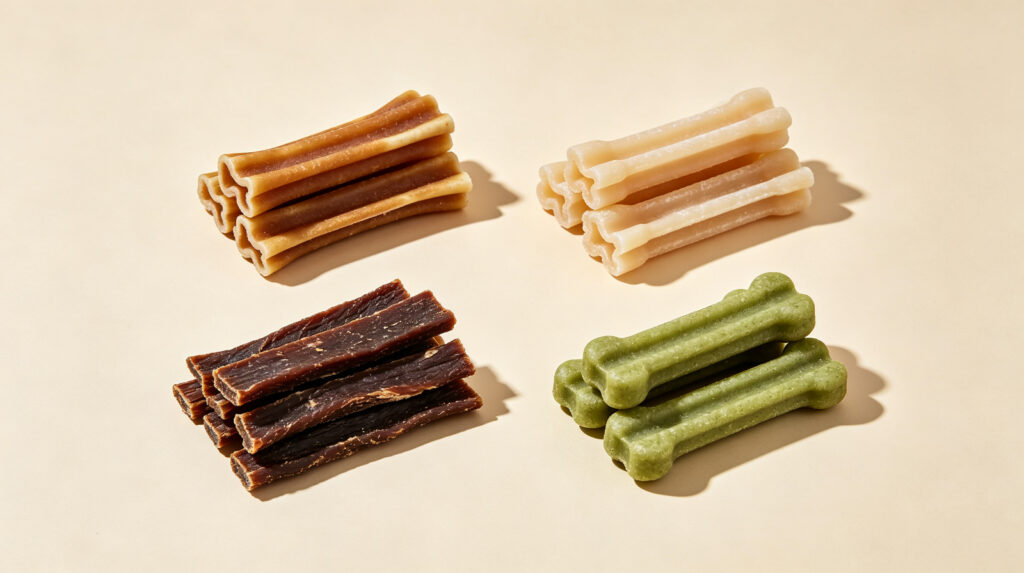
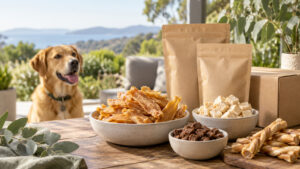
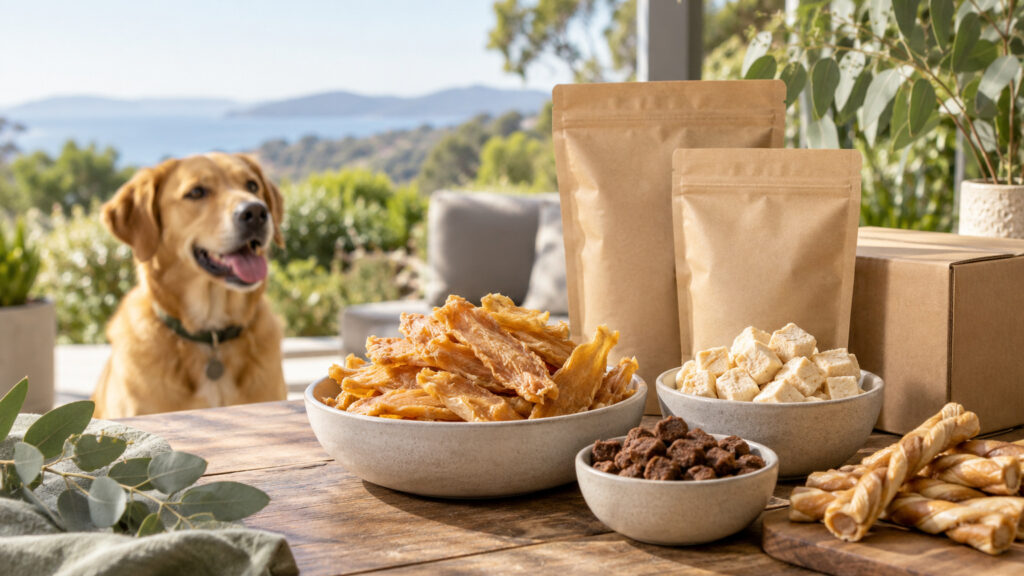
Dog chews are one of the most distinctive categories in the modern pet treat market. Unlike a soft training bite that disappears in seconds, a chew is engineered for a longer-lasting eating experience, which means its texture, density, moisture level, and safety profile are decided almost entirely on the production line. For a private label brand, that makes the dog chew manufacturing process behind every bag of private label dog chews just as important as the final recipe.
A buyer who only evaluates a finished sample can miss the factors that determine whether repeat orders look, smell, and chew the same as the first one. Understanding how dog chew manufacturers turn raw hides, collagen, meat proteins, and dental formulations into a consistent product helps brands ask sharper questions, compare suppliers on equal terms, and avoid the most common private label failures.
This guide walks through how the main types of dog chews are produced, the step-by-step process behind them, the safety controls that matter most, and what to audit before approving a factory for an OEM or private label range.
What Is a Dog Chew, and How Is It Different from an Ordinary Treat?
A dog chew is designed around chewing duration and texture rather than quick consumption. Where a standard jerky or biscuit is optimized for taste and immediate reward, a chew is engineered to balance:
- Hardness and density — how long it takes a dog to work through it
- Texture — firm, chewy, crunchy, or layered
- Moisture and water activity — the foundation of shelf stability
- Safety — splintering risk, choking risk, and microbial control
- Palatability — a long-lasting chew still has to taste appealing
These characteristics are set during manufacturing, not added at packaging. That is why the production process is the real determinant of chew quality.
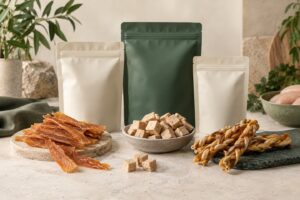
Main Categories of Dog Chews — and Why Their Processes Differ
There is no single production line for “dog chews.” Each category follows a different process route.
Rawhide Chews
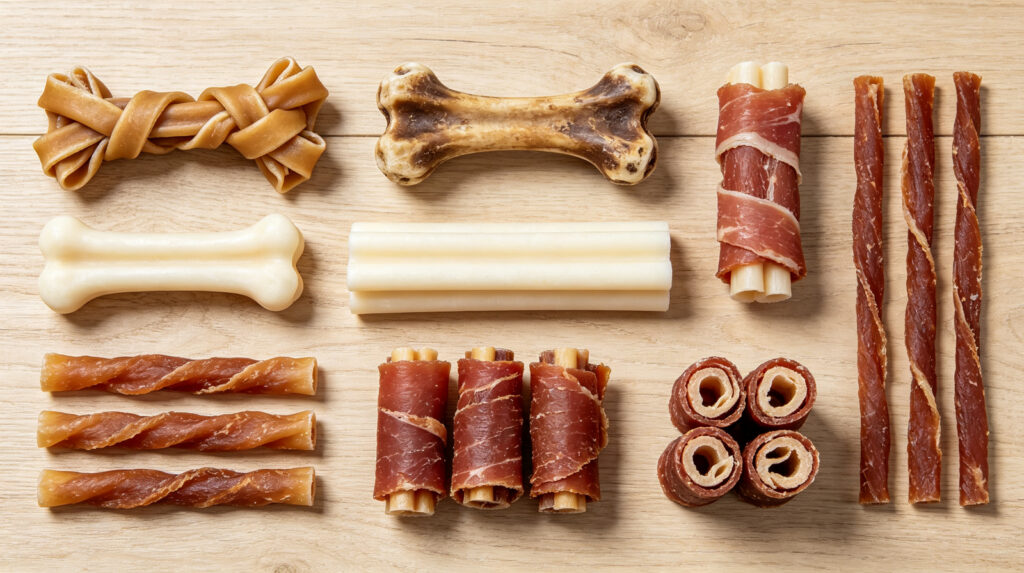
Traditional rawhide is made from bovine or equine hide that is cleaned, split, formed, and dried. It remains a high-volume, cost-effective category, sold as knots, bones, rolls, twists, and pressed shapes.
Collagen Chews
Collagen chews use the collagen-rich inner layer of hide, processed to create a lighter, more digestible-positioned chew. They are often positioned as a modern alternative to rawhide.
Natural Protein and Meat Chews
This group includes bully sticks, dried tendons and esophagus, meat-wrapped chews, and jerky-based products. They rely on careful drying of animal proteins rather than hide forming — a process closely related to how air dried dog treats for private label brands are produced.
Dental and Hard-Baked Chews
Dental chews are typically starch- or protein-based, shaped by extrusion or molding, then baked or dried to a precise hardness designed for a longer chew and oral-care positioning.
Soft and Semi-Moist Chews
Soft chew products use gentler drying and flexible formulations, suited to puppies, senior dogs, and small breeds where an ultra-hard chew is inappropriate.
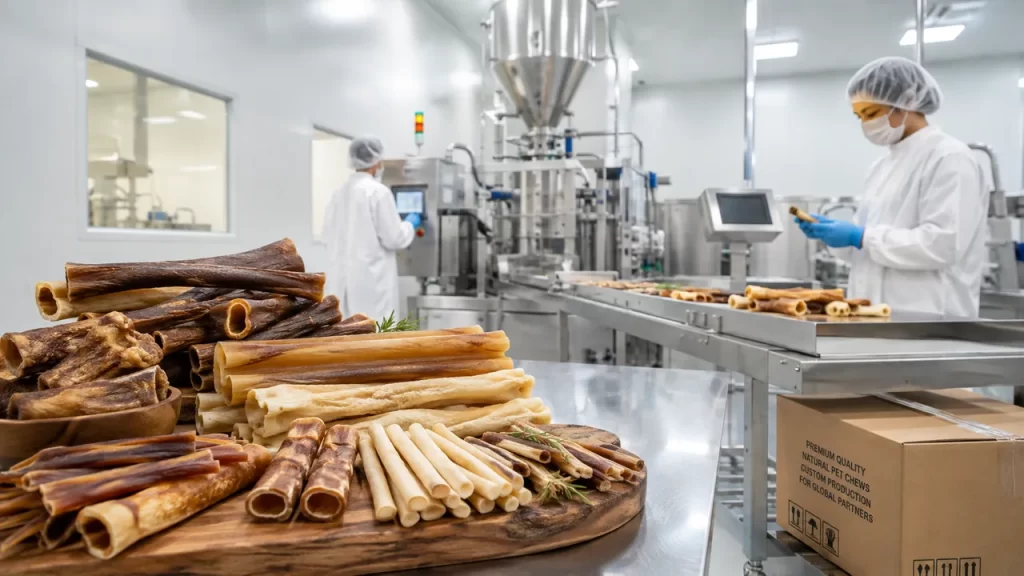
The Dog Chew Manufacturing Process Step by Step
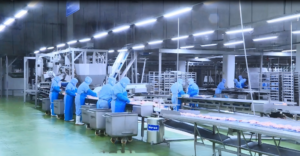
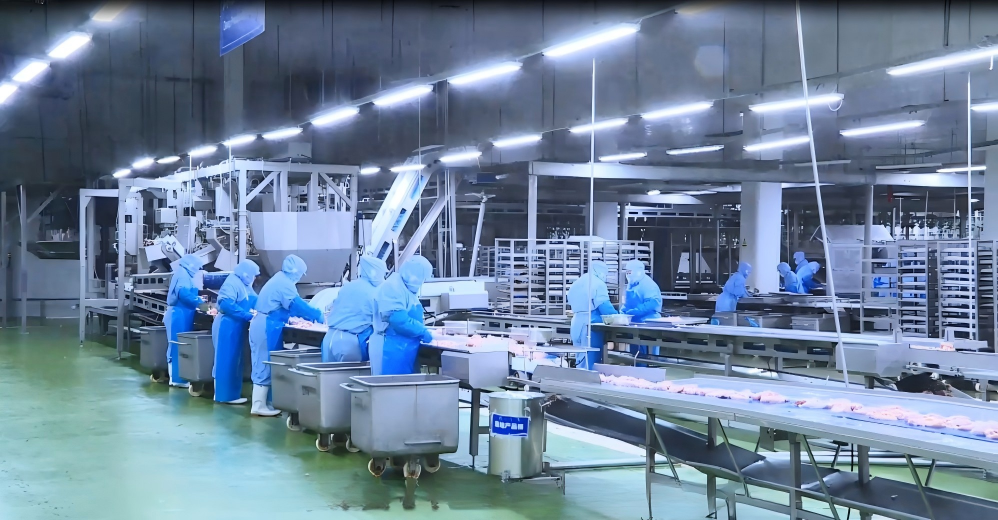
Exact parameters vary by category, but a well-controlled dog chew manufacturing process follows a consistent logical sequence.
Step 1: Raw Material Selection and Incoming Inspection
Quality is decided before processing begins. Factories source hides, collagen layers, meat proteins, starches, and functional ingredients from approved suppliers, then inspect each lot for:
- Origin and species documentation
- Freshness and sensory condition
- Temperature on arrival
- Microbiological status
- Chemical and residue testing where required
- Traceability back to batch and supplier
For rawhide and collagen, the quality and split thickness of the incoming hide directly determine chew texture and yield.
Step 2: Cleaning and Pre-Processing
Raw hides and collagen undergo washing, de-hairing, liming or equivalent treatment, splitting, and rinsing to remove impurities and prepare the structural layer. Meat proteins are trimmed of excess fat and prepared for drying. This stage has a major influence on odor, color, and final cleanliness.
Step 3: Forming and Shaping
This is where the product becomes recognizable. Depending on the category, manufacturers use:
- Hand or machine twisting and knotting for rawhide bones and rolls
- Molds and presses for shaped bones and bars
- Extrusion for dental and starch-based chews
- Wrapping lines for meat-wrapped rawhide or collagen
- Cutting and braiding for sticks and strips
Shape, size, and weight tolerances should be defined in the product specification, not left to the line operator.
Step 4: Cooking, Drying, or Baking
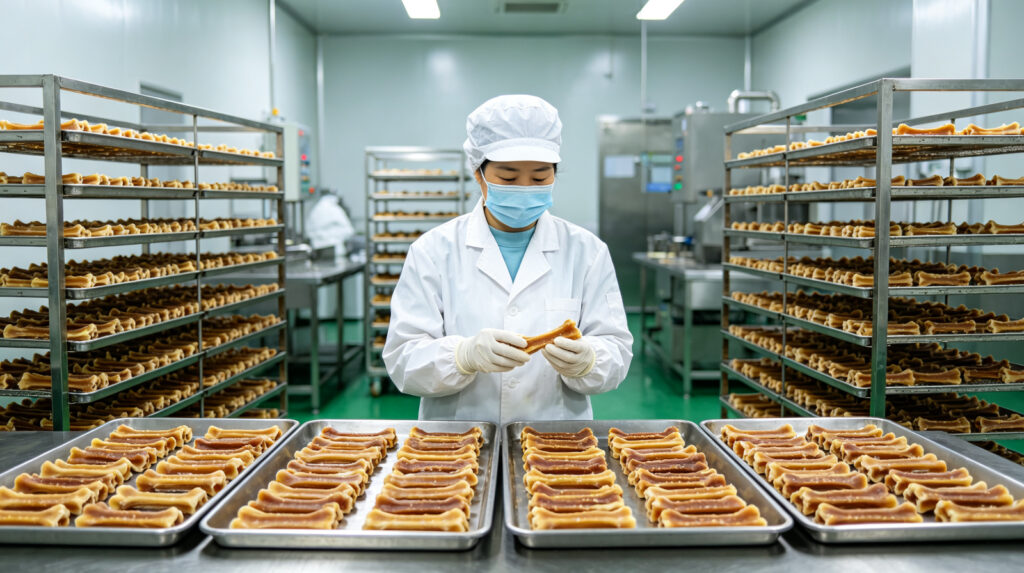
Drying is the most critical control point in chew production. The manufacturer manages temperature, airflow, humidity, residence time, and product thickness to reach a target moisture content and water activity.
- Under-dried chews risk mold, short shelf life, and spoilage
- Over-dried chews become brittle, prone to splintering, and unappealingly hard
- A thick pressed bone and a thin strip must never share the same drying program by default
Protein chews such as bully sticks follow controlled drying schedules to achieve a stable, chewy texture without compromising safety.
Step 5: Cooling and Conditioning
Freshly dried chews are conditioned to equalize moisture throughout the product before cutting or packaging. Skipping conditioning causes moisture migration inside sealed packaging, which leads to inconsistent texture and localized mold risk.
Step 6: Cutting, Sizing, and Sorting
Products are trimmed to final dimensions and sorted by size and weight. Consistent dimensions matter for retail: a “medium” chew that varies wildly between shipments erodes buyer trust and creates listing problems online.
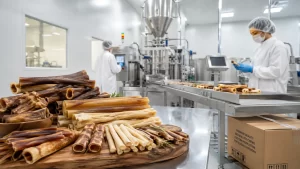
Step 7: Quality, Safety, and Foreign-Material Controls
Before packing, reputable dog chew manufacturers apply a structured control sequence:
- Metal detection and, where appropriate, X-ray inspection
- Visual and dimensional checks
- Moisture and water activity verification
- Microbiological testing per batch plan
- Weight and count verification
- Splintering and texture assessment
Step 8: Packaging
Packaging protects the chew from moisture re-absorption and oxidation. Resealable stand-up pouches, flat-bottom bags, and bulk cartons are common. For private label, pack size, film structure, and packaging format, along with labeling and barcode requirements, should all be confirmed before the production run.
Critical Safety Controls Private Label Buyers Should Verify
Animal-origin and long-lasting chews carry specific safety responsibilities. The table below maps the main risks to the controls a competent factory should demonstrate (see also how pet treat manufacturers ensure product safety across the line).
| Risk Area | What Can Go Wrong | Control to Verify |
|---|---|---|
| Microbial safety | High bacteria load, mold, Salmonella | Batch microbiological testing, validated drying, water-activity spec |
| Splintering | Brittle chews break into sharp pieces | Drying control, texture and fracture testing |
| Choking hazard | Undersized or inconsistent pieces | Sizing controls, size guidance on packaging |
| Foreign material | Metal, bone fragments, debris | Metal detection / X-ray, sanitation controls |
| Chemical residue | Untanned or poorly processed hide | Supplier approval, residue testing, process records |
| Allergen cross-contact | Mixed protein lines | Segregation, cleaning validation, allergen management |
| Shelf-life failure | Mold or rancidity before expiry | Real-time shelf-life and oxidation studies |
Certifications such as HACCP, BRCGS, IFS, or ISO 22000 indicate a structured food-safety system, but importers should still verify destination-market import requirements for animal-origin pet products.
Rawhide vs. Alternative Chews: Process and Positioning Differences
Buyers often choose between traditional rawhide and newer alternatives. Understanding the process differences clarifies their commercial positioning.
| Feature | Rawhide Chews | Collagen Chews | Meat/Natural Chews | Dental Chews |
|---|---|---|---|---|
| Core material | Bovine/equine hide | Inner collagen layer | Tendons, esophagus, meat proteins | Starch/protein base |
| Key process | Clean, form, dry | Extract, form, dry | Trim, slow-dry | Extrude/mold, bake |
| Typical texture | Firm, long-lasting | Lighter, chewy | Dense, meaty | Crunchy to firm |
| Positioning | Classic, value | Modern rawhide alternative | Natural, single-ingredient story | Functional/oral-care |
| Buyer focus | Consistency, odor, safety | Sourcing, digestibility claims | Drying control, oxidation | Hardness, compliant claims |
Any digestibility or dental-health claim must be supported by documentation and comply with the regulations of the destination market — it should never be added to packaging on assumption.
What to Audit Before Approving a Dog Chew Factory
A polished sample is not evidence of a reliable production system. Before placing a private label order, audit the factory against a structured checklist or request evidence for the following.
Process Documentation
Ask whether the factory maintains written procedures, drying schedules, and batch records for each chew type, and whether parameters are logged rather than carried in an operator’s memory.
In-House Laboratory Capability
Confirm whether moisture, water activity, and microbiological testing are performed in-house or through accredited external labs, and how often.
Line Flexibility
A factory producing rawhide, collagen, meat, and dental formats under one roof gives a brand more range flexibility than coordinating multiple specialty factories.
Capacity and Lead Time
Understand standard MOQ, private-label MOQ, monthly capacity, peak-season capacity, and reorder lead time — and how consistency is maintained when volumes scale.
Export Compliance
Animal-origin chews can face specific import rules. Confirm the export documentation, health certificates, and destination-country experience the supplier can provide.
Private Label Customization Options
A capable OEM partner lets brands build a differentiated chew family rather than a generic SKU. Customization typically covers:
- Format: bones, knots, rolls, sticks, braids, dental bars, wrapped chews
- Size and weight: puppy, small-breed, medium, and large-dog sizing
- Protein and flavor: chicken, duck, beef, pork, fish, and combination wraps
- Texture and hardness: tuned to target dog size and chew style
- Functional positioning: dental or care-focused formats, subject to compliant claims
- Packaging: pouch structure, size, design, private branding, and retail-ready cartons
Common Manufacturing Mistakes That Hurt Retail Brands
Choosing on Price Alone
The cheapest quote may reflect lower-grade raw material, shorter drying, weaker testing, or thinner specification. Compare like-for-like before deciding.
No Written Product Specification
Approving a sample without defining weight, dimensions, color, odor, moisture, hardness, and packaging tolerances leaves the brand with no basis to reject a poor repeat batch.
Ignoring Water Activity
Moisture content alone does not predict microbial stability. Water activity is the more meaningful indicator for shelf-stable dried chews.
Over-Claiming in Marketing
“Fully digestible,” “tartar removing,” or veterinary-style claims require support. Unverified claims create regulatory and marketplace risk.
Skipping Shelf-Life Validation
Packaging film, moisture barrier, and fat stability should be validated together through real-time shelf-life studies, especially for meat-based chews.
Working With Matchwell
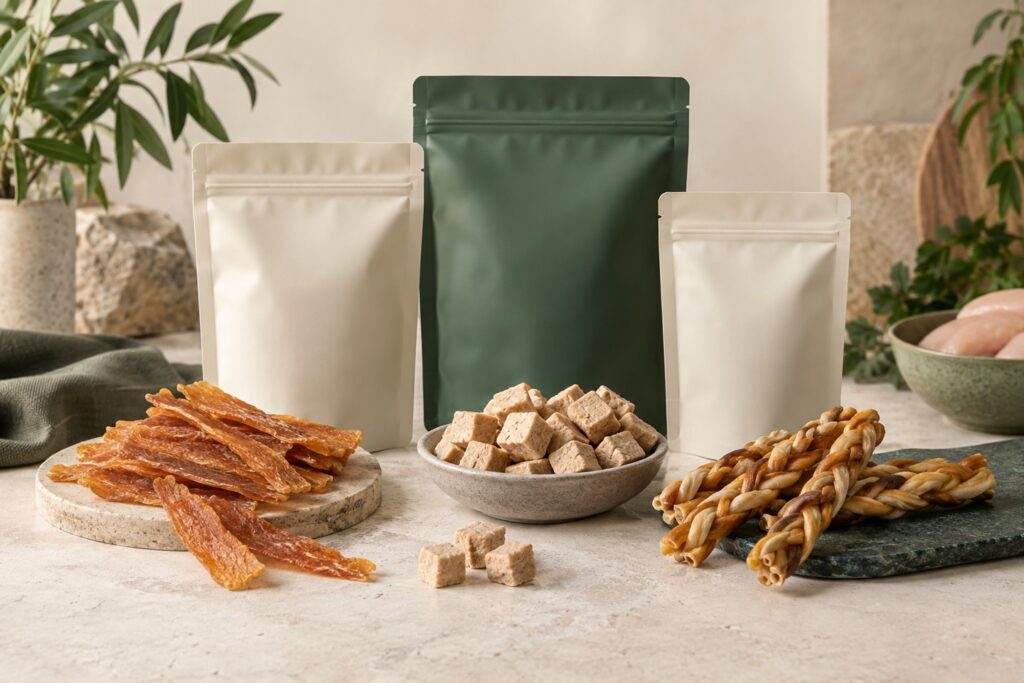
Matchwell works with B2B pet brands, distributors, importers, and retailers developing private label and OEM dog chew and pet treat programs. Our manufacturing capabilities span multiple categories — including rawhide and collagen chews, natural meat chews, meat-wrapped products, dental formats, jerky, and freeze-dried treats — allowing buyers to build a coordinated range from a single partner.
For private label customers, we focus on what makes a chew program repeatable: controlled drying, defined moisture and water-activity specifications, structured food-safety systems, batch traceability, consistent sizing, and customizable shaping and packaging. The objective is not a one-off attractive sample, but a commercially viable product reproduced consistently at scale, with the documentation international buyers need.
Frequently Asked Questions
What is the dog chew manufacturing process?
It generally follows raw-material inspection, cleaning and pre-processing, forming or shaping, controlled cooking/drying/baking, cooling and conditioning, cutting and sizing, safety and quality checks, and packaging. Exact steps differ for rawhide, collagen, meat, and dental chews.
What is the most important control point in chew production?
Drying is usually the most critical stage, because moisture content and water activity determine texture, splintering risk, microbial safety, and shelf life. A validated, product-specific drying schedule is essential.
Are rawhide and collagen chews made the same way?
No. Both start from animal hide, but collagen chews use the inner collagen layer and follow a lighter forming and drying route, giving a different texture and a modern alternative-positioned product.
What should private label buyers check at a chew factory?
Review process documentation and batch records, moisture and water-activity control, microbiological testing, metal/X-ray inspection, food-safety certifications, capacity and MOQ, shelf-life validation, and export documentation for animal-origin products.
How do manufacturers keep chew batches consistent?
Consistency comes from approved raw-material sourcing, defined drying schedules, logged process parameters, dimensional and weight specifications, conditioning before packing, and batch-by-batch quality testing.
Can dog chews be customized for a private label brand?
Yes. Manufacturers such as Matchwell can customize format, size, protein and flavor, texture and hardness, functional positioning, pouch structure, and branding, subject to MOQ and compliant destination-market claims.
Conclusion
The dog chew manufacturing process is where a private label chew program succeeds or fails. A chew’s longevity, texture, safety, and shelf stability are not marketing attributes — they are engineered through raw-material control, precise forming, carefully validated drying, and disciplined quality and foreign-material checks.
For brands comparing dog chew manufacturers, the decisive questions are therefore process questions: how drying is controlled, how water activity is verified, how batches are traced, and how consistency is protected as orders grow. Answering those questions before production protects the brand from splintering, spoilage, sizing complaints, and rejected repeat shipments.