
How to Audit a Pet Treat Manufacturer: A 12-Step Checklist for Pet Brands
Choosing a pet treat manufacturer is not simply a price comparison. The factory you select will influence product safety, consistency, regulatory compliance, delivery performance and ultimately your brand reputation.
A polished website, an attractive sample and a food safety certificate are useful starting points, but they do not prove that every commercial batch will meet your requirements. A proper manufacturer audit examines how the factory controls risk every day—from approving raw materials to releasing finished products and managing complaints.
This guide explains how to audit a pet treat manufacturer before placing an OEM, ODM or private label order. It is designed for pet brands, importers, distributors, retailers and sourcing teams evaluating manufacturers of jerky, freeze-dried treats, dental chews, training treats, wet treats and other pet snack products.
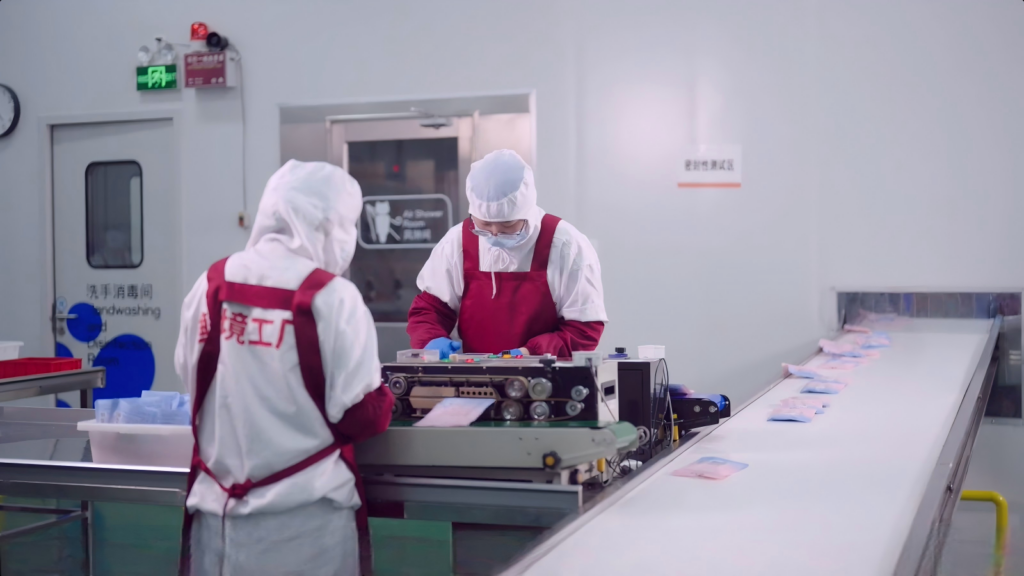
Why Audit a Pet Treat Manufacturer?
An audit converts supplier claims into verifiable evidence. It helps a buyer answer five essential questions:
- Can the manufacturer consistently make a safe product?
- Can it meet the legal requirements of the destination market?
- Can it reproduce the approved formula, texture, color and packaging at commercial scale?
- Can it trace ingredients and finished products quickly if a problem occurs?
- Does it have enough technical, operational and financial stability to support the brand long term?
The audit should be risk-based. A single-ingredient freeze-dried treat, a semi-moist meat snack and a functional dental chew do not have identical hazards. Your checklist should reflect the product, process, ingredients, packaging, target consumers and sales market.
For products entering the United States, the FDA’s Preventive Controls for Animal Food rule requires covered facilities to follow current good manufacturing practices and maintain a food safety system that includes hazard analysis and risk-based preventive controls. U.S. importers subject to the Foreign Supplier Verification Programs rule must also verify that imported food meets applicable U.S. safety standards. In the European Union, Regulation (EC) No 183/2005 establishes feed hygiene, registration or approval, HACCP and traceability requirements, while Regulation (EC) No 767/2009 governs the marketing and labeling of feed, including pet food.
Regulatory requirements vary by market and product. Therefore, confirm the applicable rules with a qualified regulatory professional rather than treating a general audit checklist as legal advice.
Before the Audit: Define the Scope
Do not begin with a generic factory tour. First, prepare a written audit scope covering:
- Product category and proposed SKU
- Animal species and life stage
- Formula, allergens and functional ingredients
- Manufacturing process and critical parameters
- Packaging format and pack size
- Expected annual volume and peak-season demand
- Destination countries
- Required certifications and laboratory tests
- Customer-specific or retailer-specific standards
- Whether subcontracting is permitted
Ask the supplier to complete a pre-audit questionnaire and provide documents before the meeting. This lets your team spend audit time investigating risk rather than collecting basic company information.
1. Verify the Manufacturer’s Legal Identity and Certification Scope
Start by confirming that you are dealing with the actual manufacturer, not an unrelated trading company presenting another factory’s documents.
Compare the legal company name and site address across the business license, export documents, certificates, invoices and bank information. If a sales company and manufacturing entity are different, document the ownership or contractual relationship between them.
For every certificate, verify:
- Legal entity and manufacturing address
- Certification body and certificate number
- Issue and expiry dates
- Product and process scope
- Exclusions or outsourced activities
- Latest audit grade or result, when available
- Open nonconformities and corrective-action status
Certifications such as BRCGS, IFS or FSSC 22000 can provide valuable third-party assurance, but only when the certified site and scope cover the products you intend to buy. A valid certificate should support—not replace—your own supplier approval process.
2. Review the Food Safety Plan and Hazard Analysis
Ask the manufacturer to walk you through its food safety plan for the proposed product. The team should be able to explain the process flow and identify biological, chemical and physical hazards at each relevant step.
Depending on the product, the review may include:
- Pathogens such as Salmonella and other relevant microorganisms
- Mycotoxins, pesticide residues, veterinary drug residues or heavy metals
- Allergens and cross-contact
- Foreign material, including metal, glass, hard plastic or bone fragments
- Excess or deficient nutrients in functional or complete products
- Moisture and water activity associated with microbial stability
- Risks created by rework, post-process handling or environmental contamination
Check whether every significant hazard has an appropriate control, monitoring method, limit, responsible person and corrective action. Employees should be able to show completed records, not just blank procedures.
For a heat-treated treat, for example, request the scientific basis for the time-and-temperature process. For a freeze-dried product, examine raw-material controls, validated lethality measures where applicable, environmental hygiene, post-process exposure and finished-product testing. A visually impressive machine is not evidence that the process has been validated.
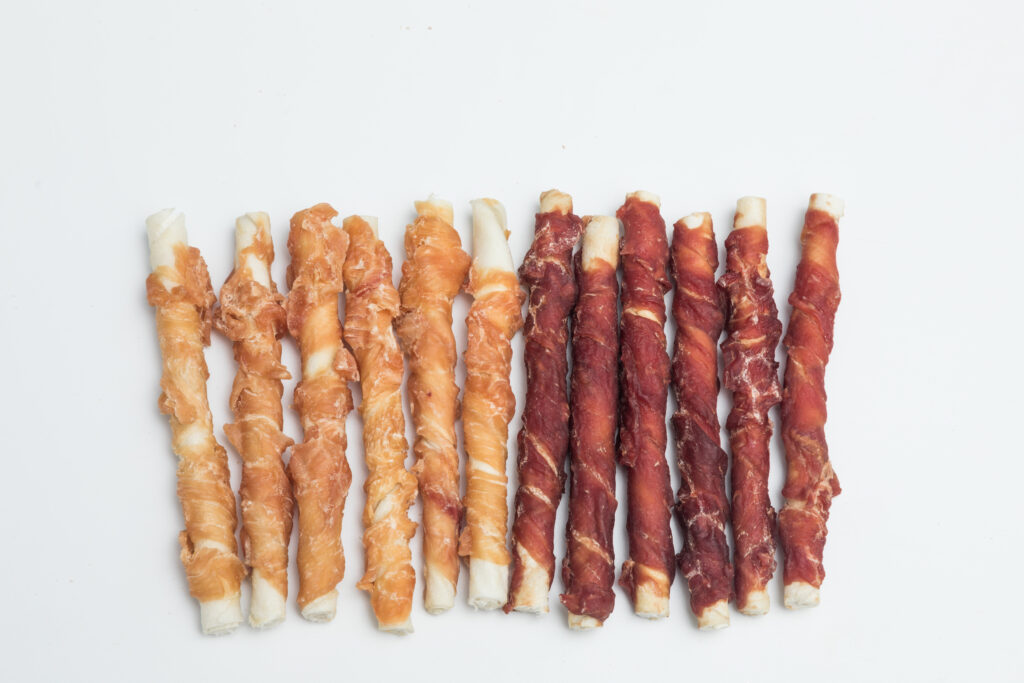
3. Audit Raw-Material and Supplier Controls
Finished-product quality begins with ingredient control. Select several high-risk or high-volume ingredients and trace how each supplier was approved.
Look for:
- Approved supplier list and supplier risk classifications
- Ingredient specifications and acceptance criteria
- Certificates of analysis and incoming test records
- Country and species declarations for animal proteins
- Allergen, GMO or organic documentation where relevant
- Controls for additives, preservatives and processing aids
- Supplier audit records and performance reviews
- Procedures for blocked, rejected or expired materials
- Verification that labels match the materials actually received
Then inspect the receiving area. Confirm that lot numbers, temperatures, packaging condition and quantities are checked at receipt. Frozen or chilled materials should move through a controlled cold chain, while dry ingredients should be protected from moisture, pests and cross-contamination.
Choose one ingredient lot from the warehouse and compare its physical label with the receiving record, test result, inventory record and production usage. This simple exercise often reveals whether the traceability system works outside the quality manual.
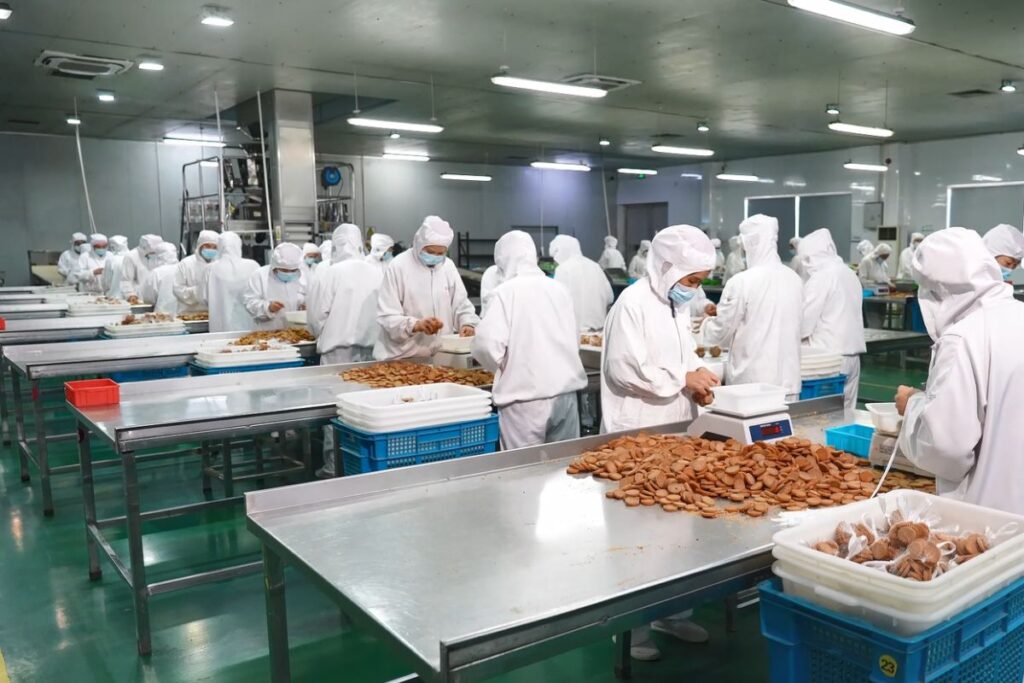
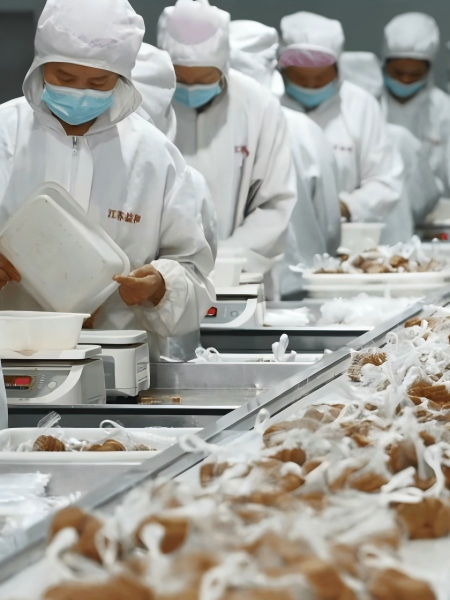
4. Inspect Facility Hygiene, Zoning and Personnel Practices
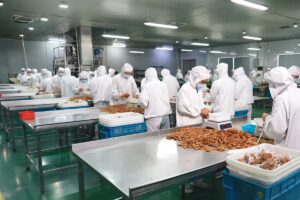
Follow the product flow from receiving to dispatch. The layout should minimize cross-contamination between raw and processed products, allergens, waste, chemicals and finished goods.
During the factory walk, check:
- Separation of raw and ready-to-pack areas
- Personnel and material flow
- Handwashing, protective clothing and entry controls
- Hygienic condition and cleanability of equipment
- Condensation, standing water, rust or damaged surfaces
- Cleaning tools and their area identification
- Chemical storage and dilution controls
- Pest monitoring devices and corrective actions
- Glass and brittle-plastic registers
- Waste routes and waste-container management
- Maintenance condition and temporary repairs
- Calibration status of measuring devices
Observe employee behavior as carefully as written policies. If staff bypass hygiene barriers while an auditor is present, routine compliance may be weaker than the procedure suggests.
5. Examine Process Controls on the Actual Production Line
Ask to see your product category being produced, if possible. If the line is idle, review recent production records and arrange a follow-up video or pilot run.
The key controls depend on the process:
| Product type | Examples of audit focus |
|---|---|
| Dehydrated or air-dried treats | Raw-material temperature, slice or piece size, dryer loading, time and temperature, moisture or water activity, post-drying handling |
| Freeze-dried treats | Freezing conditions, chamber cycle parameters, endpoint criteria, environmental control, oxygen or moisture protection |
| Dental chews and extruded treats | Ingredient dosing, mixing uniformity, extrusion temperature and pressure, shape and weight control, drying, breakage and texture |
| Semi-moist or soft treats | Humectant and preservative dosing, pH or water activity, mixing uniformity, seal integrity and shelf-life validation |
| Wet treats and canned products | Fill weight, container closure, thermal process, retort records, cooling water and incubation or commercial sterility controls where applicable |
Compare the approved specification with what operators use on the floor. Formula versions, work instructions and packaging artwork should be controlled so obsolete versions cannot be used accidentally.
Also ask how rework is identified, approved, limited and documented. Uncontrolled rework can change allergen status, nutrition, appearance and shelf life.
6. Evaluate Laboratory Testing and Product-Release Procedures
A manufacturer should have written specifications for raw materials, work-in-progress products, finished treats and packaging. Testing should be based on product risk, regulatory requirements and customer specifications.
Review:
- Sampling plan and sample quantities
- Test methods and acceptance limits
- Internal laboratory equipment and calibration
- External laboratory qualifications or accreditation
- Microbiological, chemical, nutritional and physical testing
- Water activity, moisture, pH or other stability indicators
- Packaging-seal and leak testing
- Retained samples and retention period
- Out-of-specification investigation process
- Final release authorization
Select recent batches and compare their test results with their production and release dates. A product should not be shipped before required results are reviewed unless a documented, risk-assessed positive-release or hold-and-release system is in place.

Do not accept a single laboratory report as proof of consistent control. Look for trends across multiple batches and ask how the manufacturer responds when results approach a limit.
7. Conduct a Traceability Test and Mock Recall
Effective traceability should connect every finished batch to its ingredients, packaging, production records, test results, storage location and customers.
Select a recent finished-product lot without advance notice and ask the factory to trace:
- All raw-material and packaging lots used
- Supplier and receiving information
- Production date, line and shift
- Operators and quality checks
- Rework, if any
- Finished quantity, waste and inventory balance
- Laboratory and release records
- All customers or destinations that received the lot
Your company can set a target completion time—for example, within four hours—based on its risk policy and customer requirements. The manufacturer should also demonstrate mass balance: the quantities received, used, wasted, held and shipped should reconcile within a justified tolerance.
Review the latest mock recall and any real withdrawal or recall history. Check whether problems led to root-cause analysis and preventive action rather than only short-term correction.
8. Check Packaging, Label Control and Shelf-Life Evidence
Packaging protects the product and carries legally important information. Audit both functions.
Ask for evidence supporting the proposed shelf life under the intended storage and distribution conditions. Depending on the product, this may include real-time studies, accelerated studies, microbiological results, water activity, oxidation indicators, palatability, texture, color and seal performance.
Review controls for:
- Food-contact packaging specifications and declarations
- Packaging supplier approval
- Barcode and date-code verification
- Net-weight control
- Metal detection or X-ray inspection, where applicable
- Seal temperature, seal strength and leak testing
- Artwork approval and revision control
- Ingredient declarations and analytical constituents
- Feeding instructions, warnings and storage statements
- Claims such as “natural,” “grain-free,” “organic” or functional benefits
- Languages and importer details required by the target market
Label compliance is a shared responsibility. The manufacturer should provide accurate technical data, while the brand owner or importer should verify that final artwork meets local regulations before printing.
9. Assess OEM, ODM and Product-Development Capability
A private label pet treat manufacturer must do more than produce an existing catalog item. Evaluate whether its development process can turn your concept into a repeatable commercial product.
Ask to see how the manufacturer manages:
- Product brief and target cost
- Formula development and ingredient substitution
- Sample rounds and approval records
- Palatability, texture and feeding evaluations
- Nutrition and claim review
- Pilot production and scale-up
- Packaging development
- Specification approval
- Change control after launch
- Ownership and confidentiality of formulas and artwork

Request a development timeline with responsibilities on both sides. Clarify sample charges, minimum order quantity, packaging minimums and the number of revisions included.
The most important scale-up question is: “How will you ensure the commercial batch matches the approved sample?” The answer should include measurable specifications, not only visual comparison.
10. Verify Capacity, Delivery Reliability and Business Continuity
Quoted capacity is not always available capacity. Ask for production-line capacity by product type, current utilization, peak-season constraints, planned maintenance and the effect of changeovers.
Review recent on-time delivery performance and determine which steps usually control the lead time: ingredients, printed packaging, testing, production, export documentation or shipping.
Business-continuity questions should cover:
- Backup suppliers for critical ingredients and packaging
- Alternative equipment or production lines
- Power, refrigeration and data backups
- Fire, flood and natural-disaster plans
- Contamination or disease-outbreak response
- Cybersecurity and recipe-data protection
- Key-person succession
- Product-liability and recall insurance, where required
If alternative factories or subcontractors may be used, require written approval before your products are transferred. The alternative site should pass the same qualification process.
11. Review Complaint, Nonconformity and Change-Control Systems
No factory has zero problems forever. A mature supplier detects issues early, investigates them honestly and prevents recurrence.
Review complaint trends from the previous 12 months, including foreign material, mold, odor, color, texture, broken pieces, leaking packs and incorrect labels. Check response times and whether investigations connect complaints to batch records and retained samples.
For corrective and preventive actions, look for:
- Clear description of the nonconformity
- Containment of affected materials and products
- Root-cause analysis
- Corrective action and responsible owner
- Completion deadline
- Evidence that the action was effective
- Trend review for recurring problems
The change-control procedure should require advance notice and approval for changes to recipes, ingredient sources, processes, equipment, production sites, specifications, test methods and packaging.
12. Evaluate Commercial Reliability and Communication
Food safety comes first, but operational communication can still make or break a private label project.
Confirm in writing:
- Product, packaging and order MOQ
- Price validity and cost-adjustment mechanism
- Incoterms and payment terms
- Sample and mass-production lead times
- Specification and golden-sample approval
- Quality agreement and acceptance criteria
- Inspection rights
- Ownership of formulas, molds and artwork
- Confidentiality and market exclusivity, if applicable
- Treatment of rejected or nonconforming goods
- Recall responsibilities and costs
- Required export and customs documents
Evaluate how quickly and precisely the supplier answers technical questions. Strong sales communication is useful, but access to quality, R&D, packaging and export specialists is equally important.
Pet Treat Manufacturer Audit Scorecard
A weighted scorecard makes supplier comparisons more objective. Adjust the weighting for your product and market.
| Audit area | Suggested weight | Evidence to review |
| Regulatory status and certifications | 10% | Licenses, registrations, certificate scope, audit reports |
| Food safety plan and hazard controls | 20% | HACCP or food safety plan, validation, monitoring, corrective actions |
| Raw materials and supplier control | 10% | Approved suppliers, specifications, COAs, incoming inspection |
| Facility hygiene and process control | 15% | Factory observations, sanitation, zoning, production records |
| Testing and product release | 10% | Sampling plan, lab reports, retained samples, release records |
| Traceability and recall readiness | 10% | Trace test, mass balance, mock recall |
| Packaging, labeling and shelf life | 5% | Artwork control, packaging tests, shelf-life evidence |
| OEM and R&D capability | 8% | Development records, pilot trials, scale-up and change control |
| Capacity and business continuity | 7% | Capacity evidence, delivery KPIs, contingency plans |
| Communication and commercial controls | 5% | Quality agreement, response quality, contract terms |
| Total | 100% |
Use both a total score and critical-failure rules. A supplier should not pass merely because strong commercial scores compensate for a serious food safety failure. Critical findings may include falsified records, expired or mismatched certificates, unapproved subcontracting, uncontrolled pathogen risk, failed traceability or shipment of unreleased product.
Common Red Flags During a Pet Food Factory Audit
Pause supplier approval if you encounter any of the following:
- The factory address does not match its certificates
- The supplier refuses access to production or warehouse areas without a reasonable safety or confidentiality explanation
- Records appear newly created, identical or incomplete
- Operators cannot explain the controls they perform
- Raw and processed products move through the same area without adequate separation
- Ingredients lack lot identification or supplier status
- Test reports cannot be connected to production batches
- The factory cannot complete a traceability exercise
- Samples are produced on different equipment or at a different site from commercial orders
- The supplier changes ingredients, formulas or packaging without approval
- Sales claims conflict with quality documents
- The factory pressures you to skip testing to meet a shipment date
One observation may have an explanation. A pattern of inconsistent evidence is a warning that the management system may exist mainly on paper.
Can You Audit a Pet Treat Manufacturer Remotely?
A remote audit can be useful for preliminary screening, document review or follow-up, especially when travel is not practical. Request a live, continuous video tour rather than only edited factory footage. Ask the camera operator to show dates, lot labels, hygiene barriers, warehouses, laboratories and records selected by the auditor.
However, a remote review has limitations. It is harder to assess odors, temperature, employee behavior, pest activity, sanitation details and the complete physical flow of materials. High-risk products or large-volume contracts may justify an on-site audit by your team or a qualified independent auditor.
What Happens After the Audit?
Classify each finding by risk and send the manufacturer a corrective-action request with clear deadlines. Require root cause, corrective action, responsible person and evidence of completion.
A practical supplier decision may be:
- Approved: No critical findings and acceptable overall control
- Conditionally approved: Orders may proceed after specified corrective actions or additional testing
- Not approved: Critical risks, unreliable evidence or inadequate corrective action
Supplier approval is not permanent. Monitor batch quality, complaints, delivery, regulatory changes, certificate status and corrective-action performance. Reaudit based on risk, material changes or poor performance—not only on a fixed calendar.
Frequently Asked Questions
How often should a pet treat manufacturer be audited?
The frequency should be risk-based. Product risk, supplier history, certification status, complaints, process changes, regulatory requirements and purchase volume should all influence the schedule. A higher-risk or poorly performing supplier should be reviewed more often.
Is a food safety certificate enough to approve a manufacturer?
No. A certificate is valuable third-party evidence, but you must verify its authenticity, site, scope, expiry date and relevance to your product. Product-specific specifications, testing, traceability, process capability and commercial controls still require evaluation.

Who should participate in the audit?
Ideally, the audit team should combine food safety or quality expertise with knowledge of the product, regulations, packaging and commercial requirements. For high-risk products or regulated imports, use a qualified auditor or specialist when your internal team lacks the required expertise.
Should a startup audit a factory before requesting samples?
Initial samples can help shortlist suppliers, but a sample should not trigger automatic approval. Complete at least a document-based qualification before paying for tooling or printed packaging, and finish the appropriate audit before the first commercial shipment.
What documents should I request from a private label pet treat manufacturer?
At minimum, request legal and certification documents, product and ingredient specifications, process flow, hazard analysis, sample test reports, shelf-life evidence, traceability records, packaging documentation, quality agreement and export documents relevant to the target market.
Audit Matchwell as Your Potential Manufacturing Partner
At Matchwell, we welcome detailed questions from pet brands, importers, wholesalers and retailers. Our OEM and ODM manufacturing program is supported by BRC, IFS and FSSC 22000 certification, an in-house R&D team, a three-stage inspection process and third-party testing cooperation.
We support private label projects across multiple pet treat categories, from concept and formula development to packaging, quality control and export documentation. Buyers can review our manufacturing background and quality approach or explore our wholesale pet treat categories.
Planning a new pet treat line or qualifying an additional supplier? Contact Matchwell to request product information, samples and the documents needed for your supplier evaluation.