
Wet Cat Food Pouches vs Cans for Private Label Buyers
Choosing between wet cat food pouches and cans begins with the product you want customers to feed. A portion of shredded chicken in broth creates a different brief from a larger pack of complete wet food.
For a private label launch, the pack also affects sampling, artwork, filling, transport and the quotation. Comparing only the empty container price leaves much of the decision unanswered.
This guide to wet cat food pouches vs cans helps brand owners and importers prepare a comparison based on the same product requirements. The most useful outcome is a format your manufacturer can consistently produce and your customers can use as intended.
In this article
- Define the feeding role before selecting the pack
- Compare pouches and cans using the same requirements
- Approve texture in the finished retail pack
- Ask how the complete packaging system will be verified
- Compare quotations on a matched commercial basis
- Set shelf life and handling instructions for the selected product
- Send a complete development brief to the manufacturer
- Use sample approval to create the production specification
- Frequently asked questions
- Discuss your private label wet cat food project with Matchwellpets
Define the feeding role before selecting the pack
Decide whether the product is intended as a complete food for a specified life stage or as a complementary snack, soup or topper. Confirm the nutritional and labeling basis for the destination market before approving claims.
For the U.S., the FDA explains that a complete and balanced claim needs support through the relevant AAFCO nutrient profile or feeding trial route. A pack containing meat and broth does not establish that claim by appearance alone.
Describe the intended feeding occasion in ordinary language. Is the owner serving the entire unit at once? Will the product accompany another food? If the pack may be used across several meals, what instructions will be needed after opening?
Set the proposed net weight from that brief and the approved feeding guidance. Avoid choosing a familiar pack weight before the formulation and intended use have been considered.
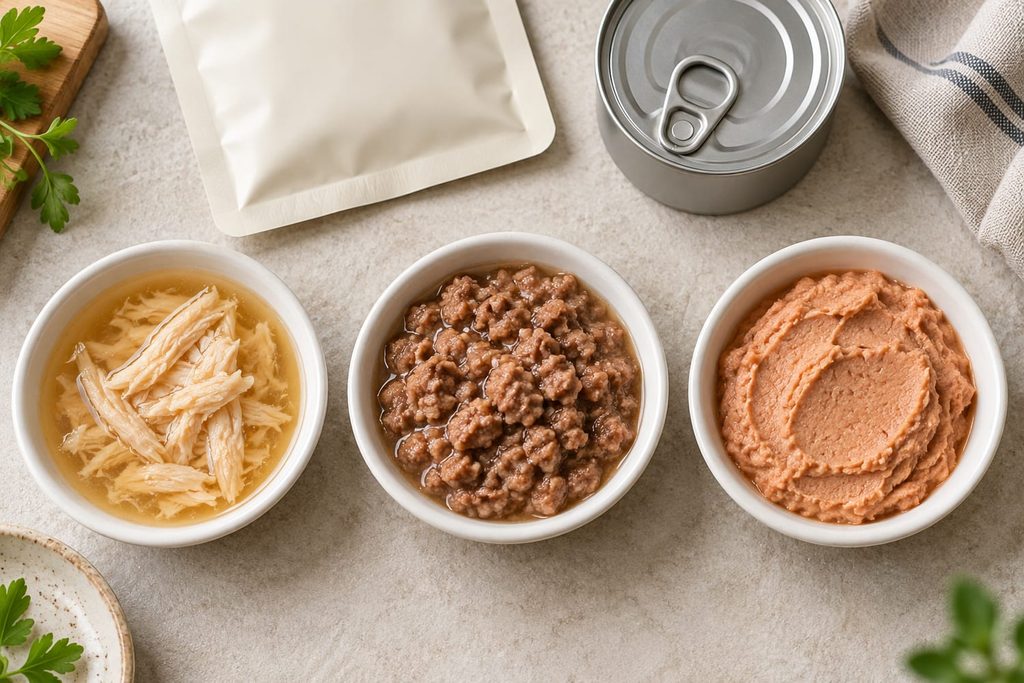
Compare pouches and cans using the same requirements
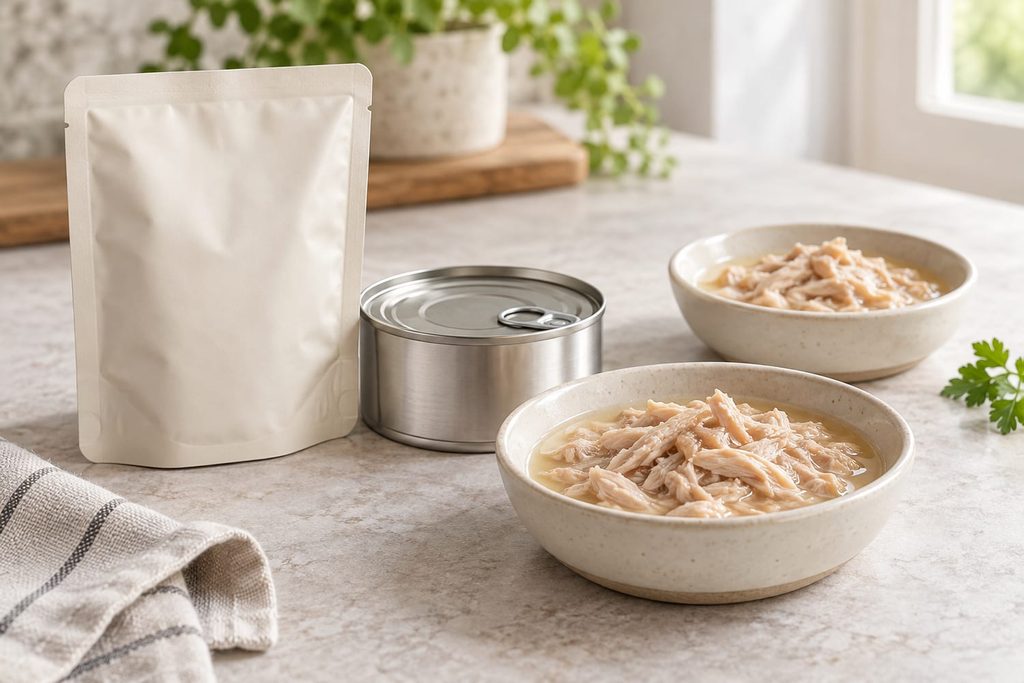
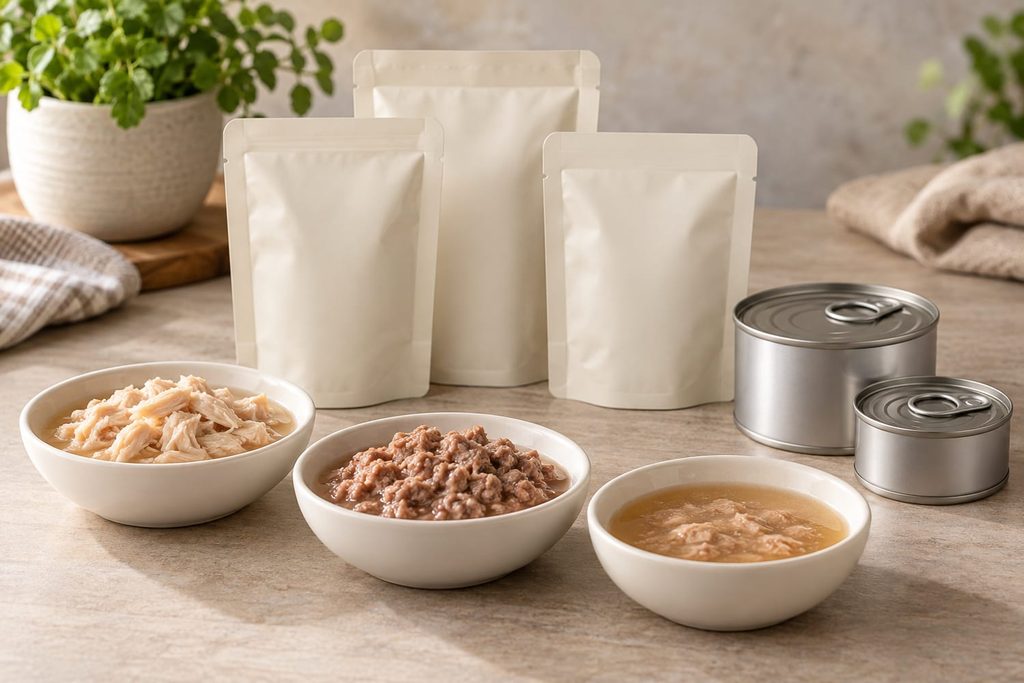
Retort pouches and cans can both be considered for shelf-stable wet food projects. Packaging suppliers offer pouches for retort pet food applications and steel cans for wet pet food. The selected recipe, container and manufacturing process still need to be evaluated together.
| Decision point | Pouch option | Can option |
|---|---|---|
| Intended serving | Check portion size, opening method and how the food leaves the pack | Check portion size, lid opening and access with a spoon |
| Product texture | Evaluate shreds, pieces and sauce in a finished pouch sample | Evaluate the same intended texture in a finished can sample |
| Pack verification | Request the material specification and relevant seal checks | Request the can and end specifications and relevant closure checks |
| Retail presentation | Assess the individual pouch and any outer display or multipack | Assess the individual can, label and any tray or multipack |
| Distribution cost | Compare actual filled-carton dimensions, mass and load plan | Compare actual filled-carton dimensions, mass and load plan |
| Shelf life | Request evidence for the proposed recipe and pouch | Request evidence for the proposed recipe and can |
Use the table as a brief for supplier discussions. It does not assign either format a universal advantage in shelf life, cost or consumer preference.
Approve texture in the finished retail pack
Ask for samples that represent the proposed commercial recipe and packaging as closely as the development stage allows. Confirm which aspects are final and which remain provisional.
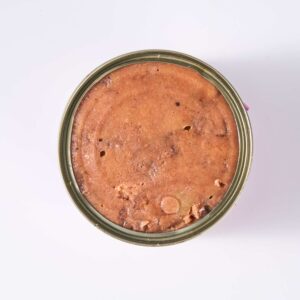
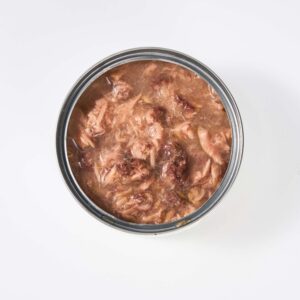
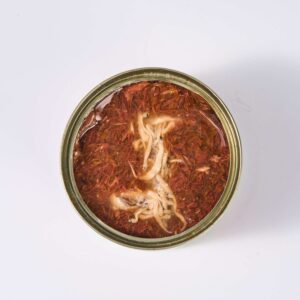
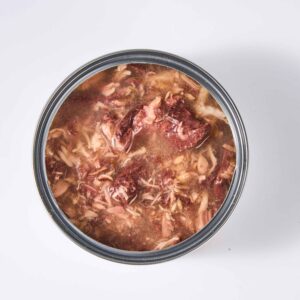
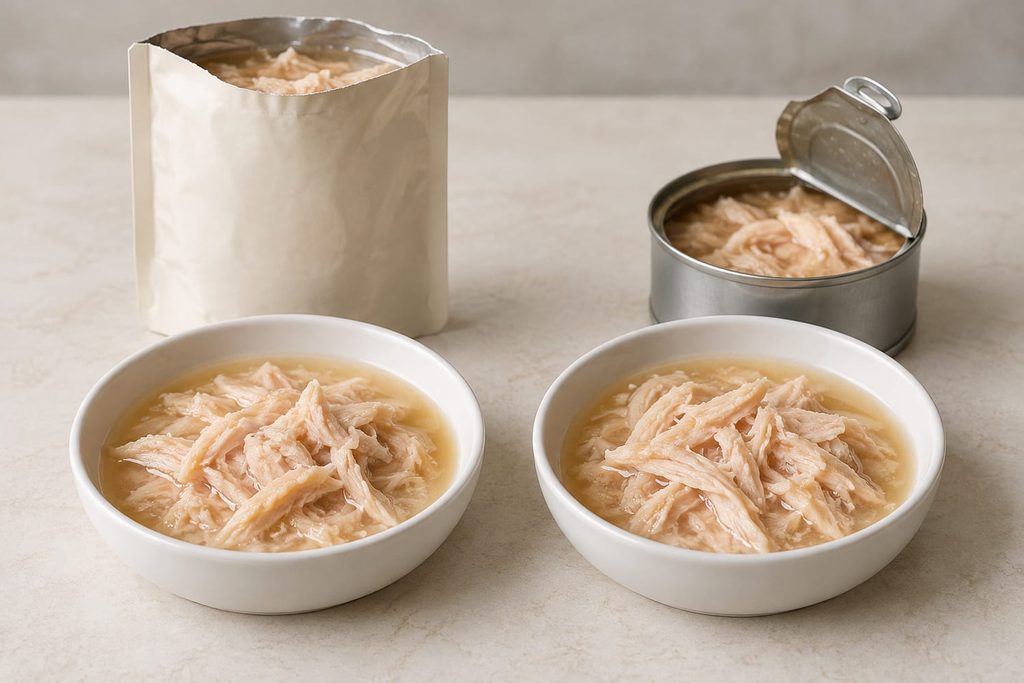
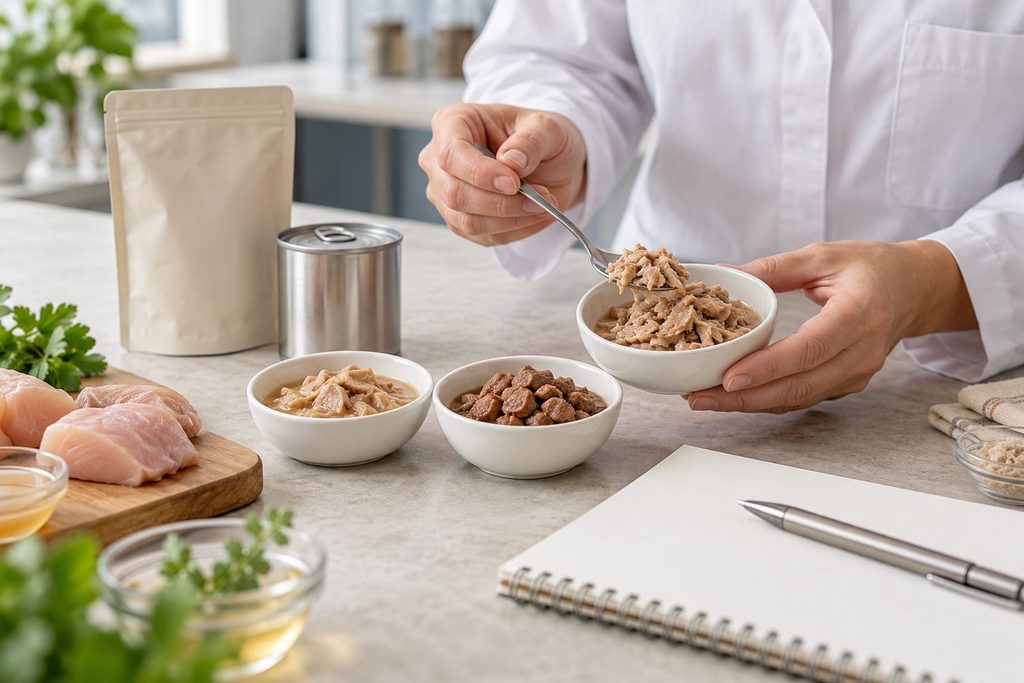
Evaluate the product after its intended manufacturing process. Review the amount of broth or gravy, piece dimensions, texture and the ease of emptying the pack. Check whether the portion delivered to the bowl matches the experience described on the label.
If you compare a pouch with a can, keep the product brief explicit. Where recipes or processes differ, record those differences beside the assessment. Otherwise, a preference for one sample could be attributed to packaging when the samples contain different products.
Ask how the complete packaging system will be verified
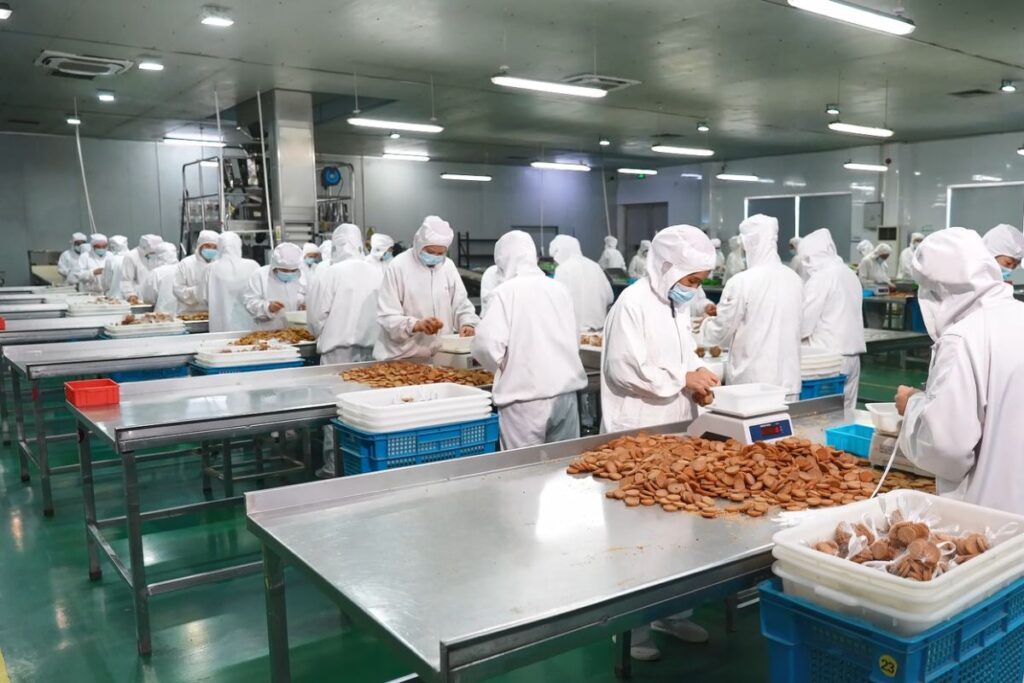
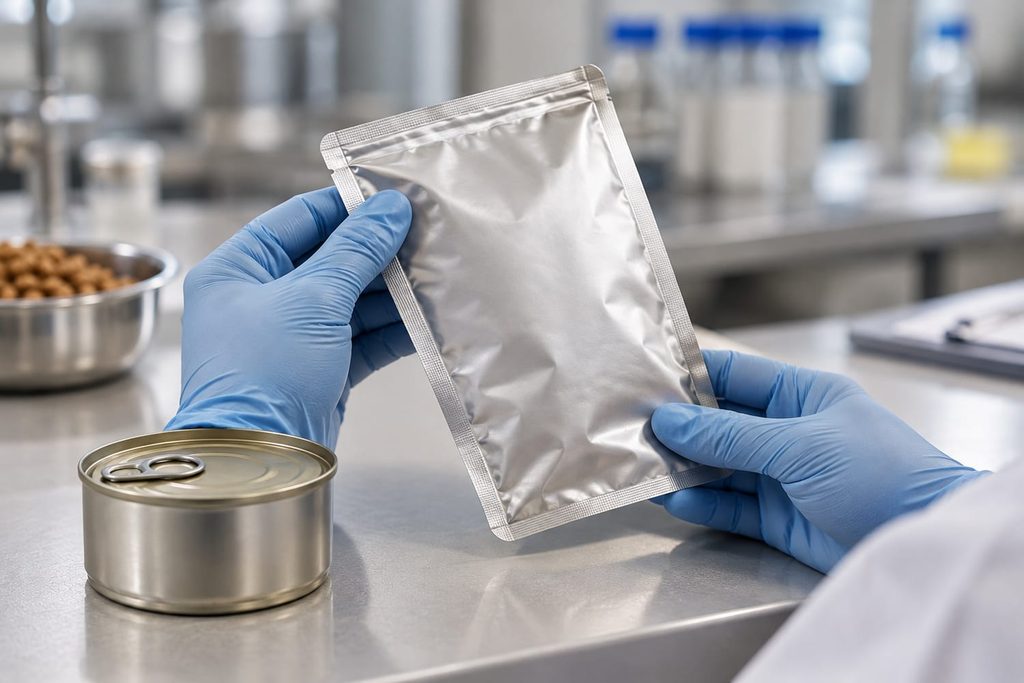
Request the specification for the primary container, closure, label and shipping carton. Confirm that the manufacturer’s review covers the proposed food, fill quantity and production conditions.
For pouches, ask about material suitability and the checks used to assess seals. For cans, ask about the body, end and the controls used to assess the completed closure. Ask the manufacturer to explain the acceptance criteria and which results are available with a shipment.
The FDA identifies shelf-stable low-acid pet foods in cans or airtight pouches among the products relevant to its animal food business guidance. Discuss the requirements that apply to your product and destination with the manufacturer and the appropriate regulatory specialists.
Keep food safety verification and shelf life evidence within the qualified manufacturing review. A visual sample review by the brand team is useful for product approval, but it cannot establish process adequacy.
Compare quotations on a matched commercial basis
Ask the supplier to state what is included in each quotation. Match the intended recipe, net weight, order quantity, artwork requirements and delivery term where possible.
Compare the cost per finished unit and per agreed sales case. Add the relevant artwork, printing or tooling charges, outer packaging and logistics costs. Make any tax or duty treatment consistent with the basis used by your finance team.
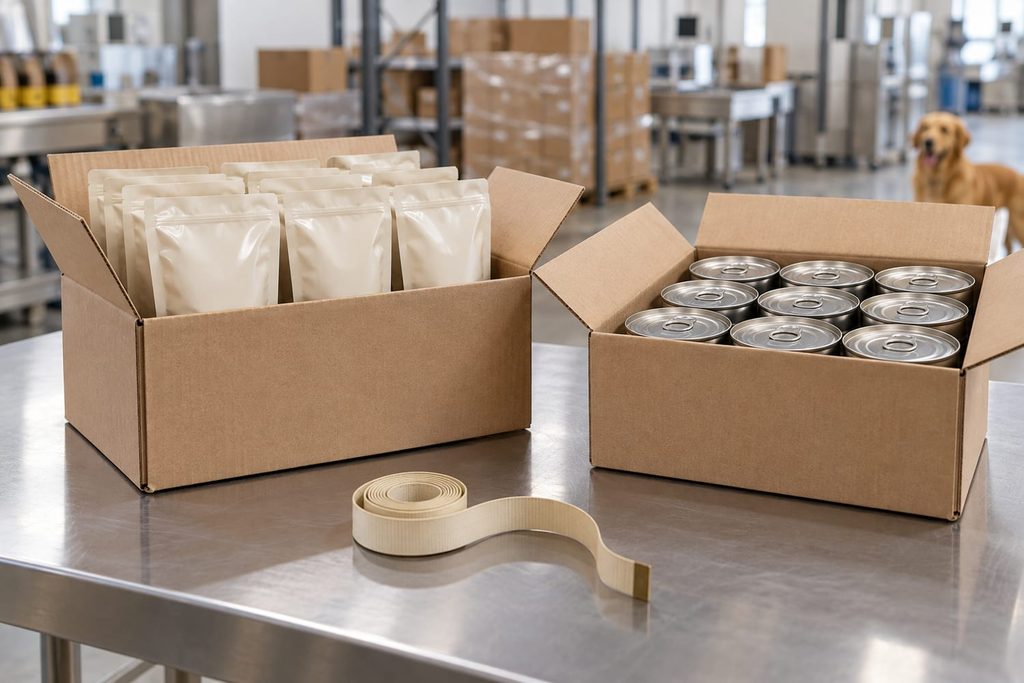
Check carton dimensions and pallet or container loading before assuming a format will cost less to ship. The complete shipping configuration determines the freight comparison.
Also confirm how minimum quantities apply. Product production, printed packaging and each artwork version may have different commercial conditions. Ask what happens to unused printed packaging if the first production order does not consume it all.
Set shelf life and handling instructions for the selected product
Request the proposed unopened shelf life, storage conditions and supporting evaluation for the actual recipe and pack. Agree a minimum remaining shelf life at the relevant delivery point if your retailers need one.
Confirm instructions after opening separately. The FDA’s storage guidance advises prompt refrigeration or disposal of unused canned and pouched pet food. Obtain the specific instructions to appear on your product rather than applying one generic period to every recipe.
Review transport and warehouse handling with the manufacturer. Establish how pack damage will be assessed, reported and managed so receiving staff have a usable procedure.
Send a complete development brief to the manufacturer
A precise brief helps the factory identify which options are available and what still needs development. Include:
- Destination market and intended sales channels
- Target species, life stage and feeding role
- Proposed proteins, ingredient restrictions and nutritional requirements
- Preferred texture and target net weight
- Pouch or can preferences and any acceptable alternatives
- Artwork, language and outer case requirements
- Estimated quantity by recipe and artwork version
- Required arrival date, shelf life conditions and target commercial basis
Ask for a response that identifies the proposed product, packaging, sample plan and unresolved decisions. Keep the same brief when comparing suppliers so that differences in quotations are easier to explain.
Use sample approval to create the production specification
After choosing a development direction, document the approved recipe version, pack size, appearance and artwork. Record the checks and tolerances agreed with the manufacturer, including any provisional items that still need closure.
Plan time for sample review, necessary technical work, packaging procurement and production. Request a project-specific schedule instead of treating a general website lead time as the complete launch timetable.
Use the approved specification when reviewing the first commercial batch. This gives the brand, factory and receiving warehouse the same reference for identifying the product that was ordered.
Frequently asked questions
Are wet cat food pouches better than cans
The choice depends on the feeding occasion, recipe, user experience and supply chain. Compare finished samples and matched quotations against the same brief.
Do cans always have a longer shelf life
Do not make that assumption. Request the shelf life supported for each proposed recipe, process and packaging combination.
Can the same recipe be supplied in both formats
Ask the manufacturer to assess the proposal. A change in pack format should be reviewed with the relevant filling, processing, quality and commercial requirements.
Can a soup or topper be sold as a complete cat food
Only use the nutritional positioning supported for the specific formula and destination market. Confirm the basis with the manufacturer before approving the label.
Discuss your private label wet cat food project with Matchwellpets
Matchwellpets offers wet cat food and OEM or ODM development options. Send your destination market, feeding role, preferred texture, proposed pack size and expected quantity using the inquiry form on the Matchwellpets homepage.
Request a proposal covering the available recipe and packaging options, sample process, required technical documentation and project-specific commercial terms. That gives your team a clear basis for choosing between pouches and cans before committing to a launch.