
Are Air Dried Dog Treats Good for Private Label Pet Brands?
For pet brands searching for products that combine natural positioning, recognizable ingredients, and premium shelf appeal, air dried dog treats are becoming an increasingly interesting category.
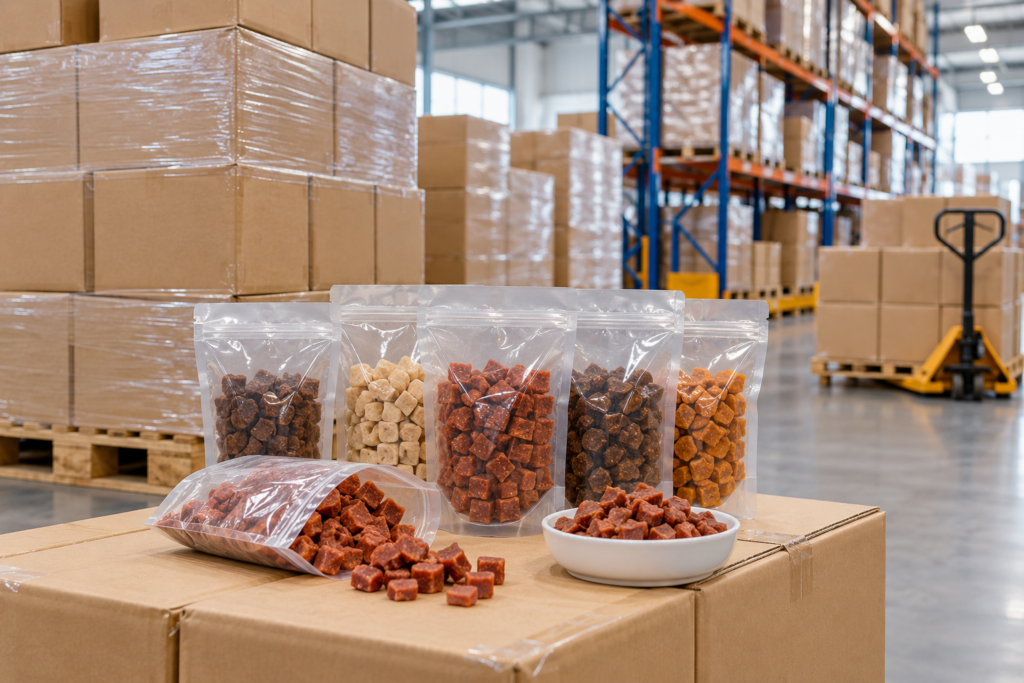
They can be made with chicken, duck, beef, fish, lamb, and other proteins, while offering brands considerable flexibility in shape, size, formulation, texture, and packaging.
But are air dried treats suitable for private label development?
For many brands, the answer is yes—but successful sourcing depends on understanding the product, manufacturing process, quality controls, and commercial positioning before placing an order.
What Are Air Dried Dog Treats?
Air dried dog treats are produced by removing moisture from meat or other suitable ingredients through a controlled drying process.
During production, manufacturers manage factors such as:
- Temperature
- Airflow
- Humidity
- Drying time
- Product thickness
- Final moisture specifications
The result is typically a dense, chewy, or firm treat with concentrated meat aroma and flavor.
Depending on the recipe, air dried treats can range from simple single-protein strips to more complex meat-and-vegetable combinations.
Why Air Dried Dog Treats Appeal to Pet Brands
Private label brands increasingly need products that are easy for consumers to understand.
Air dried treats can offer several strong marketing advantages.
1. Simple Ingredient Positioning
Many air dried products can be created with a relatively short ingredient list.
Examples include:
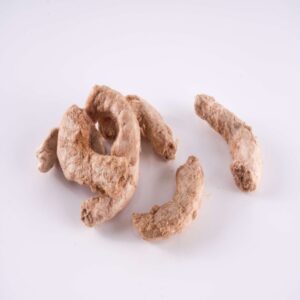
- Chicken breast strips
- Duck breast jerky
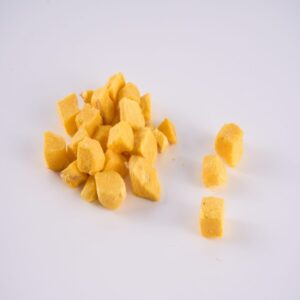
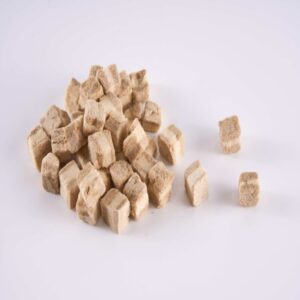
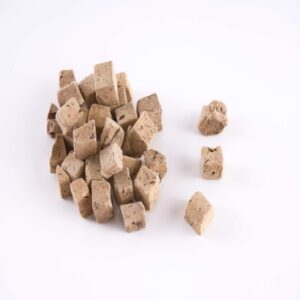
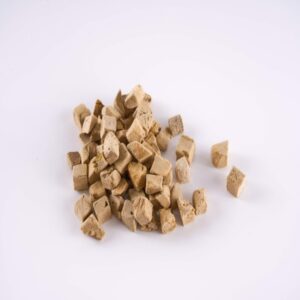
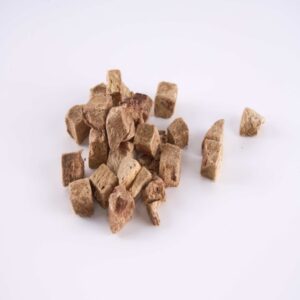
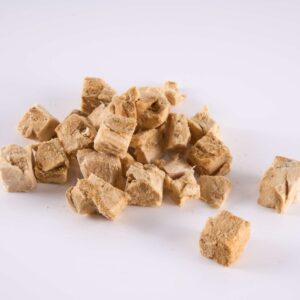
- Beef cubes
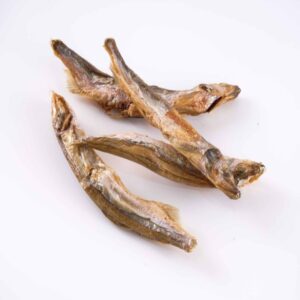
- Fish strips
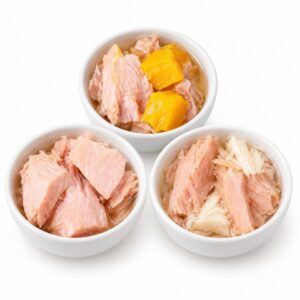
- Sweet potato wrapped with chicken
- Meat-based training treats
This allows brands to build product messaging around recognizable ingredients rather than complicated formulations.
2. Strong Meat-Focused Appearance
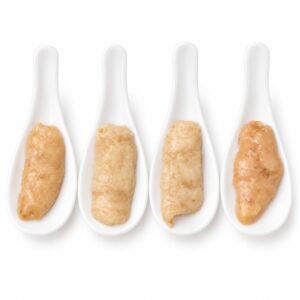
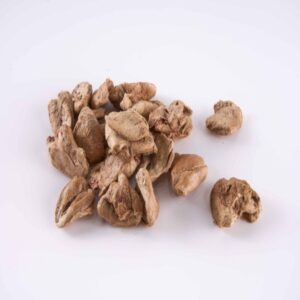
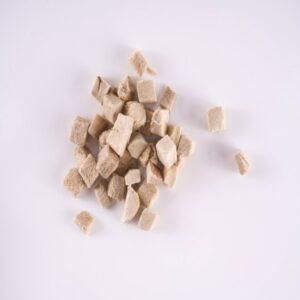
Air dried meat retains a visually recognizable appearance that can support a premium positioning.
When consumers can clearly see that a product resembles real chicken, duck, or beef, the product can be easier to understand at first glance.
For retail brands, this visual characteristic can be particularly valuable in transparent or partially transparent packaging.
3. Flexible Product Formats
Air drying is not limited to one treat format.
Brands can develop products such as:
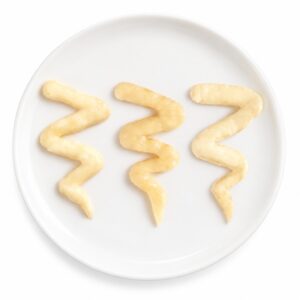
- Thin jerky strips
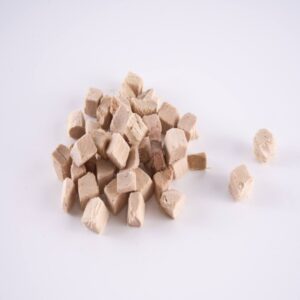
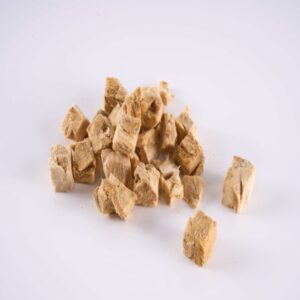
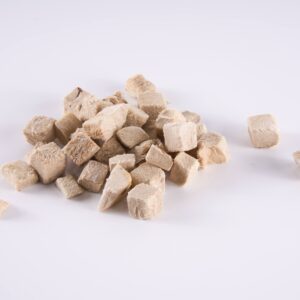
- Small training cubes
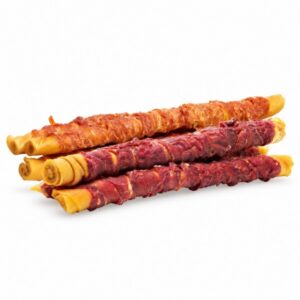
- Meat sticks
- Meat slices
- Meat-wrapped chews
- Vegetable and meat combinations
This makes it possible to build an entire product family around a single processing category.
Air Dried vs. Freeze Dried Dog Treats
Private label buyers often compare air dried and freeze dried products.
Although both remove moisture, they are very different.
| Feature | Air Dried Dog Treats | Freeze Dried Dog Treats |
|---|---|---|
| Processing | Controlled warm-air drying | Freezing followed by vacuum drying |
| Texture | Chewy or firm | Lightweight and porous |
| Appearance | Dense, meat-like | Dry and porous |
| Product positioning | Natural jerky-style | Premium minimally processed |
| Equipment cost | Generally lower | Generally higher |
| Common formats | Strips, sticks, slices | Cubes, chunks, organ meats |
The right option depends on the brand’s positioning.
A premium jerky line may be better suited to air dried products, while a lightweight single-ingredient snack may fit freeze drying better.
Which Proteins Work Well for Air Dried Treats?
One of the advantages of private label manufacturing is the ability to build multiple SKUs using different proteins.
Chicken
Chicken is widely accepted and works well in strips, cubes, sticks, and wrapped products.
It is often suitable for brands seeking broad consumer appeal.
Duck
Duck provides a slightly more premium positioning and can be used to expand beyond standard chicken treats.
Duck breast strips and duck jerky are common options.
Beef
Beef can create a strong, meat-forward product image and works well for cubes, strips, sticks, and chewy treats.
Fish
Fish-based treats provide additional variety and can help brands create distinctive product ranges.
However, manufacturers must carefully manage oxidation, odor, and packaging requirements.
What Makes a Good Air Dried Dog Treat Manufacturer?
For private label buyers, manufacturing capability is more important than simply receiving an attractive sample.
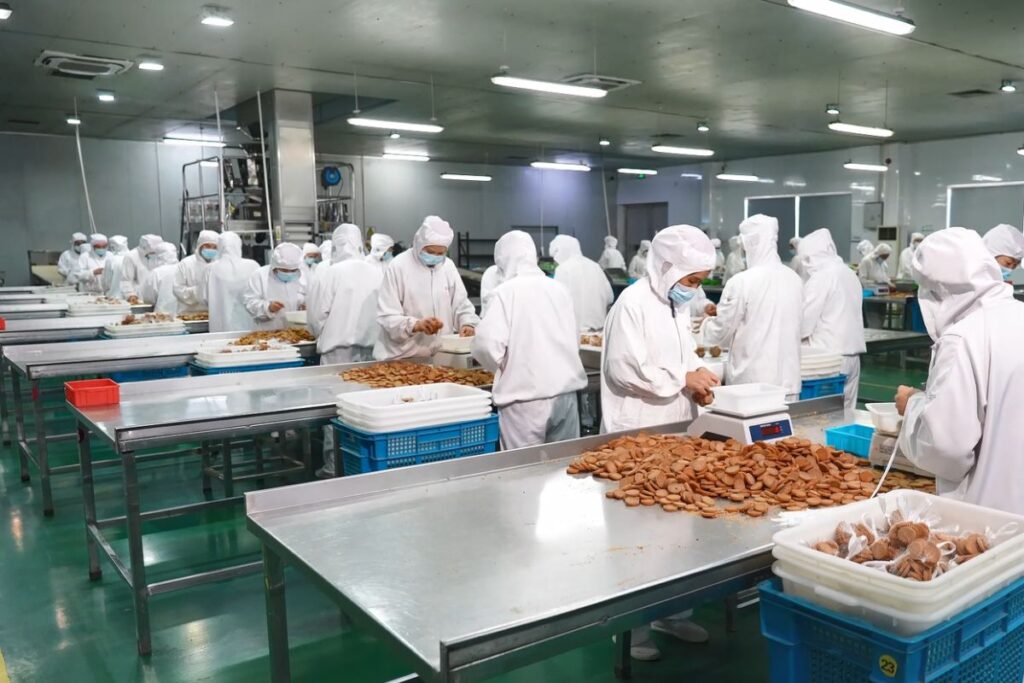
A reliable dog treat manufacturer should have structured control over the entire production process.
Raw Material Management
Raw material quality directly influences the final treat.
Manufacturers should have procedures covering:
- Supplier approval
- Incoming inspection
- Temperature control
- Ingredient traceability
- Raw material specifications
Controlled Drying
Drying parameters should be established according to the specific recipe and dimensions of the product.
A thick beef strip and a thin chicken slice should not automatically follow the same process.
Manufacturers need to manage the relationship between time, temperature, airflow, humidity, and final product characteristics.
Moisture and Water Activity
Private label buyers should understand both moisture content and water activity.
These are related but different measurements.
Water activity is particularly important when evaluating microbial stability and shelf-life performance in dried products.
A professional manufacturer should establish suitable specifications according to the formulation and validated process.
Food Safety Is Critical
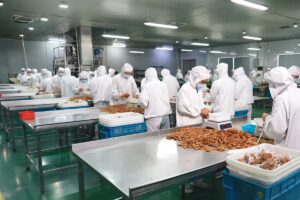
Meat-based treats require strict food-safety management.
Buyers should ask potential suppliers about:
- Food safety certifications
- HACCP plans
- Traceability systems
- Microbiological testing
- Metal detection
- Sanitation controls
- Allergen management
- Batch records
- Shelf-life testing
Certifications can help buyers evaluate whether the factory operates under a structured quality-management system.
However, importers should also conduct their own supplier qualification and verify destination-market requirements.
Private Label Customization Options
Air dried dog treats can offer considerable customization potential.
Depending on manufacturing capability, brands may customize:
Protein Type
Possible options can include chicken, duck, beef, fish, lamb, rabbit, and combinations.
Shape and Size
Treats can be produced as:
- Strips
- Cubes
- Slices
- Sticks
- Small training pieces
Sizing can be adjusted for different target dogs and product positioning.
Formulation
Brands may develop:
- Single-protein treats
- Meat and vegetable treats
- Functional-positioned products
- High-meat formulas
- Limited-ingredient treats
Any nutritional or functional claim should comply with applicable regulations in the destination market.
Packaging
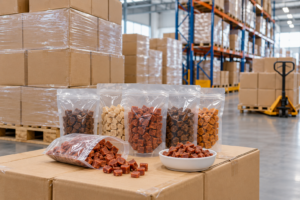
Private label packaging can include different pouch structures, sizes, designs, and branding.
Common formats include resealable stand-up pouches and flat-bottom bags.
What Should Brands Ask Before Ordering?
Before approving a supplier, private label buyers should ask:
- What ingredients are used?
- Where are the animal proteins sourced?
- What certifications does the manufacturing facility hold?
- How is the drying process controlled?
- What are the finished moisture and water activity specifications?
- What microbiological testing is performed?
- What shelf-life testing has been completed?
- Can size, shape, formula, and packaging be customized?
- What is the MOQ?
- What export documentation can the supplier provide?
These questions help buyers evaluate manufacturing capability rather than simply comparing unit prices.
Common Private Label Sourcing Mistakes
Choosing Only by Price
The cheapest quotation may use different raw materials, specifications, packaging, or quality-control standards.
Buyers should compare like-for-like specifications.
Failing to Establish Product Specifications
An approved sample alone is not enough.
Brands should define acceptable commercial specifications for characteristics such as:
- Weight
- Dimensions
- Color
- Texture
- Moisture
- Packaging
- Product appearance
Ignoring Import Requirements
Animal-origin pet treats can be subject to specific import requirements.
Before commercialization, brands should confirm ingredient, labeling, documentation, and import rules for their destination country.
How Air Dried Treats Can Fit Into a Product Portfolio
Private label brands do not need to rely on a single SKU.
A structured range could include:
Chicken Breast Strips → Duck Jerky → Beef Cubes → Fish Treats → Meat-Wrapped Chews
This approach can provide different proteins, textures, price points, and use occasions while maintaining a consistent product identity.
Air dried treats can also complement other categories such as:
- Freeze dried treats
- Dog chews
- Training treats
- Wet food
- Functional pet treats
Working With Matchwell
Matchwell works with B2B pet brands, distributors, importers, and retailers developing private label pet treat products.
Our product development capabilities cover multiple dog treat categories, including meat-based treats, jerky, chews, freeze-dried products, and customized OEM/ODM projects.
For private label buyers, the goal is not simply to source a product—it is to create a commercially viable product that can be reproduced consistently at scale.
Frequently Asked Questions
Can air dried dog treats be private labeled?
Yes. Depending on the manufacturer’s capabilities, brands may customize protein, shape, size, recipe, package size, and packaging design.
Are air dried treats single ingredient?
Some products can be single ingredient, while others use multiple ingredients depending on texture, positioning, and production requirements.
Are air dried treats suitable for premium pet brands?
Yes. Their recognizable appearance, meat-focused recipes, and natural positioning can make them suitable for premium ranges.
What should buyers check before placing an order?
Buyers should review ingredient specifications, food-safety systems, microbiological standards, water activity, moisture, packaging, shelf-life validation, MOQ, and import requirements.
Conclusion
Air dried dog treats can be a strong category for private label pet brands because they offer recognizable ingredients, high meat content, flexible formats, and premium product positioning.
However, successful sourcing depends on more than choosing a protein and packaging design.
Brands should evaluate manufacturing controls, raw material traceability, drying parameters, microbiological testing, product specifications, shelf-life performance, and export compliance before entering commercial production.
For businesses planning to develop an OEM or private label dog treat range, working with an experienced manufacturing partner can make product development and commercialization considerably more efficient.