
Pet Chew Manufacturer: How to Choose the Right OEM Partner for Your Brand
The pet treat market continues to create opportunities for brands that can offer dogs products that are enjoyable, convenient, and suited to different chewing habits. For retailers, importers, distributors, and emerging pet brands, however, developing a successful chew product starts long before it reaches the shelf.
It starts with choosing the right pet chew manufacturer.
A reliable manufacturing partner does more than produce dog chews. The right supplier can help you select suitable materials, adjust product size and texture, develop private label packaging, manage quality control, prepare samples, and scale production as your business grows.
If you are planning to launch a new dog chew line or expand your existing pet treat range, this guide explains what to look for when evaluating a pet chew manufacturer.
What Does a Pet Chew Manufacturer Do?
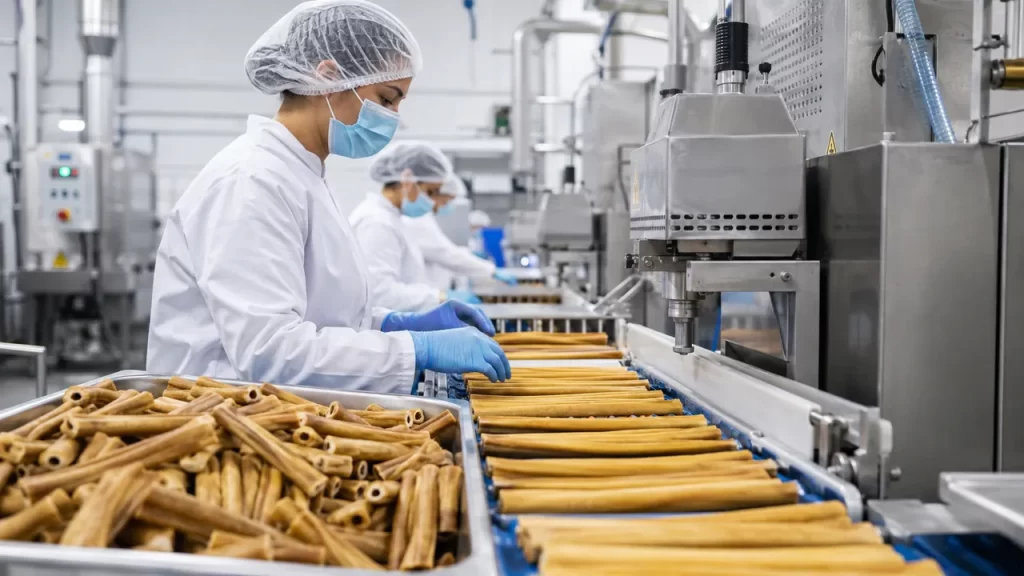
A pet chew manufacturer produces chew products for pet brands, wholesalers, retailers, importers, distributors, and other B2B buyers.
Depending on the factory’s capabilities, manufacturing services may include product sourcing, formulation development, size customization, flavor selection, drying or processing, quality inspection, private label packaging, bulk packing, and export preparation.
Some manufacturers mainly offer standard products for wholesale distribution. Others provide OEM and ODM services that allow buyers to create products according to their own brand positioning.
For private label brands, this flexibility is especially important.
Instead of simply purchasing an existing product, buyers may want to change the chew’s length, thickness, protein source, appearance, packaging size, or product combination.
A capable dog chew manufacturer should be able to discuss these requirements before mass production begins.
Common Types of Dog Chews Available for Private Label
The dog chew category is highly diverse. Different products target different dog sizes, chewing preferences, price points, and retail channels.
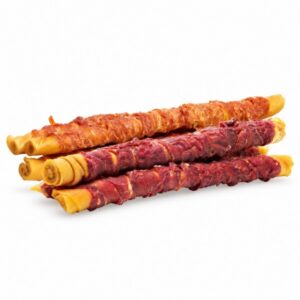
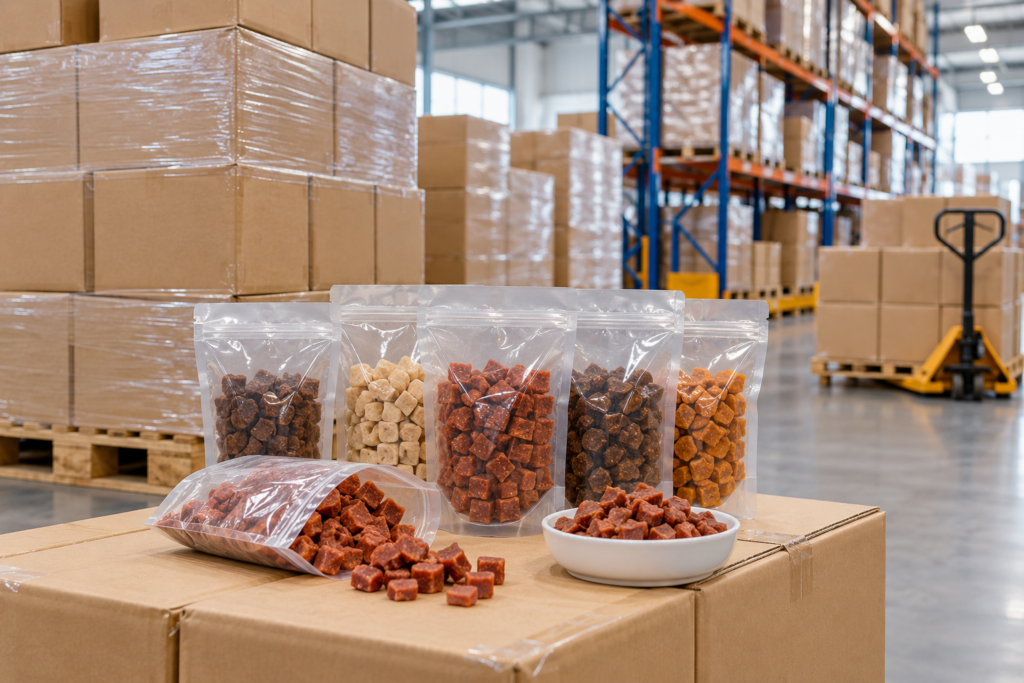
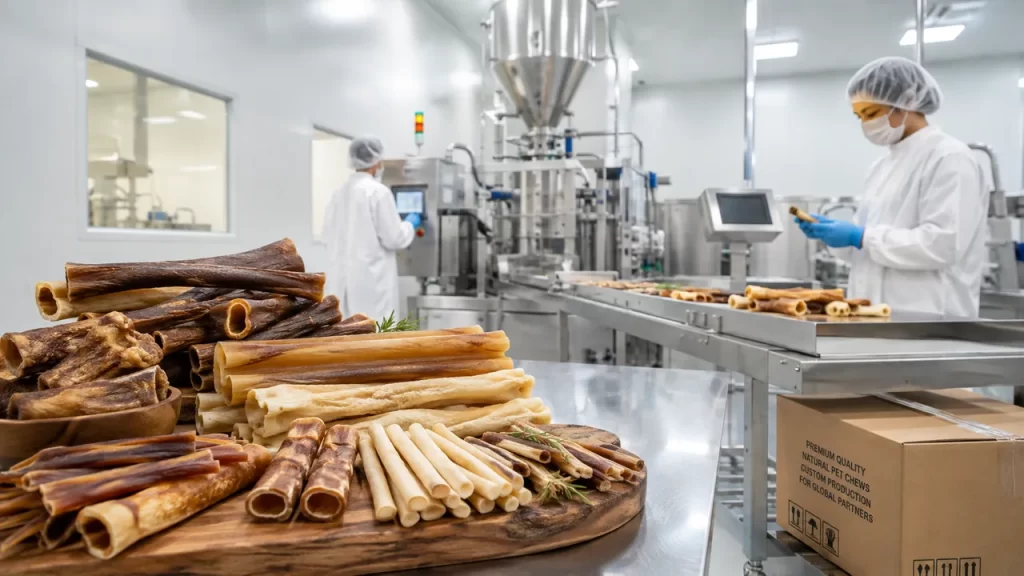
A professional pet chew factory may offer products such as collagen chews, rawhide-style chews, rawhide alternatives, chicken-wrapped chews, duck-wrapped chews, beef chews, dental chews, jerky chews, twisted chews, bone-shaped chews, and functional chew products.
For buyers, product selection should be based on more than appearance.
For example, a retailer targeting small dogs may prefer thinner or shorter chews, while a brand focused on large breeds may require thicker, longer-lasting formats. Premium pet stores may prioritize natural-looking products and simple ingredient positioning, while mass-market retailers may focus more heavily on consistency, packaging efficiency, and competitive pricing.
This is why working directly with an experienced pet chew manufacturer can be more effective than choosing products only from a fixed catalog.
Why Private Label Dog Chews Are Growing in B2B Pet Markets
Private label gives pet businesses greater control over their product presentation and market positioning.
Instead of competing with identical branded products sold by multiple distributors, buyers can develop a chew range under their own brand.
Private labeling can also help businesses create clearer product segmentation. A brand may offer separate chew collections for puppies, small breeds, aggressive chewers, dental care, training rewards, or premium natural treats.
Packaging can also be adapted to different sales channels.
A small resealable pouch may work well for e-commerce, while a larger pack may be better suited to warehouse clubs, pet specialty retailers, or wholesale distribution.
For this reason, buyers searching for a private label dog chew manufacturer should evaluate both product manufacturing and packaging capabilities.
1. Evaluate the Manufacturer’s Product Range
One of the first things to check is whether the supplier already produces the type of chew you want to sell.
A broad product portfolio usually indicates that the factory has experience working with different materials, shapes, textures, and processing methods.
This can be useful when you want to expand your range later.
For example, you might begin with collagen sticks and chicken-wrapped chews, then add dental chews or other natural dog treats after establishing your market.
Working with one qualified manufacturing partner can simplify sourcing, quality management, packaging coordination, and shipment consolidation.
However, product variety alone is not enough.
You should also evaluate whether the manufacturer can maintain consistent specifications across repeat orders.
2. Check OEM and ODM Customization Capabilities
Customization is one of the biggest advantages of working directly with a pet chew factory.
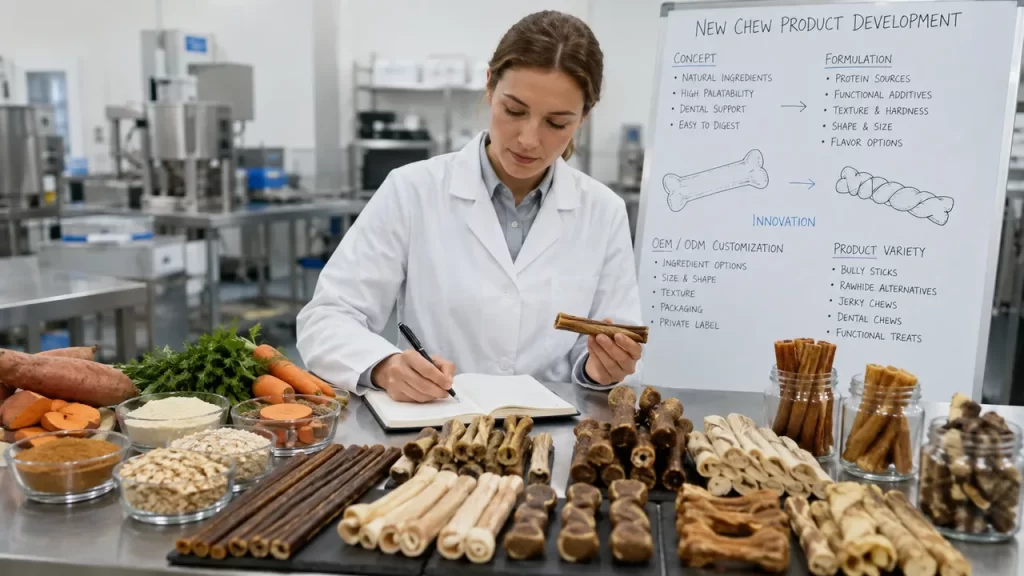
Depending on the product, buyers may be able to customize dimensions, weight, color, texture, hardness, shape, protein combinations, packaging size, label design, and assortment configuration.
Before choosing a supplier, clearly explain your target market and product concept.
For example, instead of asking only for “dog chews,” provide more specific information:
You may need a medium-hard chew for dogs between 20 and 50 pounds, packed in a resealable retail pouch, positioned as a natural everyday chew.
That information gives the manufacturer a much better starting point.
An experienced OEM supplier can then recommend suitable existing products or determine whether additional development is required.
3. Ask About Quality Control
Quality control is one of the most important factors when sourcing pet treats.
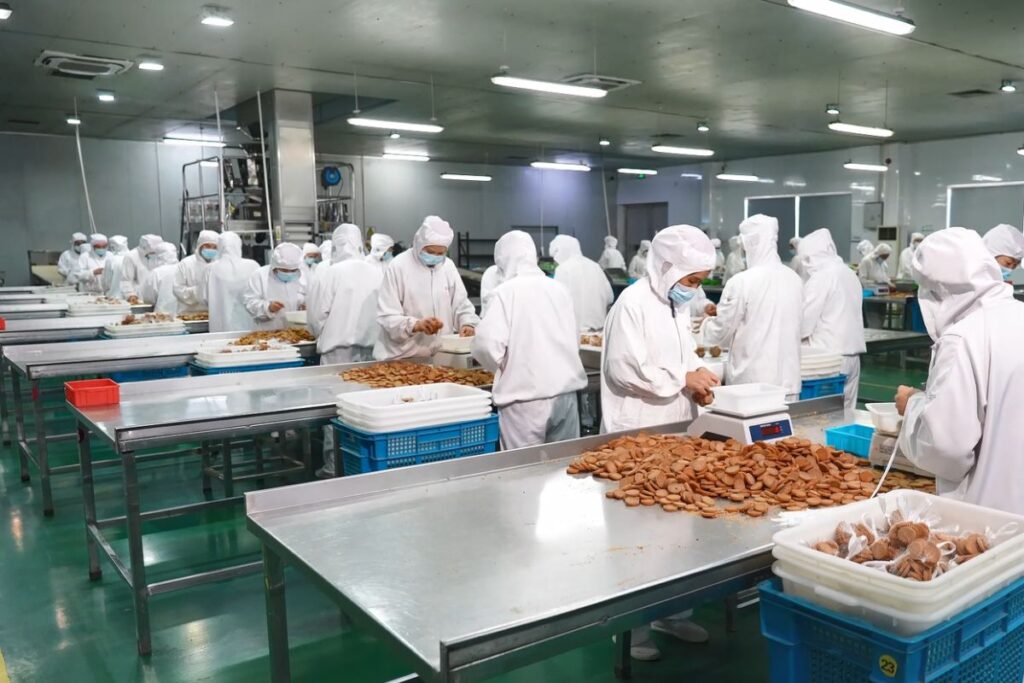
A reliable manufacturer should have documented procedures covering raw material inspection, production monitoring, finished product inspection, packaging control, and traceability.
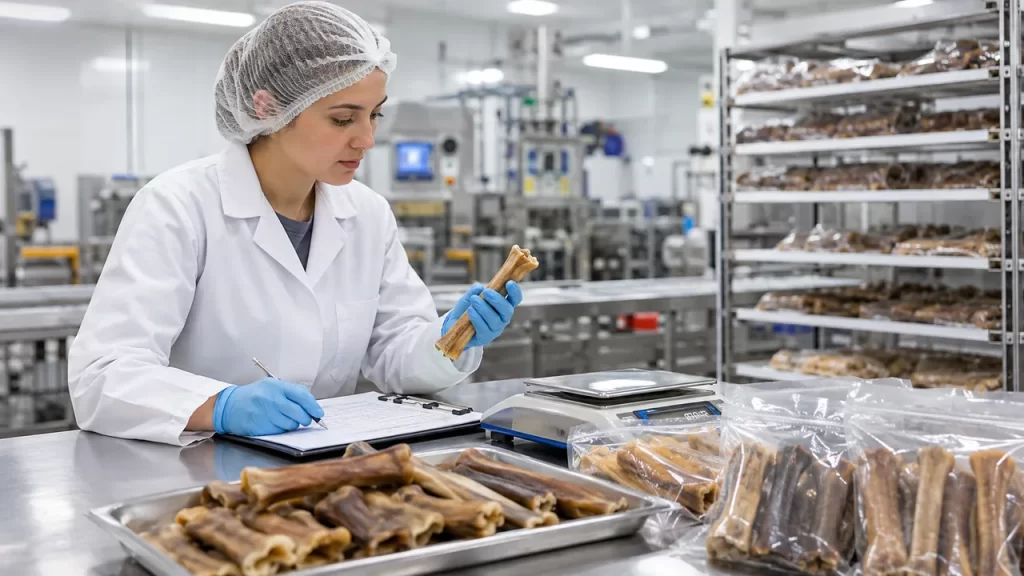
Buyers should also ask how the factory controls factors such as moisture, product dimensions, appearance, foreign material risks, packaging integrity, and batch consistency.
For international buyers, recognized food safety management systems can also make supplier evaluation easier.
Matchwellpets works with pet businesses that require structured manufacturing and quality management for international markets, with factory systems designed around established food safety and production standards.
Quality should not be treated as a final inspection step.
It should be built into the complete manufacturing process.
4. Request Samples Before Placing a Bulk Order
Product photos cannot fully show chew hardness, smell, texture, flexibility, dimensions, or packaging quality.
That is why samples are important.
Before placing a wholesale or private label order, request representative samples and evaluate them carefully.
Check whether the product matches your target market, whether the size is appropriate, whether the appearance is consistent, and whether the packaging supports your intended retail positioning.
If you are developing a customized product, sample approval becomes even more important.
At Matchwellpets, sample preparation can typically be arranged before production, helping buyers evaluate potential products before moving into larger-volume purchasing.
5. Understand MOQ Requirements
MOQ, or minimum order quantity, can have a major impact on product development.
Large established brands may prefer higher production volumes because they reduce unit costs. Smaller brands and market-testing projects usually need more manageable initial quantities.
Before beginning development, ask whether the MOQ applies per product, per flavor, per size, or per packaging design.
These details can significantly affect your total investment.
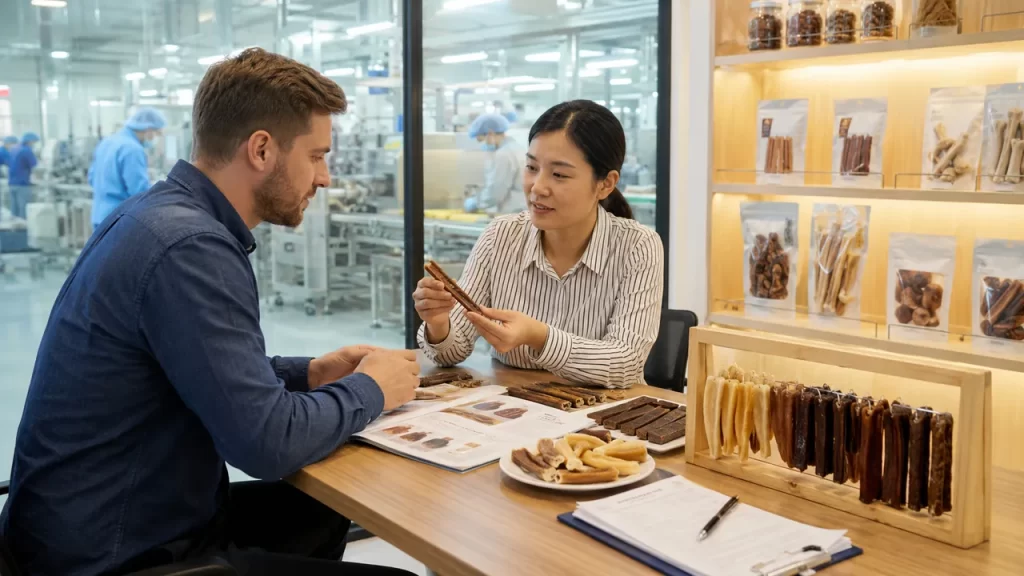
For many Matchwellpets pet treat projects, MOQ can start from approximately 500 kg, depending on the product and customization requirements.
Discussing MOQ early prevents unnecessary product development on concepts that do not match your purchasing plan.
6. Review Private Label Packaging Options
Packaging influences both product protection and purchasing decisions.
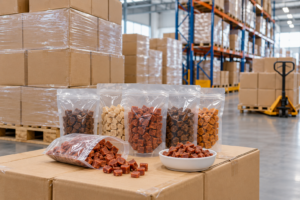
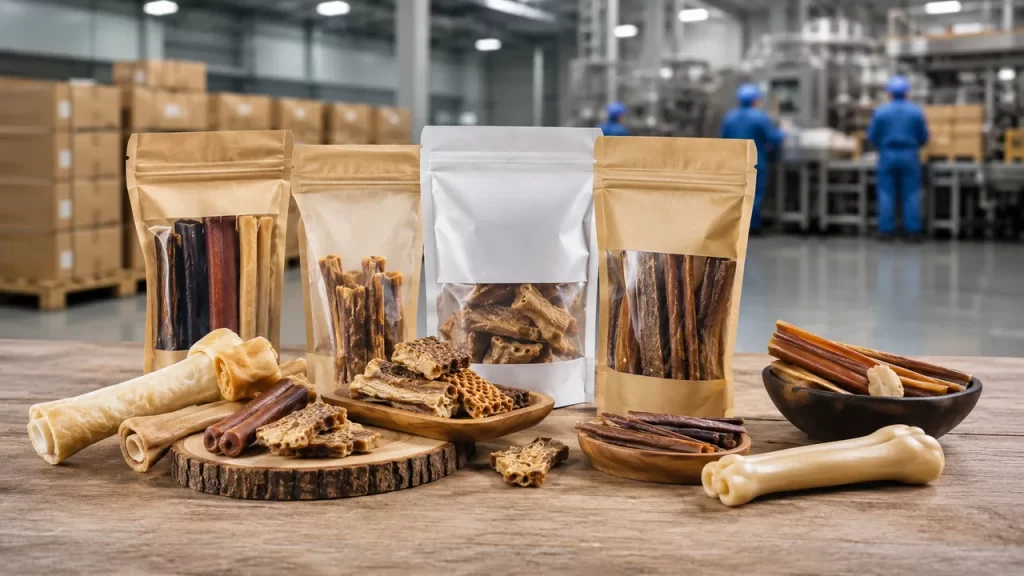
For dog chews, common packaging formats include stand-up pouches, resealable bags, transparent-window bags, printed bags, bulk cartons, display boxes, and custom retail packaging.
Your packaging decision should consider shelf life, product size, retail environment, branding, shipping efficiency, and customer convenience.
When evaluating a private label manufacturer, ask whether they can coordinate packaging alongside production.
A supplier that can manage both product and packaging may reduce communication problems between separate factories and shorten the development process.
7. Evaluate Production Lead Time
Reliable delivery is particularly important for distributors and seasonal retail programs.
Late production can lead to stockouts, lost promotions, delayed listings, and unhappy retail partners.
Before placing an order, understand the normal production schedule and what may affect it.
Lead time can vary based on order quantity, raw material availability, product complexity, packaging requirements, and seasonal demand.
For standard Matchwellpets projects, production can often be completed within approximately 15–20 days after order and specification confirmation, although customized projects may require additional development time.
For repeat orders, maintaining forecasts with your manufacturer can improve production planning.
8. Consider Export Experience
A strong domestic supplier is not automatically a strong export supplier.
International pet treat orders may involve additional documentation, labeling, carton specifications, pallet requirements, shipment coordination, and destination-market requirements.
If you are importing pet chews, work with a manufacturer that is familiar with international B2B orders.
Export experience can reduce communication errors and make it easier to coordinate production with freight forwarders, customs brokers, and import teams.
This is especially important for buyers serving the United States, Europe, Australia, Southeast Asia, and other regulated pet product markets.
9. Compare Total Value, Not Just Unit Price
Price is important, but the lowest quotation is not always the lowest-cost sourcing option.
A cheaper supplier may become expensive if you experience inconsistent products, damaged packaging, production delays, high reject rates, or frequent specification changes.
When comparing pet chew manufacturers, consider the complete sourcing value.
Evaluate manufacturing capability, communication speed, customization support, quality management, MOQ, lead time, packaging capability, export experience, and long-term supply stability.
For growing pet brands, manufacturing consistency can be more valuable than saving a small amount on the initial unit price.
How Matchwellpets Supports Private Label Pet Chew Projects
Matchwellpets provides OEM and private label manufacturing services for pet treat businesses looking to develop dog chew products for wholesale and retail markets.
Our manufacturing capabilities cover multiple dog chew formats and can support customization based on product type, dimensions, packaging, and brand requirements.
For qualified projects, our team can assist with product selection, samples, packaging discussion, production planning, and export coordination.
Typical project advantages include sample support, approximately 500 kg starting MOQ for many products, private label packaging options, OEM/ODM development, and production lead times that can be as short as 15–20 days for suitable standard projects.
Whether you are a pet brand, distributor, importer, retailer, or e-commerce seller, the goal is the same: build a product line that is consistent, commercially viable, and appropriate for your target customer.
Questions to Ask a Pet Chew Manufacturer Before Ordering
Before selecting a supplier, ask about available chew materials, standard sizes, customization options, minimum order quantities, sample availability, packaging formats, production lead time, quality control procedures, export markets, and repeat-order capacity.
You should also provide your target market, expected annual purchasing volume, desired packaging, preferred product type, and required launch date.
The more information both sides exchange early in the project, the easier it is to create an accurate quotation and avoid unnecessary revisions.
FAQ About Pet Chew Manufacturing
Can I put my own brand on dog chews?
Yes. Private label pet chew manufacturers can typically produce products under your own brand and support custom retail packaging. Packaging options and MOQ depend on the specific product and design.
Can a pet chew manufacturer customize the product size?
In many cases, yes. Length, thickness, weight, shape, and other specifications may be customizable depending on the raw material and manufacturing process.
What is the MOQ for private label dog chews?
MOQ varies by manufacturer and product. Matchwellpets can support many pet treat projects from approximately 500 kg, subject to product and packaging requirements.
Can I get samples before ordering?
Yes. Samples are recommended before bulk production, especially when developing a new private label product. Matchwellpets can arrange samples for qualified B2B projects.
How long does pet chew production take?
Production time depends on product type, order volume, raw materials, and packaging. Standard Matchwellpets projects may require approximately 15–20 days after specifications are confirmed.
Do you manufacture dog chews for overseas brands?
Yes. Matchwellpets works with B2B customers including pet brands, importers, distributors, retailers, and wholesalers serving international markets.
Looking for a Reliable Pet Chew Manufacturer?
Choosing the right manufacturing partner can determine how efficiently your pet chew business grows.
A strong supplier should provide more than competitive pricing. You need consistent quality, responsive communication, customization capability, reliable production, and packaging support.
If you are currently sourcing private label dog chews, wholesale pet chews, or OEM pet treats, Matchwellpets can help you evaluate suitable product options for your market.
Send us your target product, preferred size, packaging requirements, estimated order quantity, and destination market.