
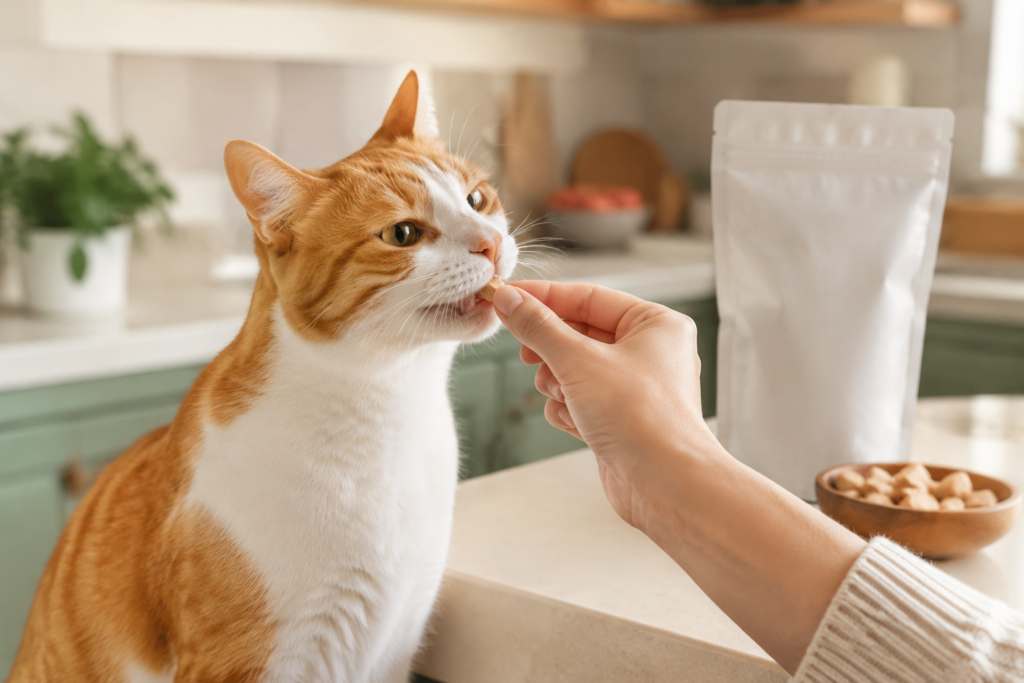
Cat Snack OEM: How to Build a Private Label Cat Treat Line That Is Ready to Scale
Launching a cat treat brand no longer requires owning a production facility. With the right cat snack OEM partner, a retailer, distributor, Amazon seller, or established pet brand can turn a product concept into a market-ready line while the manufacturer handles formulation, sampling, production, quality control, and packaging.
However, successful OEM sourcing involves more than placing a logo on an existing pouch. The product must fit the target customer, retail channel, price point, labeling rules, and supply plan. A premium freeze-dried snack developed for specialty pet stores has very different cost and packaging requirements from a crunchy treat designed for supermarket distribution.
This guide explains how to structure a cat snack OEM project for the U.S. market and how to evaluate a manufacturing partner before moving into mass production.
What Does Cat Snack OEM Mean?
OEM stands for original equipment manufacturing. In a cat snack OEM project, a manufacturer produces cat treats that another company sells under its own brand. Depending on the program, the buyer may select a proven stock formula, modify an existing recipe, or develop a more distinctive product around a target protein, texture, function, and price.
OEM is often used alongside private label and ODM, but the terms are not always identical:
| Model | What the buyer controls | Best suited to |
|---|---|---|
| Private label | Brand, artwork, pack size, and selected stock product | Faster launches and lower development risk |
| OEM | Product specification, formula options, format, packaging, and quality requirements | Brands that need meaningful customization |
| ODM | Product concept developed jointly with the manufacturer’s R&D team | New concepts, exclusive positioning, or long-term product platforms |
The right model depends on how quickly you need to launch, how much differentiation you need, and how much inventory and development cost your business can support.
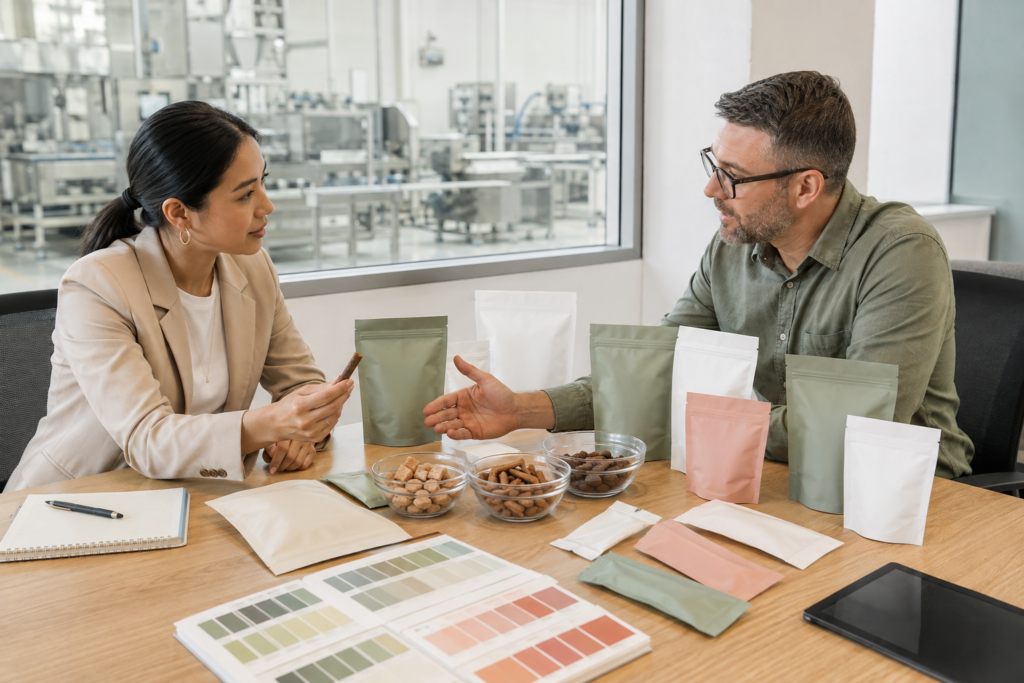
Choose the Product Format Before Choosing the Flavor
Many buyers begin with a flavor idea such as chicken, tuna, or salmon. A more effective OEM brief starts with the feeding occasion and product format. Format affects processing, shelf life, packaging, freight cost, retail price, and consumer expectations.
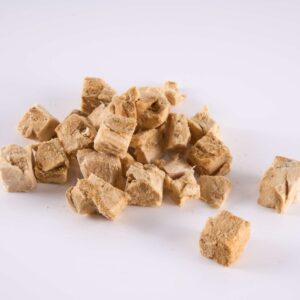
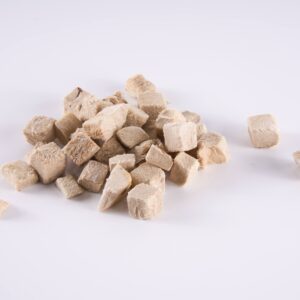
Freeze-Dried Cat Treats
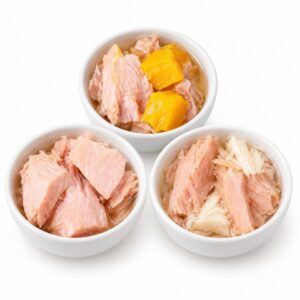
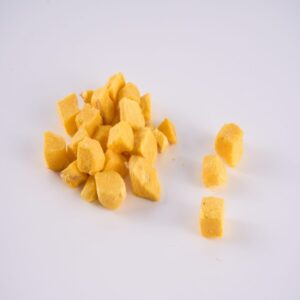
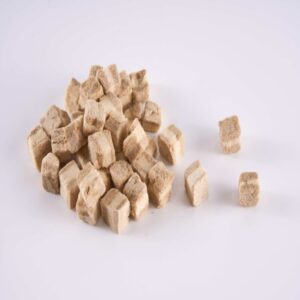
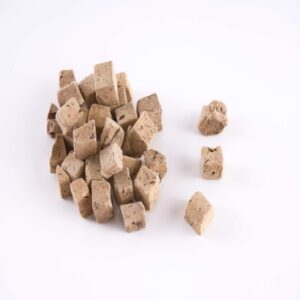
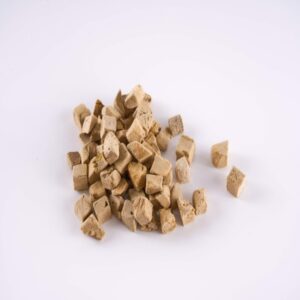
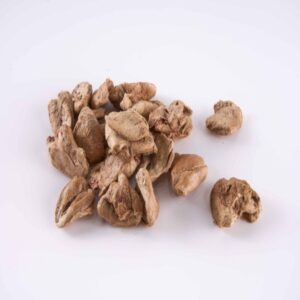
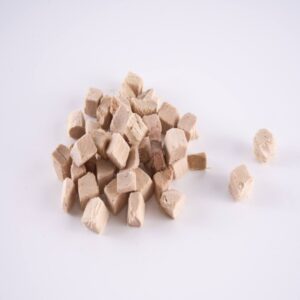
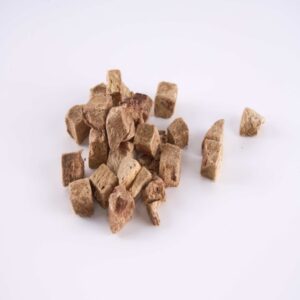
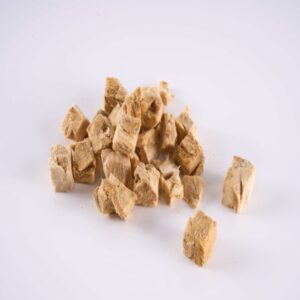
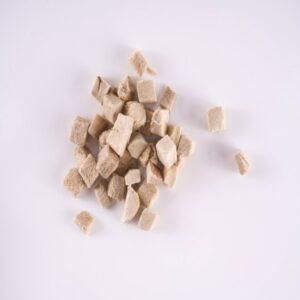
Freeze-dried cubes, flakes, and small bites support a premium, meat-first position. They are well suited to specialty retail, e-commerce, and limited-ingredient concepts. Buyers should pay close attention to piece size, breakage, moisture control, oxygen-barrier packaging, and the consistency of the protein supply.
Crunchy Cat Biscuits
Crunchy biscuits offer flexible shapes, flavors, colors, and pack sizes. They can work well in grocery, pet retail, and value-to-premium ranges. Key decisions include hardness, crumb control, calorie density, shape recognition, and whether the recipe will include grains, catnip, taurine, or other permitted ingredients.
Dental and Functional Sticks
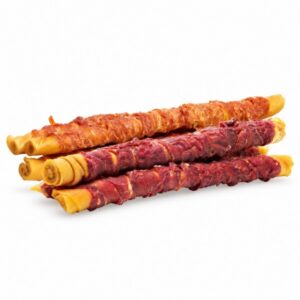
Dental-style sticks can combine a distinctive shape with ingredients associated with everyday care. Texture must be developed specifically for cats rather than copied from dog chews. Any function-related wording should be reviewed carefully so marketing language does not become an unapproved disease or drug claim.
Soft or Chewy Treats
Soft bites are convenient for portioning and may be attractive for indoor, adult, or senior-cat positioning. During development, evaluate water activity, softness over shelf life, residue in the pouch, and whether the texture remains consistent in different climates.
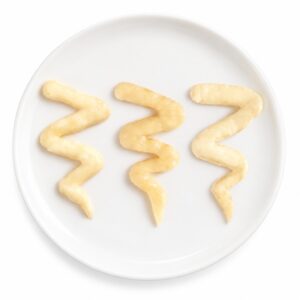
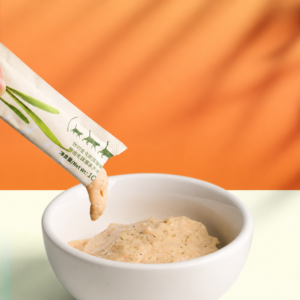
Lickable Cat Snacks
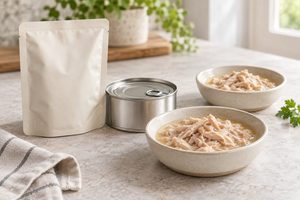
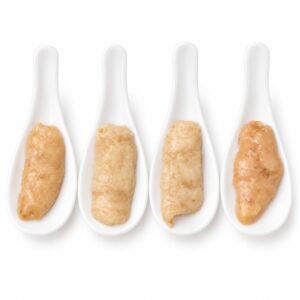
Single-serve creamy sachets create a strong bonding occasion and are easy to merchandise in multipacks. The OEM discussion should cover viscosity, flow from the tube, protein source, pack integrity, thermal processing, serving size, carton configuration, and storage conditions.
| Product format | Strongest commercial position | Questions to confirm with the OEM |
|---|---|---|
| Freeze-dried bites | Premium, meat-first, limited ingredient | Protein origin, moisture, breakage, oxygen barrier |
| Crunchy biscuits | Everyday reward, broad retail | Hardness, crumbs, shape, formula flexibility |
| Dental or functional sticks | Differentiated daily-use treat | Texture, ingredient purpose, claim support |
| Soft chews | Portion control and palatability | Water activity, softness, hot-climate stability |
| Lickable sachets | Bonding, hydration-led positioning, multipacks | Viscosity, seal integrity, thermal process, carton count |
Build a Clear Product Brief for Your Cat Snack Manufacturer
A precise brief helps the factory recommend a realistic formula and provide a more accurate quotation. Before requesting samples, define the following:
- Target market and country of sale
- Sales channel, such as Amazon, pet specialty, grocery, or veterinary retail
- Intended consumer position: value, mainstream, premium, or super-premium
- Product format, piece size, texture, and feeding occasion
- Preferred protein and ingredients to include or avoid
- Desired claims, such as limited ingredient, grain-free, or no artificial colors
- Target pack size and packaging format
- Estimated first order and 12-month volume
- Target landed cost or target retail price
- Launch date and required delivery destination
Do not rely on a competitor photo alone. Two products that look similar may have different moisture levels, ingredient ratios, processing conditions, shelf lives, and landed costs. A useful benchmark should explain what you want to match and what you want to improve.
Formulation: Balance Palatability, Positioning, and Production Reality
Cats can be highly selective about aroma, texture, and mouthfeel. A formula that looks attractive on a spreadsheet still has to perform in real feeding situations and remain stable through production, packing, storage, and transportation.
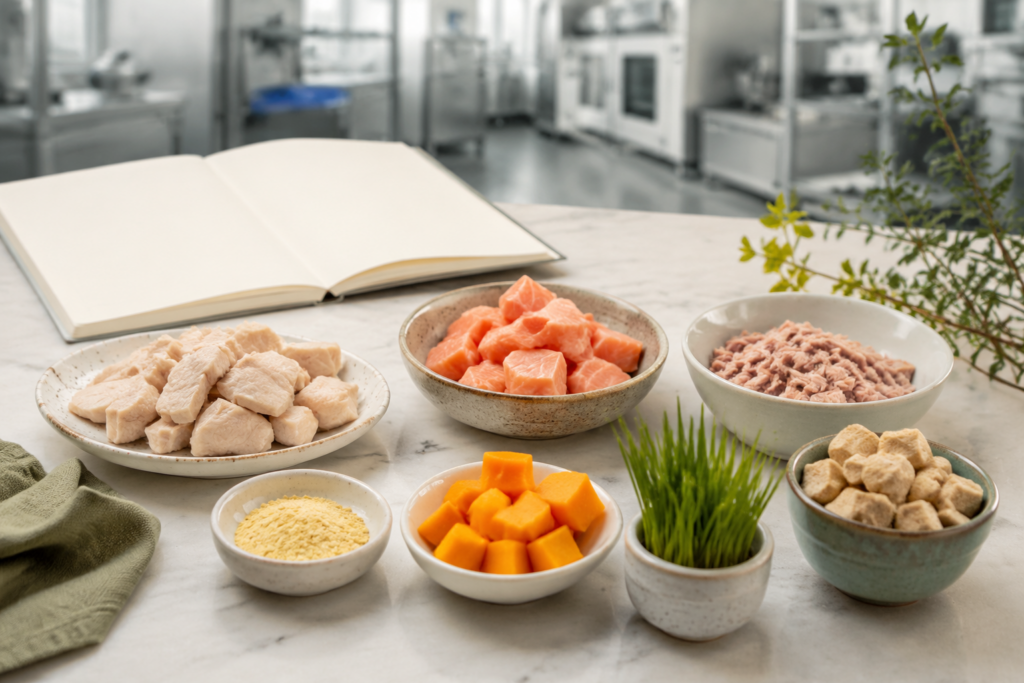
During formulation, review five areas.
1. Protein Strategy
Chicken, tuna, salmon, duck, beef, and other proteins each create a different cost and brand position. Confirm whether the protein will be the main ingredient, a flavor component, or part of a blend. If the product name emphasizes an ingredient, the final wording must match the applicable naming and labeling rules.
2. Ingredient Simplicity
Limited-ingredient concepts can be commercially attractive, but every ingredient still has a technical purpose. Removing binders, antioxidants, humectants, or texture-supporting ingredients without reformulation may affect stability and consistency. Ask the OEM to explain what each ingredient contributes.
3. Palatability
Evaluate more than whether one cat eats the first sample. Compare aroma, first choice, consumption, repeat acceptance, and performance across several cats when possible. A structured comparison between prototypes is more useful than a simple pass-or-fail reaction.
4. Physical Performance
Measure piece dimensions, weight variation, hardness, crumbs, breakage, color, odor, and pouch residue. For lickable products, include viscosity and ease of dispensing. These details influence reviews, returns, and the customer’s perception of quality.
5. Shelf-Life Design
Shelf life depends on the formula, process, water activity, packaging barrier, seal quality, and storage conditions. Confirm which tests support the proposed shelf life and whether the product needs accelerated or real-time stability work before launch.
U.S. Labeling: Plan Compliance Before Artwork Approval
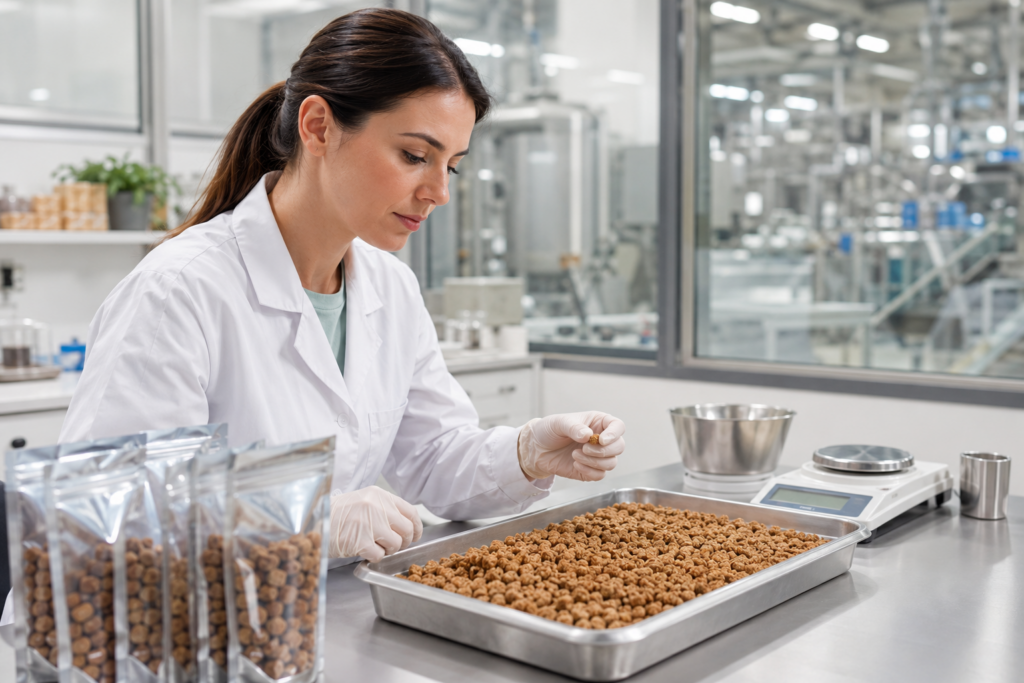
For products sold in the United States, treats and snacks are regulated as animal food. According to the FDA’s pet food overview, labels generally need proper product identification, a net quantity statement, the name and place of business of the manufacturer or distributor, and an ingredient list in descending order by weight. State-level requirements may also apply.
The Association of American Feed Control Officials explains that a treat not intended as a complete and balanced diet should conspicuously display “snack” or “treat” on the principal display panel. Product names and ingredient statements also need to follow applicable naming conventions.
Marketing claims require equal care. The FDA notes that expressed or implied claims to cure, treat, prevent, or mitigate disease can cause a product to be considered an animal drug. For that reason, do not approve terms such as “treats kidney disease” or “prevents urinary infections” simply because a functional ingredient is included.
Your OEM partner can provide formula data, specifications, test information, and packaging coordination, but the brand owner or importer should arrange a final regulatory review for the intended market before printing commercial packaging.
A Practical Cat Snack OEM Development Process
A well-managed project normally moves through the following stages:
- Concept and feasibility: Share the market, format, ingredient preferences, target price, volume, and launch date.
- Product selection: Compare stock formulas, customized options, processing methods, and packaging formats.
- Quotation and project scope: Confirm what is included in the price, which costs are one-time, and what may change with raw-material or packaging choices.
- Sample development: Produce prototypes and record each version so feedback is specific and traceable.
- Sample evaluation: Review palatability, appearance, texture, dimensions, pack compatibility, and expected shelf life.
- Formula and specification approval: Lock the agreed recipe, quality tolerances, packaging configuration, and testing plan.
- Artwork and label review: Place final regulatory content into the correct dieline and check barcodes, seals, date coding, and carton marks.
- Pilot or first production: Confirm the commercial process can reproduce the approved sample.
- Quality inspection and release: Review batch records, finished-product results, packaging checks, and shipment documents.
- Shipping and post-launch review: Monitor transport condition, customer feedback, returns, and reorder timing.
Simple projects may use an existing formula and move quickly. Highly customized products may need several sample rounds. At Matchwell, custom samples can generally be prepared in about seven days after a feasible development brief is confirmed. Standard production lead time is generally around 15–20 days after formula, packaging, and order details are approved; timing varies by product and packaging.
How to Evaluate Quality Control Before Placing an Order
Certificates are useful, but buyers should also understand how the factory controls the actual product. Ask for a quality plan that covers:
- Approved raw-material suppliers and incoming inspection
- Batch identification and traceability
- Allergen and foreign-material controls
- In-process checks for time, temperature, moisture, weight, and dimensions
- Microbiological, chemical, and physical testing as applicable
- Packaging seal and leak checks
- Metal detection or other foreign-body controls where relevant
- Retained samples and complaint investigation
- Finished-product release authorization
- Recall and corrective-action procedures
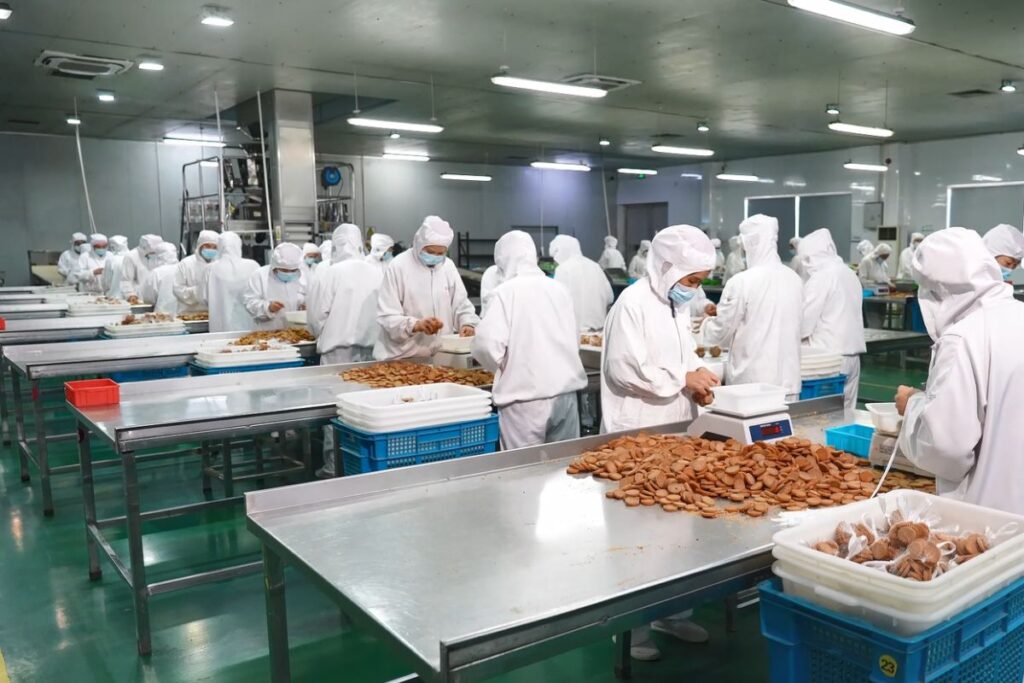
Matchwell supports OEM and ODM pet treat production with BRC, IFS, and FSSC 22000 certifications, a triple inspection process, and third-party testing collaboration. Buyers should still request the certificates, specifications, and reports relevant to their exact SKU and destination market rather than assuming one document covers every product.
Packaging Decisions That Affect Cost and Shelf Performance
Packaging is not only a design choice. It protects aroma, texture, and appearance while influencing minimum order quantity, freight efficiency, retail display, and customer convenience.
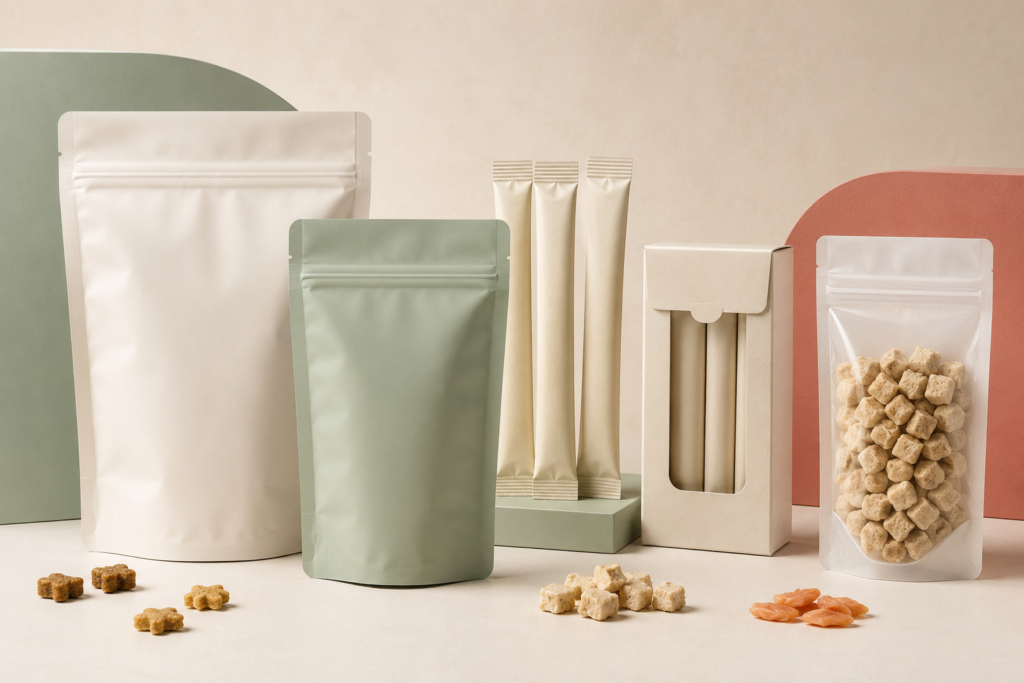
Common options include:
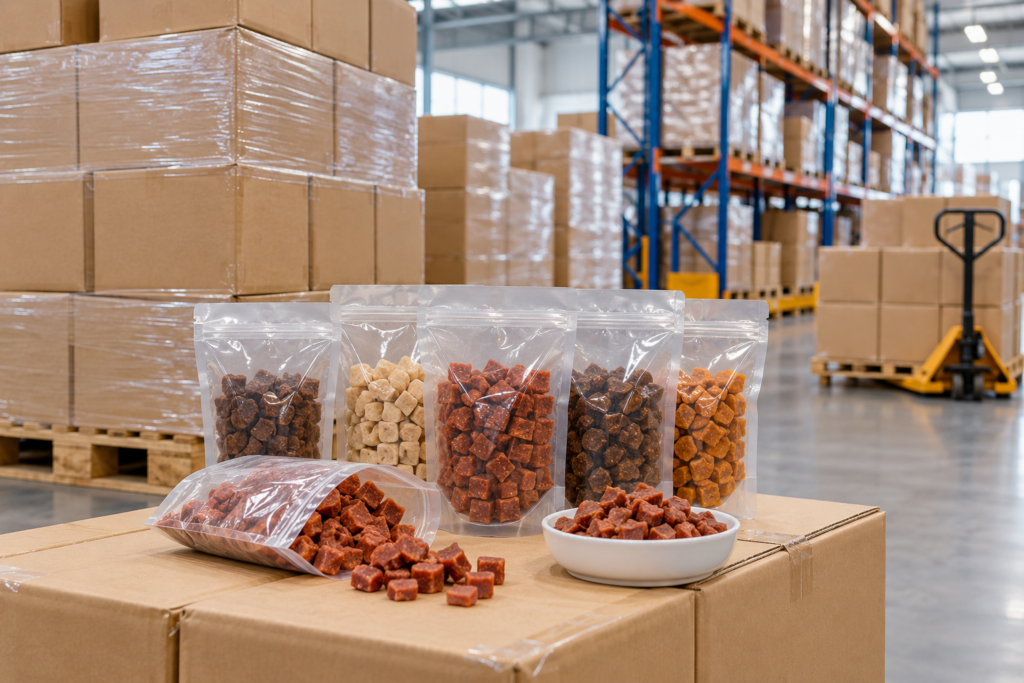
- Resealable stand-up pouches for dry treats
- High-barrier pouches for freeze-dried products
- Clear-window pouches when product appearance is a selling point
- Single-serve sachets and multipack cartons for lickable snacks
- Retail display boxes for counter or shelf presentation
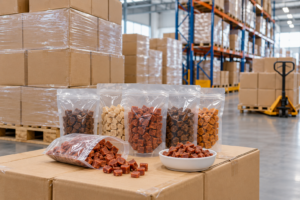
- Bulk bags for repacking or foodservice-style channels where permitted
Confirm the film structure, oxygen and moisture barrier, zipper performance, print method, pouch dimensions, fill weight, case count, pallet pattern, and date-code position before approving artwork. A larger pouch may look more substantial, but excess headspace can increase materials and shipping cost and may make the product look underfilled.
For a first launch, consider using one packaging structure across several flavors. This may simplify artwork, purchasing, case packing, and inventory planning while allowing consumers to compare the range easily.
Understand MOQ and Total Landed Cost
The lowest factory price does not always create the best margin. Build a landed-cost model that includes:
- Product cost
- Printed packaging and cartons
- Sampling and product-development fees
- Testing and documentation
- Inspection
- Freight and insurance
- Import duties, permits, brokerage, and port charges
- Warehousing, labeling, and fulfillment
- Expected damage, breakage, or promotional units
Matchwell’s private label pet treat MOQ can start from 500 kg, depending on the product category, formula, packaging, and degree of customization. Ask whether the MOQ applies per formula, per flavor, per package design, or per production run. Packaging suppliers may have a separate print MOQ that is higher than the food production requirement.
For U.S. imports containing animal-origin materials, confirm admissibility before ordering. The FDA advises that USDA APHIS permits are generally required for certain animal food products or ingredients from countries affected by specified livestock diseases. Requirements depend on the material, processing, and country of origin, so the importer should verify the exact shipment rather than relying on a general assumption.
Questions to Ask a Cat Snack OEM Manufacturer
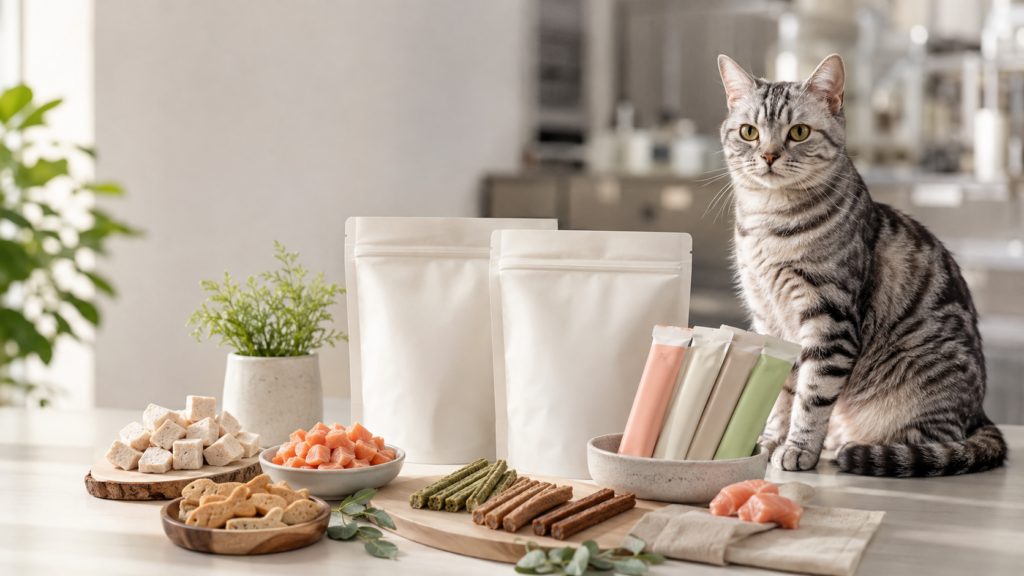
Before selecting a partner, ask these questions:
- Which cat snack formats are produced in-house?
- Which parts of the process are subcontracted?
- What is the MOQ for the food, printed pouch, and carton?
- Can the factory customize the recipe, piece size, texture, and pack size?
- How are samples documented and matched during mass production?
- Which certifications apply to the manufacturing site?
- Which tests are included, and which require an additional fee?
- Can the factory provide specifications, certificates of analysis, and traceability records?
- What is the standard lead time after artwork and formula approval?
- What export experience does the team have with the destination market?
- How are complaints, nonconforming goods, and recalls handled?
- What information does the buyer need to provide before receiving a firm quotation?
Clear answers at the beginning reduce delays and make supplier comparisons more meaningful.
Why Work With Matchwell for Cat Snack OEM Manufacturing?
Matchwell helps pet brands, retailers, e-commerce sellers, and distributors develop private label cat treats for international markets. Available support includes OEM and ODM manufacturing, recipe customization, product sampling, private packaging coordination, quality inspection, and worldwide shipment.
Product options include freeze-dried cat snacks, crunchy biscuits, dental-style sticks, soft formats, and other customized treat concepts. Projects can be developed around different proteins, ingredient preferences, pack sizes, and channel requirements.
Matchwell’s key manufacturing advantages include:
- BRC, IFS, and FSSC 22000 food-safety certifications
- 31 national patents
- A triple inspection process covering raw materials, production, and finished products
- Third-party testing collaboration with organizations such as SGS and Intertek
- Custom samples generally available in approximately seven days after feasibility confirmation
- MOQ starting from 500 kg for eligible projects
- Standard production lead time of approximately 15–20 days after final confirmation
- Export experience serving North America, Europe, Australia, Asia, and the Middle East
Final specifications, MOQ, sample timing, and production lead time depend on the formula, process, packaging, test requirements, and order size.
Start Your Cat Snack OEM Project
A successful private label cat treat begins with a commercial brief, not just a flavor. Define who will buy the product, where it will be sold, how it should be positioned, and what cost structure the business can support. Then use samples, specifications, quality records, and packaging tests to turn that concept into a repeatable product.
If you are planning a new cat treat range or expanding an existing brand, contact Matchwell Pets to discuss your target market, preferred format, ingredients, packaging, estimated volume, and launch schedule. Our team can recommend a suitable OEM or ODM route and prepare samples for evaluation.
Frequently Asked Questions
What is cat snack OEM manufacturing?
Cat snack OEM manufacturing means a specialized factory produces cat treats for another company to sell under its own brand. The project may use a stock formula, a modified recipe, or a customized product specification.
What is the minimum order quantity for private label cat snacks?
Matchwell’s MOQ can start from 500 kg, depending on the product format, recipe, packaging, and customization level. Confirm whether the minimum applies to each flavor and package design.
How long does cat treat sampling take?
Custom samples can generally be prepared in approximately seven days after the product brief and feasible formula are confirmed. More complex development may require additional rounds.
Can I customize ingredients and packaging?
Yes. Depending on technical feasibility and order volume, buyers can customize proteins, selected ingredients, texture, piece size, flavor, pack size, packaging structure, artwork, and retail cartons.
Can an OEM manufacturer guarantee that my label is compliant in the United States?
The manufacturer can provide formula, specification, and test data and can coordinate the packaging dieline. The brand owner or importer should arrange a final regulatory review for federal and applicable state requirements before printing and selling the product.
What should I send when requesting a quotation?
Send the target country, product format, preferred ingredients, claims, pack size, estimated first order, annual volume, sales channel, delivery destination, target price, and desired launch date. This information helps the OEM recommend a feasible product and quote accurately.