
Private Label Dog Treats Manufacturers: A Buyer’s Guide
Choosing between private label dog treats manufacturers involves more than comparing a catalog and a price per kilogram. Your manufacturing partner influences product consistency, packaging performance, inventory planning, and the experience customers associate with your brand.
For pet brands, distributors, and retailers, the goal is straightforward: source a treat that fits your market, arrives to an agreed specification, and can be reordered with confidence. This guide explains what to check before requesting samples, how to compare quotes, and what to include in a useful manufacturing brief.
Already have a product concept? Contact Matchwell Pets with your target market, preferred treat format, packaging requirements, and estimated order quantity to discuss suitable options.
What Do Private Label Dog Treats Manufacturers Do?
Private label dog treats manufacturers produce treats that another business sells under its own brand. Depending on the supplier and project, the service may include an existing recipe, product modifications, custom development, and branded packaging.
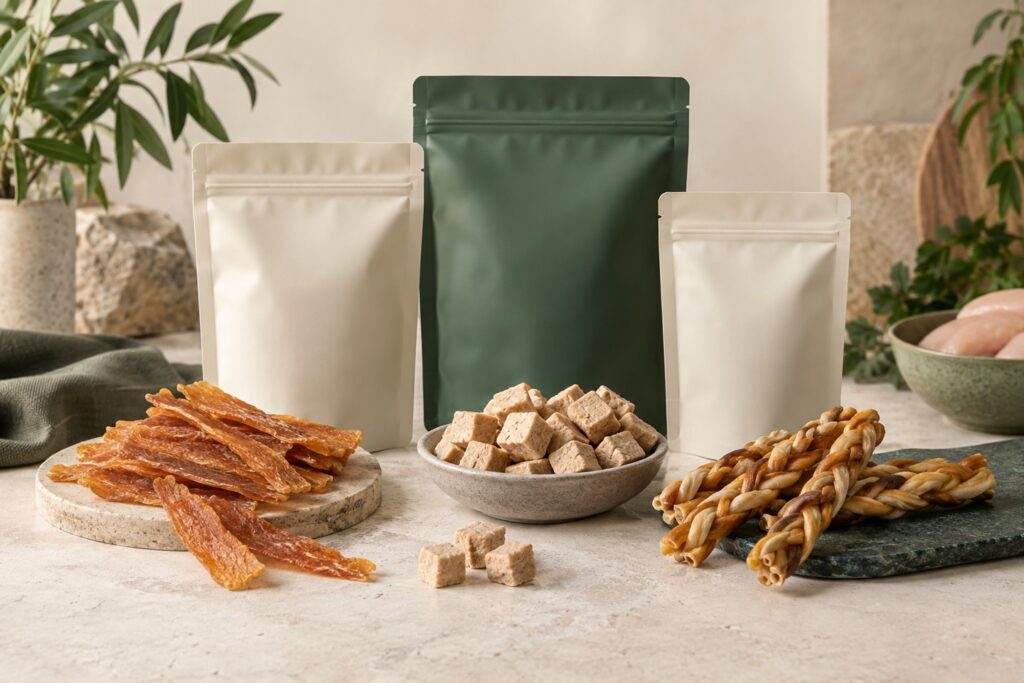
The terms private label, white label, OEM, and ODM are sometimes used differently by suppliers. Ask what is included instead of relying on the label alone.
| Manufacturing approach | Typical starting point | What to clarify |
|---|---|---|
| Existing product with your branding | A supplier’s established treat specification | Available packaging, order minimums, and whether competitors can buy the same product |
| Modified product | An existing treat with agreed changes | Which ingredients, dimensions, textures, or pack sizes can change |
| Custom development | A detailed brand brief or proposed specification | Development fees, testing, ownership, exclusivity, and approval stages |
A custom bag does not automatically mean an exclusive recipe. If exclusivity matters to your brand, define its scope in the supply agreement.
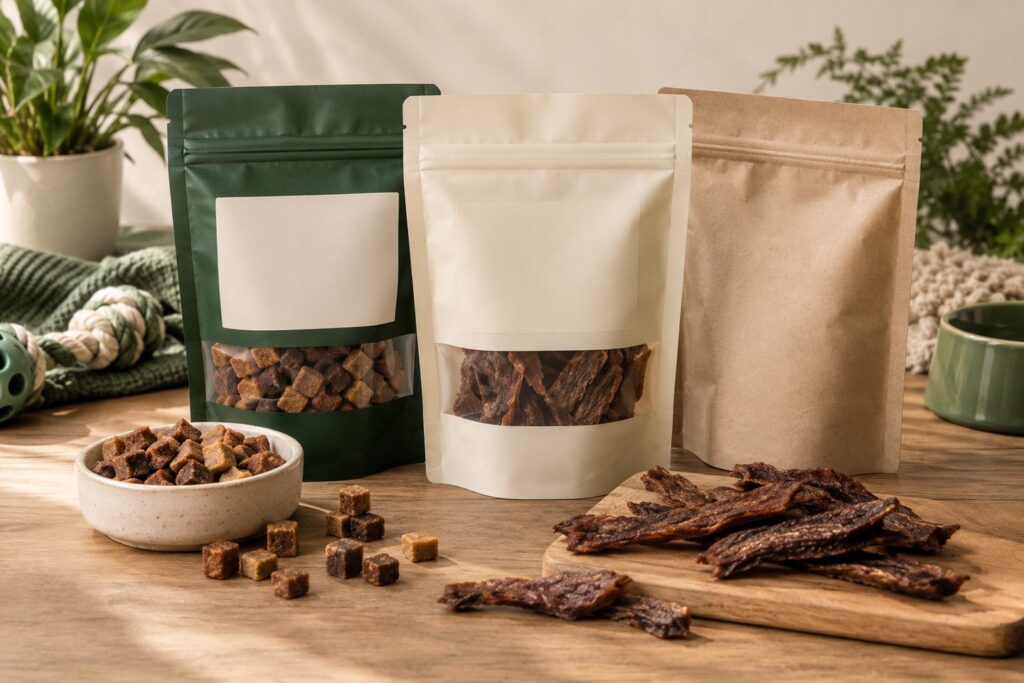
Start with a Clear Product Brief
Before asking for a price list, decide who will buy the product and why. A small training reward for everyday use has different requirements from a larger chew sold individually at a specialty pet store.
Give prospective suppliers a short brief covering:
- Target market and channel: destination country, specialty retail, distribution, or e-commerce.
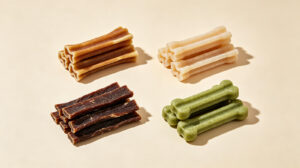
- Product format: training bites, jerky, freeze-dried pieces, or chews.
- Ingredient preferences: preferred proteins, ingredients to avoid, and any proposed claims.
- Physical specification: approximate dimensions, piece weight, texture, and acceptable variation.
- Packaging: net weight or piece count, pouch style, and units per case.
- Commercial targets: first-order volume, expected reorders, launch date, and target cost.
Be specific about priorities. If staying within a target retail price matters more than a custom shape, say so. That gives the supplier room to propose a commercially practical option.
Choose a Treat Format That Fits Your Brand
A focused launch range is easier to evaluate and replenish than a large collection of unrelated products. Compare formats against the use occasion and the quality checks each requires.
| Treat format | Possible role in your range | Questions for the manufacturer |
|---|---|---|
| Training treats | Small rewards for frequent use | How consistent are piece size, texture, and calories per piece? |
| Chicken or duck jerky | A recognizable meat-based snack | What are the ingredient composition, thickness tolerance, and finished texture? |
| Freeze-dried treats | A distinct texture and ingredient-led product story | How are breakage, moisture exposure, and packaging protection evaluated? |
| Chews and meat-wrapped sticks | A size-based range for different dogs | What dimensions, weight ranges, and feeding guidance apply? |
| Limited-ingredient treats | A simpler ingredient proposition | What is the complete formula, and how is cross-contact managed? |
These are product-planning options, not a guarantee that every supplier offers every format. Ask for current specifications before choosing your range.
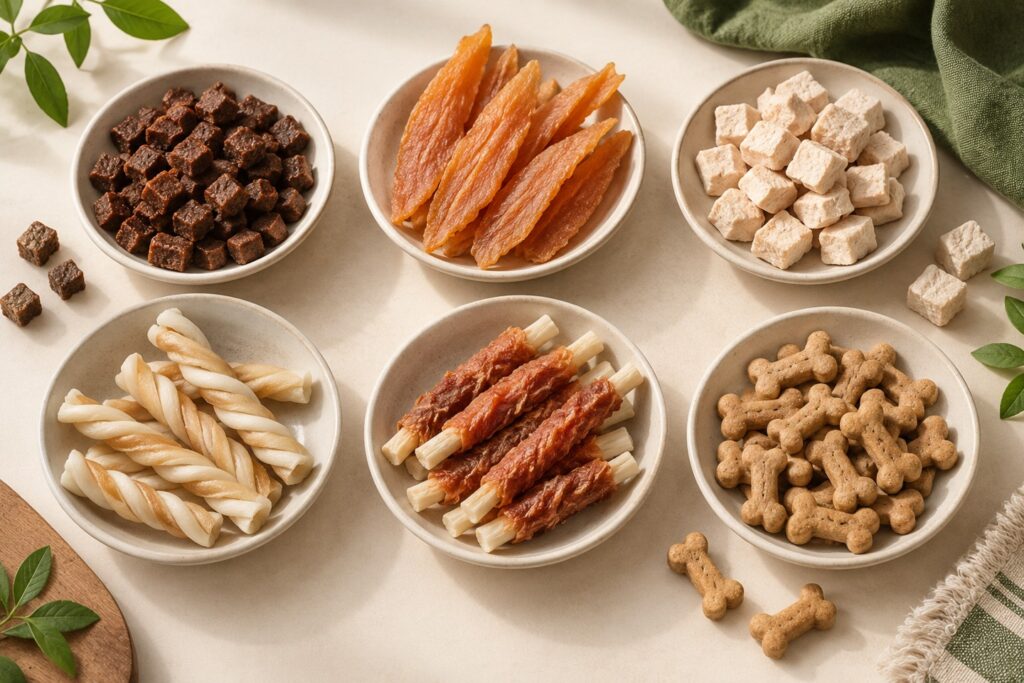
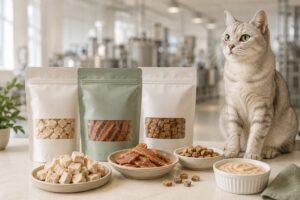
Explore Matchwell’s chicken and duck jerky dog treats as a starting point for a product discussion. For ingredient-focused positioning, read our guide to limited-ingredient dog treats.
Seven Checks Before You Select a Manufacturing Partner
1. Confirm Who Makes the Product
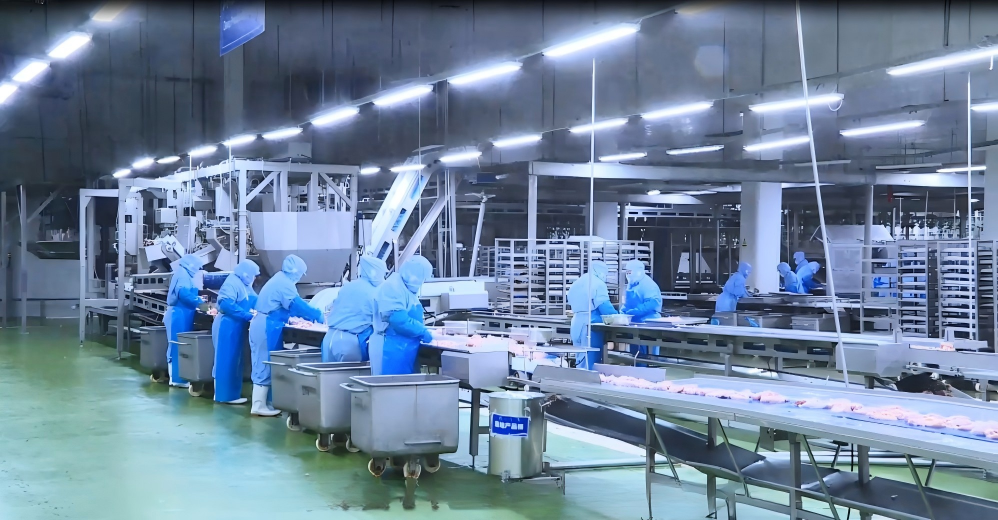
Identify the legal supplier, the manufacturing site, and any subcontracted steps. Ask which facility will produce your selected SKU and whether that facility can be assessed before you commit.
This helps you connect the sample, the quotation, and the quality documents to the same production source.
2. Agree on a Written Product Specification
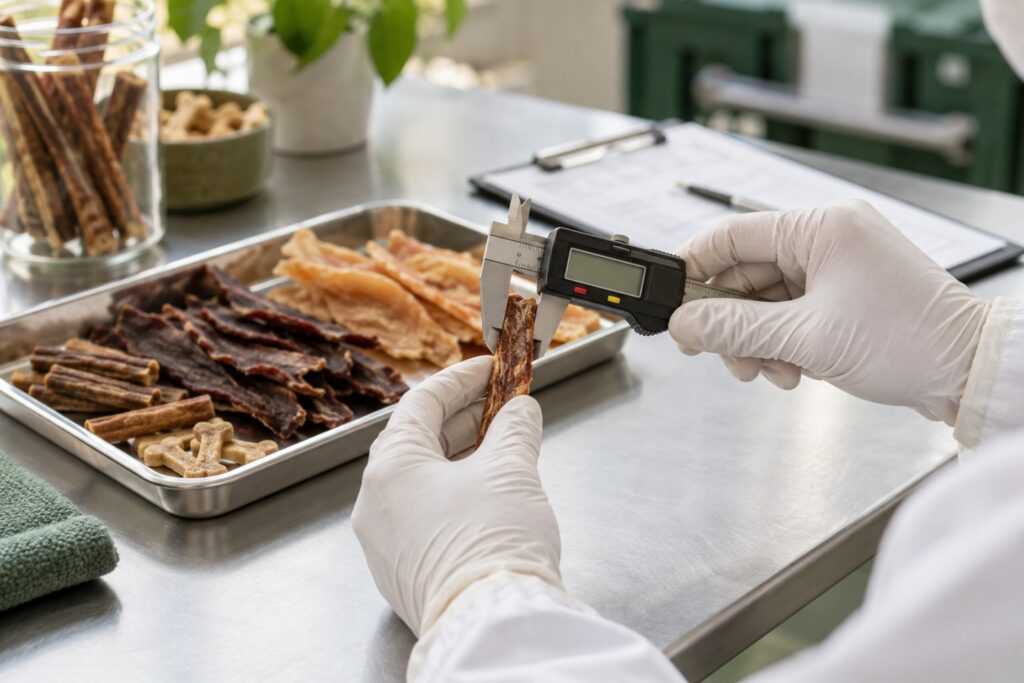
A photograph cannot define a finished product. Request an ingredient list, analytical information, dimensions, piece-weight tolerances, packaging details, and storage instructions.
For treats made from variable natural materials, agree on an acceptable range of color and shape. Keep an approved reference sample and record the specification version. Both parties should know what constitutes an acceptable production batch.
3. Review Quality Evidence
Ask how incoming materials are checked, how production controls are recorded, and how finished batches are released. Request relevant test information, lot-traceability details, and the procedure for investigating a complaint.
Where a supplier presents certification, check the named facility, scope, issuer, and validity. A logo on a brochure is only a starting point for verification.
Also establish how recipe, ingredient-source, or process changes will be communicated. A reorder should not introduce a material change that your team discovers after delivery.
4. Clarify Every Minimum Order Quantity
The minimum order quantity may apply per recipe, protein, size, SKU, or packaging design. Ask for these minimums separately.
For example, a hypothetical 500 kg production run packed into 100 g bags would equal 5,000 bags before filling losses or overfill. That calculation helps translate a factory MOQ into inventory your business must sell. It is not a Matchwell quotation.
Check whether printed packaging carries its own minimum and who owns any unused packaging stock. A small product order can still create a larger cash commitment if bags or labels must be purchased in advance.
5. Evaluate Packaging Alongside the Treat
Packaging influences presentation, protection, and handling. Review the proposed material, seal quality, closure, pouch dimensions, and shipping case before approving artwork.
Ask for shelf-life evidence relevant to the actual product and packaging combination. A shelf-life statement for a different bag or recipe should not be treated as proof for your SKU.
For online sales, assess parcel handling and presentation after transit. For retail, consider how the bag stands or hangs and how clearly shoppers can identify the format and net quantity.
6. Build a Complete Launch Schedule
Separate the schedule into sample preparation, revisions, artwork approval, packaging procurement, production, inspection, and transport. Ask which milestone starts the quoted production lead time.
A factory completion date is different from a warehouse arrival date. Confirm responsibilities for each stage and leave room for sample or artwork revisions before committing to a launch campaign.
7. Check Destination-Specific Requirements Early
Ask which product and shipment documents the supplier can provide for your destination. Have your importer or local reviewer confirm the applicable product, labeling, and entry requirements before you approve final artwork or production.
Keep any proposed claims tied to evidence for the actual product. Do not assume that a recipe, package, or claim used in one market is automatically suitable for another.
How to Compare Private Label Dog Treat Quotes
Request quotes against the same brief. A lower price may reflect different ingredients, piece sizes, packaging, testing, or shipment terms.
| Quote item | What a useful comparison should show |
|---|---|
| Product | Recipe or specification reference, dimensions, and tolerances |
| Order quantity | Minimum per SKU and pricing at your intended volume |
| Packaging | Bag type, net weight, printing, and case configuration |
| Development | Sample, revision, tooling, or setup charges where applicable |
| Quality checks | Included testing and any additional inspection costs |
| Shipment | Named delivery term, location, and what transport is included |
| Timing | Approval dependencies and estimated production readiness |
| Payment | Deposit, balance timing, currency, and quote validity |
Compare cost per sellable bag as well as cost per kilogram. Build your own estimate of delivered inventory cost using the product, packaging, freight, handling, and applicable import charges. Treat uncertain costs as estimates until confirmed.
How to Evaluate Samples Before Placing an Order
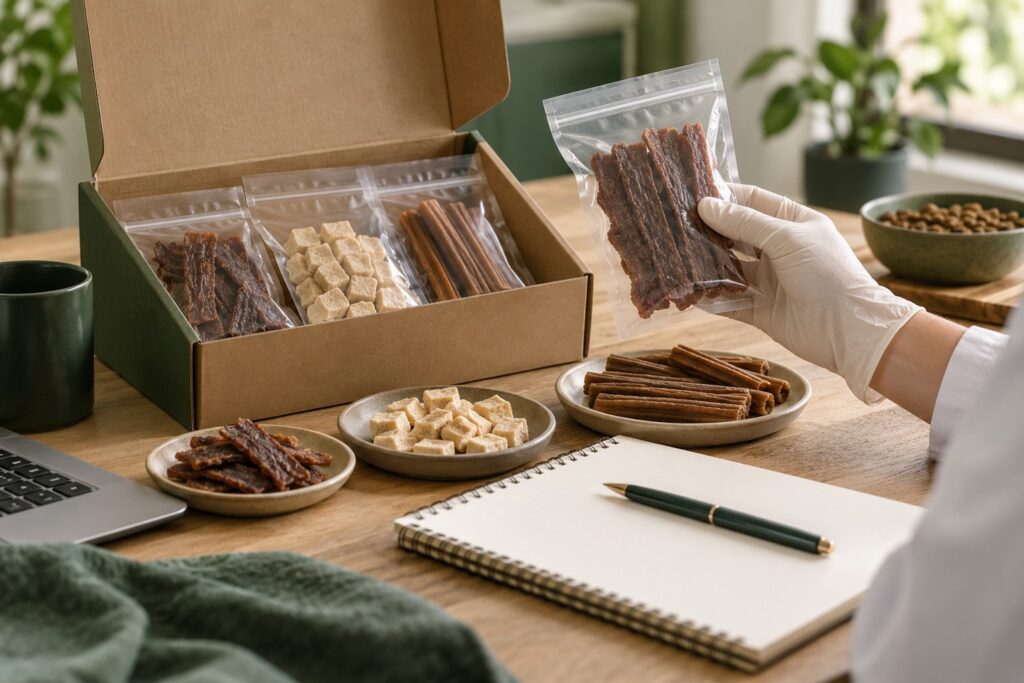
Use a repeatable checklist across suppliers. Record appearance, odor, piece size, texture, breakage, and package condition. Compare each sample with its written specification and photograph it under consistent lighting.
Where appropriate, arrange a structured acceptance assessment for the intended dogs and use occasion. One dog accepting one sample does not establish broad product preference.
Find out whether the sample is a stock item, a development sample, or representative of the proposed production process. If the final package differs from the sample bag, evaluate that package separately.
Before approval, document any requested changes and confirm that the supplier has accepted them. Retain an agreed sample and specification for later batch comparisons.
Discuss Your Private Label Dog Treat Project with Matchwell Pets
Your first inquiry should help narrow the options. Matchwell Pets’ product website is a starting point for exploring its pet product range; contact the team to confirm the current options for your brand and destination.
For a more useful response, send:
- Your company name, website, and destination country.
- The treat formats and proteins you want to explore.
- Desired bag weight or piece count and packaging style.
- Estimated quantity per SKU and expected reorder needs.
- Your target launch date and any required product documents.
Ask the team to confirm suitable products, sample availability, MOQ by SKU, packaging options, and the information needed for a formal quote.
Request Product Options and a Private Label Quote
You can start with a brief message: “We are sourcing private label dog treats for our brand in [country]. We are interested in [format/protein], packed in [bag size], with an initial order of approximately [quantity] per SKU. Please share suitable options, specifications, sample details, MOQ, and estimated lead time.”
Frequently Asked Questions
What is the minimum order for private label dog treats?
There is no single minimum across all manufacturers. MOQ depends on the product, recipe, dimensions, and packaging. Ask for the minimum per SKU and per printed packaging design, then confirm how those quantities translate into finished bags.
Can I use my own brand and packaging design?
Branded packaging is a central part of private labeling, but available formats and printing minimums vary. Request the supplier’s packaging specifications and artwork template before your designer prepares the final files.
Can a manufacturer develop a custom dog treat recipe?
Some manufacturers offer custom development, while others focus on established products. Confirm development scope, fees, testing, ownership, and whether the resulting formula is exclusive to your business.
What should I request before approving an order?
Request the agreed product specification, approved sample, packaging proof, commercial terms, and relevant quality documentation. Confirm how changes, out-of-specification goods, and complaints will be handled.
How long does private label production take?
Timing depends on sample approval, ingredients, packaging procurement, production capacity, and the agreed inspection process. Ask for a project schedule and confirm when the production lead-time clock begins.
How do I get a quote from Matchwell Pets?
Use the Matchwell contact page and include your target market, product type, protein preference, package size, and estimated quantity. These details help the team assess fit and clarify the next steps.