
The Complete Dog Treat Production Process: From Raw Materials to Packaging
How are dog treats produced on a commercial scale?
The answer depends on the product. Freeze-dried meat, soft training treats, chicken-wrapped chews and dental sticks require different ingredients, equipment and processing methods. However, professional dog treat manufacturers generally follow the same core system: product planning, formulation, raw material inspection, controlled processing, quality testing and protective packaging.
For pet brands, importers and distributors, understanding the dog treat production process makes it easier to evaluate suppliers, control product quality and develop private label products that meet market expectations.
This complete guide explains how commercial dog treats move from an initial concept to a finished product ready for shipment.
Dog Treat Production Process at a Glance
A typical commercial dog treat manufacturing process includes the following stages:
- Product concept and market positioning
- Formula development
- Prototype sampling
- Raw material sourcing
- Incoming material inspection
- Ingredient preparation
- Mixing and formulation control
- Shaping, cutting or wrapping
- Cooking, drying or freeze-drying
- Cooling and in-process inspection
- Metal detection and quality testing
- Weighing and packaging
- Finished-product inspection
- Warehousing and shipment
The precise workflow changes according to the product category, ingredients, packaging and destination market.
1. Defining the Dog Treat Concept
Production begins before any ingredients enter the factory.
The manufacturer first needs to understand what kind of product the customer wants to sell. This step determines the formula, equipment, processing method, packaging and expected production cost.
A complete product brief should identify:
- Target market and country
- Dog size and life stage
- Product category
- Preferred protein source
- Required texture
- Desired shape and dimensions
- Functional benefits
- Ingredients to include or avoid
- Target packaging size
- Estimated order quantity
- Target cost or retail positioning
- Competitor or reference products
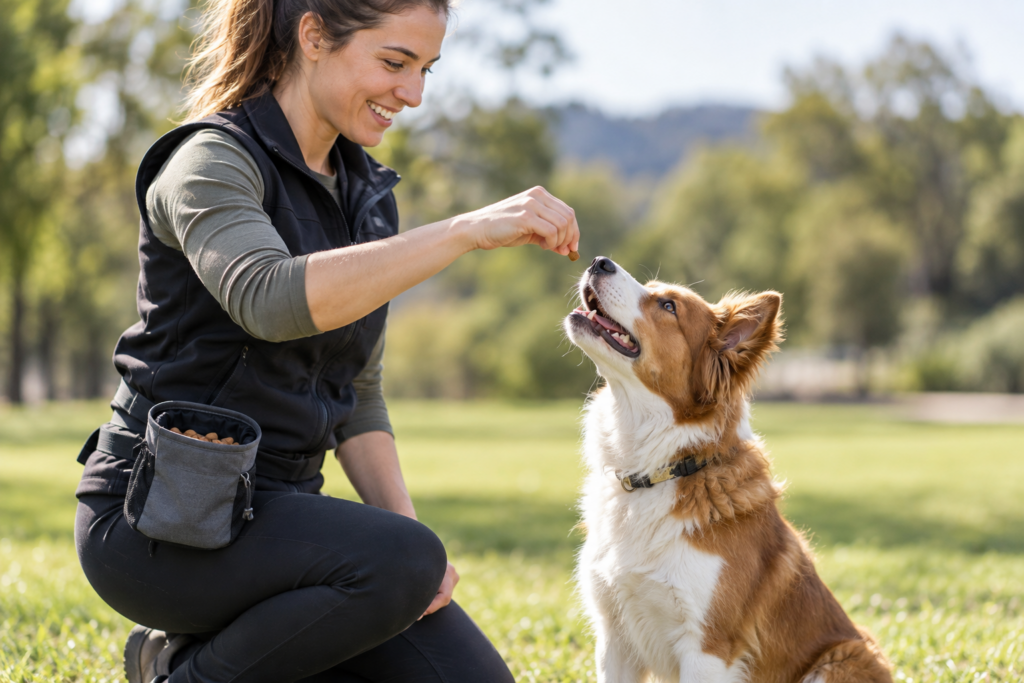
For example, a dog training treat should be small, convenient and easy to chew. A long-lasting chew must provide a more durable structure, while a freeze-dried treat should preserve the characteristics of the original meat and remain stable during transportation.
A clear product brief helps the dog treat manufacturer recommend a realistic development plan.
2. Formula Development
Once the concept is clear, the research and development team begins building the formula.
Dog treat formulation is not simply about combining ingredients. The manufacturer must balance palatability, nutrition, processing performance, shelf stability and cost.
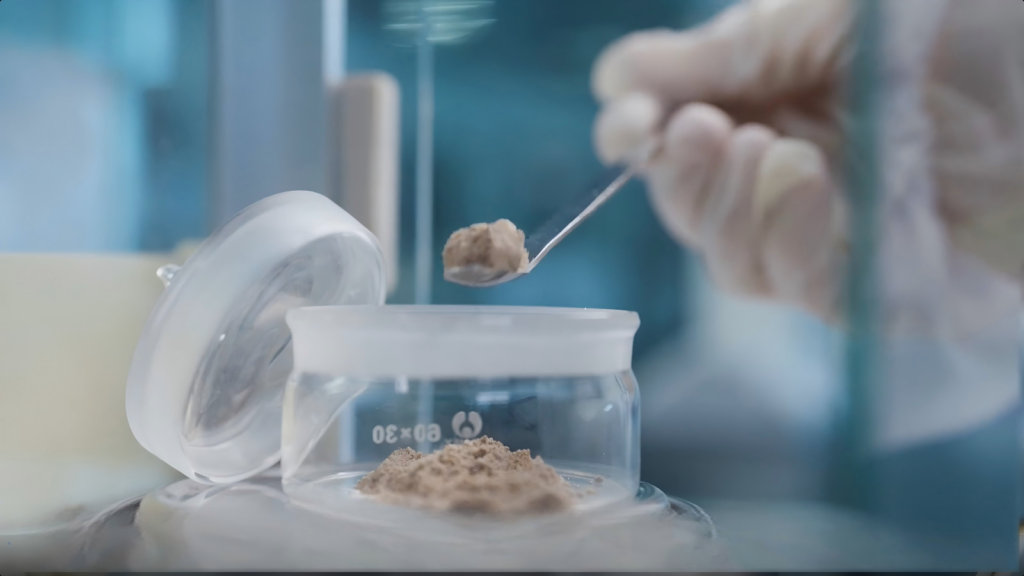
Protein selection
Common protein sources include:
- Chicken
- Duck
- Beef
- Turkey
- Rabbit
- Fish
- Lamb
- Mixed animal proteins
Protein selection affects flavor, texture, product positioning and price. It can also affect whether the treat is suitable for dogs with particular dietary sensitivities.
Supporting ingredients
Depending on the product, a formula may also contain:
- Starches
- Vegetable proteins
- Glycerin
- Dietary fiber
- Natural flavoring ingredients
- Vitamins and minerals
- Functional ingredients
- Antioxidants or permitted preservatives
Each ingredient has a purpose. Some contribute to flavor, while others help control texture, moisture, product structure or processing stability.
Processing feasibility
A formula that performs well in a small kitchen test may not behave the same way on commercial production equipment.
The R&D team must evaluate whether the formula can be mixed, shaped, dried and packaged consistently. If the product breaks easily, becomes sticky or dries unevenly, the formula or production conditions may need to be adjusted.
3. Prototype and Sample Development
Before commercial production, the manufacturer normally produces one or more samples.
Samples allow the customer to evaluate:
- Appearance
- Aroma
- Flavor concept
- Texture
- Hardness
- Product size
- Color
- Breakability
- Packaging format
- Overall market suitability
The first sample is not always the final version. Customers may request a softer texture, stronger meat aroma, different shape or smaller portion size.
The manufacturer may then adjust the formula or processing parameters and prepare a revised sample.
Matchwell can generally prepare custom samples in approximately seven days after the product specifications and development direction have been confirmed.
4. Raw Material Sourcing
After the formula is approved, the manufacturer prepares the required raw materials.
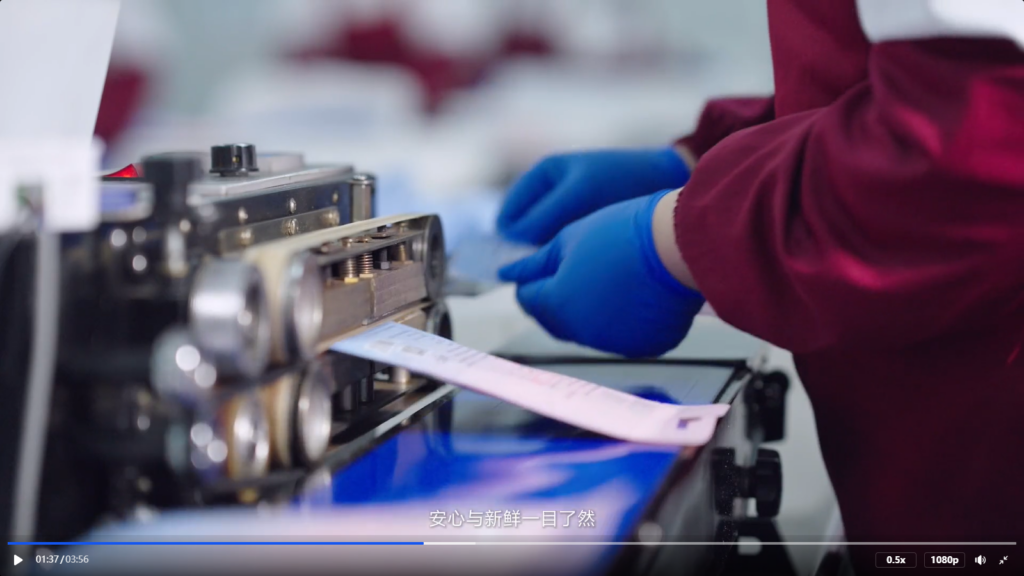
Reliable sourcing is essential because changes in meat quality, moisture, particle size or ingredient composition can affect the finished product.
A professional dog treat manufacturer should maintain an approved supplier system. Suppliers may be evaluated based on:
- Raw material specifications
- Food safety documentation
- Batch consistency
- Supply capacity
- Transportation conditions
- Traceability
- Compliance with purchasing requirements
The lowest-priced raw material is not always the most economical choice. Inconsistent ingredients can create production losses, unstable texture and customer complaints.
5. Incoming Raw Material Inspection
Raw materials should be inspected before they are released for production.
The exact inspection criteria depend on the ingredient, but manufacturers may check:
- Supplier and batch information
- Packaging integrity
- Appearance
- Color
- Odor
- Temperature
- Foreign materials
- Moisture or other technical specifications
- Storage and transportation conditions
- Required laboratory reports
Materials that do not meet the factory’s acceptance standards should be isolated and prevented from entering production.
Accurate batch records allow ingredients to be traced from the supplier through production and into the finished product.
6. Ingredient Storage and Preparation
Approved ingredients are stored under suitable conditions until production begins.
Different materials may require:
- Frozen storage
- Refrigerated storage
- Dry storage
- Humidity control
- Allergen separation
- Protected packaging
- First-in, first-out inventory management
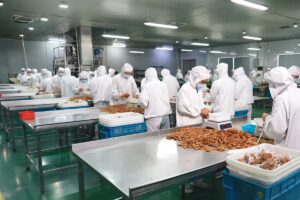
Before processing, frozen meat may need to be thawed under controlled conditions. Ingredients may then be trimmed, cut, ground, sieved or weighed according to the production formula.
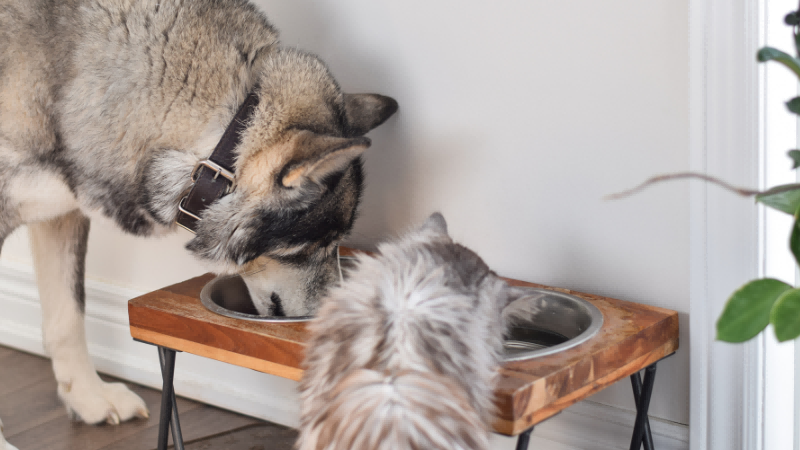
This preparation stage is important because inconsistent ingredient size can result in uneven mixing, shaping or drying.
7. Weighing and Batching
Every commercial formula should have a controlled production specification.
Ingredients are weighed according to the approved recipe and assigned batch. Accurate weighing helps the factory maintain consistent flavor, texture, appearance and nutritional composition.
During this stage, operators confirm:
- Ingredient identity
- Batch number
- Required quantity
- Production order
- Formula version
- Equipment cleanliness
- Allergen controls where applicable
Using the wrong formula version or ingredient quantity can affect the entire production batch. Clear records and verification procedures reduce this risk.
8. Mixing and Marinating
The prepared ingredients are transferred to the appropriate mixing equipment.
The purpose of mixing is to distribute meat, supporting ingredients and functional components evenly throughout the batch.
Depending on the product, the process may include:
- Grinding meat
- Blending dry ingredients
- Adding liquid ingredients
- Mixing proteins and binders
- Marinating meat pieces
- Controlling mixing time
- Checking mixture temperature
- Evaluating texture before forming
Overmixing or undermixing can influence the final product. An uneven mixture may create inconsistent color, texture, flavor or nutrient distribution.
For meat jerky and wrapped chews, marinating may be used to distribute the formula and achieve the required product characteristics before shaping or drying.
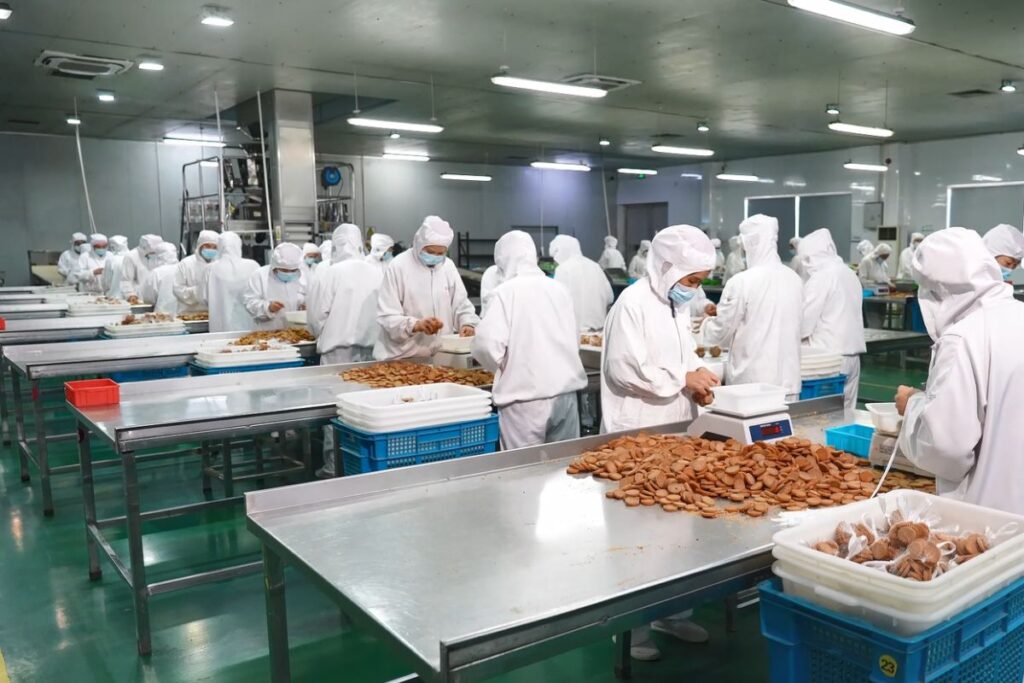
9. Forming, Cutting or Wrapping
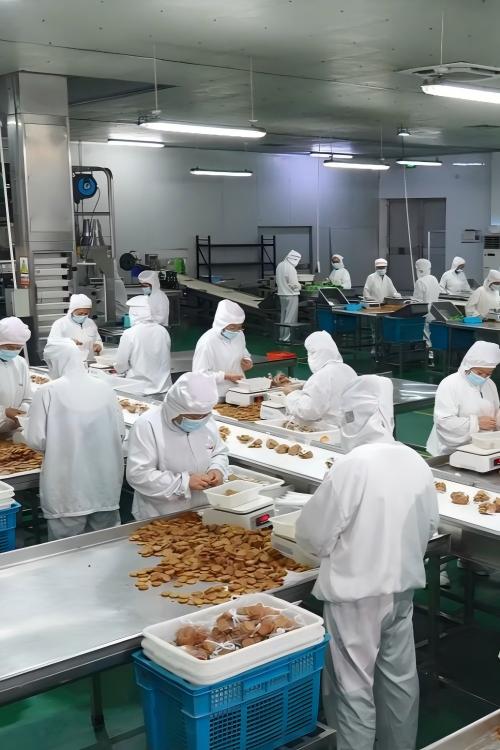
After mixing or marinating, the product is formed into its required shape.
The forming method depends on the dog treat category.
Meat jerky
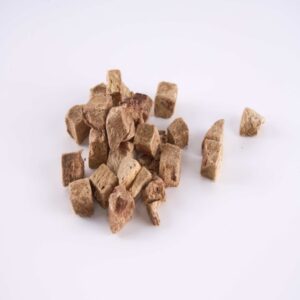
Meat may be sliced, cut into strips or formed into regular pieces before dehydration.
Training treats
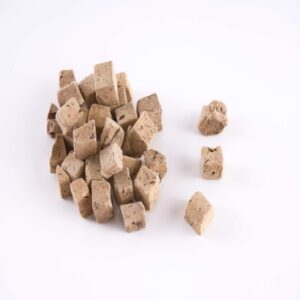
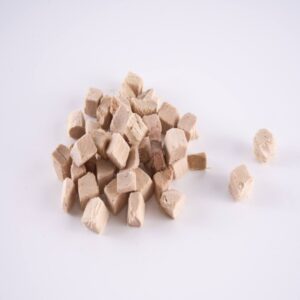
A prepared mixture may be extruded, deposited, cut or molded into small portions.
Chicken-wrapped chews
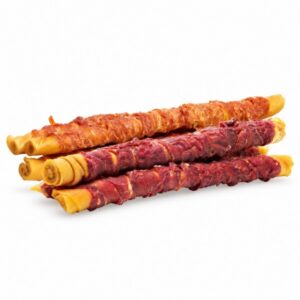
Chicken meat is wrapped around rawhide, collagen or another chew base according to the required size and meat coverage.
Dental treats
The mixture may be extruded or molded into ridged, stick-shaped or other structures designed to encourage chewing.
Biscuits
The dough is mixed, rolled, cut or molded before baking.
Size and weight controls are important at this stage. Large variations can affect drying time, packaging weight and customer experience.
10. Cooking, Dehydrating, Baking or Freeze-Drying
This is one of the most important stages in the dog treat production process.
The chosen method affects product safety, moisture, texture, flavor, appearance and shelf stability.
Dehydration
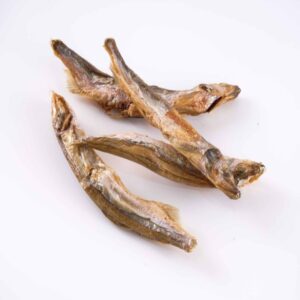
Dehydration removes moisture using controlled heat and airflow. It is commonly used for meat jerky, strips and wrapped chews.
Manufacturers must control:
- Product thickness
- Drying temperature
- Drying time
- Air circulation
- Moisture removal
- Final product texture
If drying is insufficient, the product may have poor stability. Excessive drying can make it too hard, brittle or unappealing.
Baking
Biscuits and certain formulated treats are baked under controlled conditions. The process creates the intended shape, texture and color while reducing moisture.
Cooking
Some soft treats and formed products may be cooked before or during drying. The specific process depends on the formula and equipment.
Freeze-drying
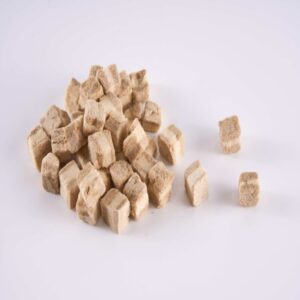
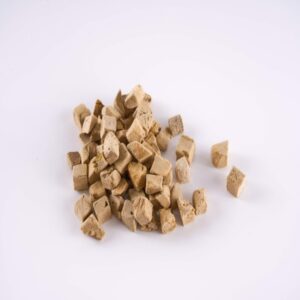
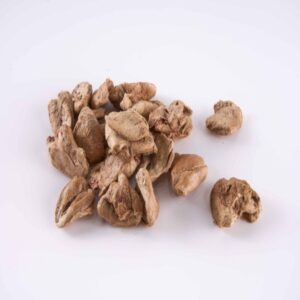
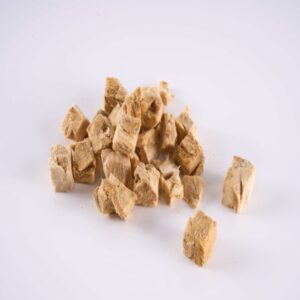
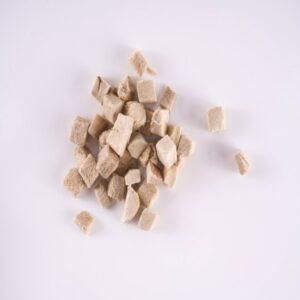
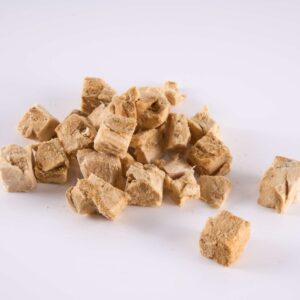
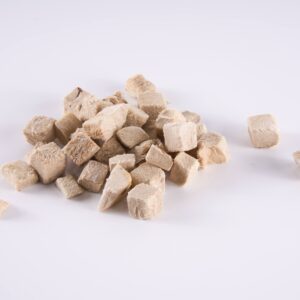
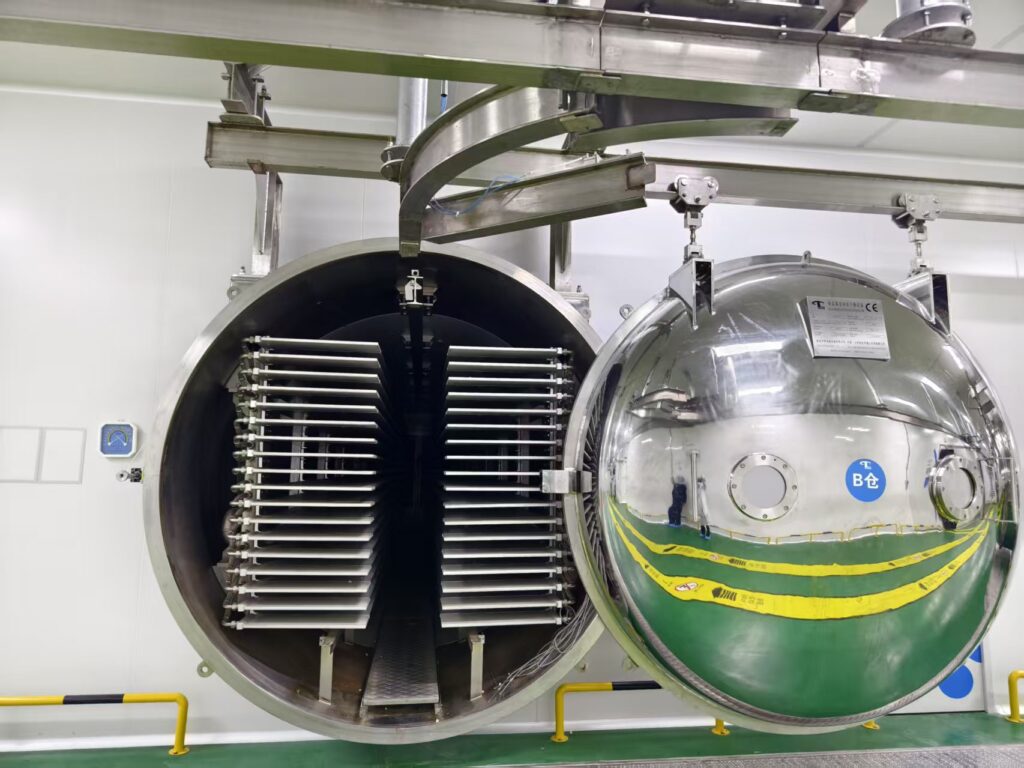
Freeze-drying removes moisture from frozen ingredients under vacuum. It is commonly used for meat and organ treats where brands want to preserve the original structure and natural characteristics of the ingredients.
The main steps normally include:
- Preparing and portioning the raw material
- Freezing the product
- Placing it in a freeze-drying chamber
- Removing moisture through sublimation
- Checking final moisture and product condition
- Transferring it quickly to protective packaging
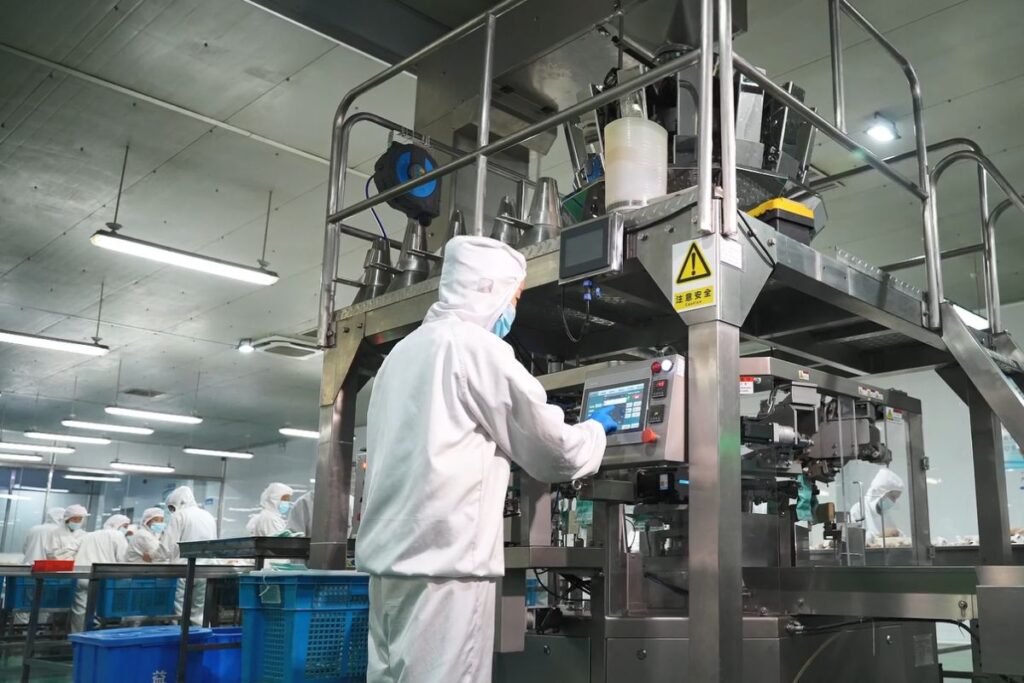
Freeze-dried products are lightweight and porous, but they require packaging with suitable moisture and oxygen protection.
11. Cooling and Product Conditioning
After heating or drying, dog treats must be cooled before packaging.
Packing a product while it is still too warm can create condensation inside the package. This may damage texture and reduce product stability.
During cooling, the manufacturer may check:
- Product temperature
- Surface condition
- Hardness
- Color
- Odor
- Moisture uniformity
- Signs of breakage or deformation
Some products may also require a conditioning period to allow moisture to become more evenly distributed throughout the treat.
The cooling environment should be managed carefully to prevent finished products from being exposed to unnecessary contamination.
12. In-Process Quality Control
Quality control does not begin at the end of production. It should take place throughout the manufacturing process.
In-process inspections may include:
- Ingredient verification
- Batch weight checks
- Product size and thickness
- Appearance and color
- Processing time
- Equipment settings
- Moisture level
- Texture and hardness
- Product temperature
- Packaging weight
- Seal quality
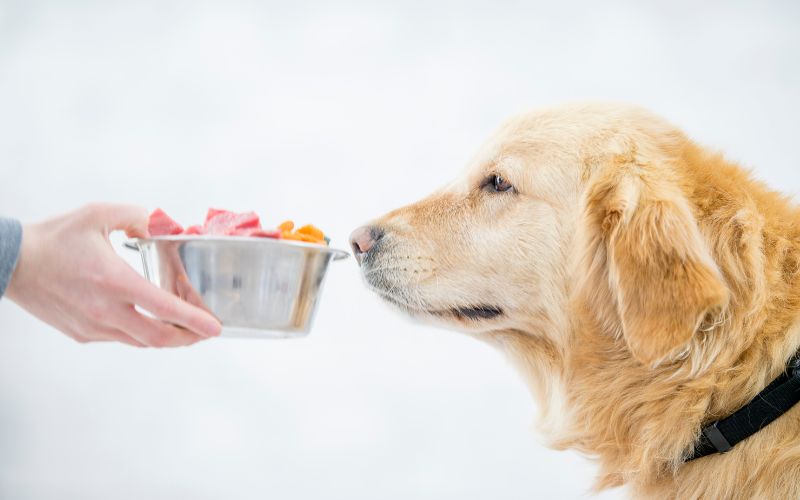
When a result falls outside the approved specification, the production team should investigate it before the batch moves to the next stage.
This is one reason detailed product specifications are essential. Without measurable standards, it is difficult to maintain consistency between orders.
13. Foreign-Material Control and Metal Detection
Commercial dog treat production should include procedures for controlling foreign materials.
Factories may use a combination of:
- Visual inspection
- Sieving
- Magnets
- Equipment maintenance
- Tool and blade control
- Glass and hard-plastic management
- Metal detection
Where applicable, finished or unpackaged treats pass through a metal detector before being released for final packing.
Metal detection records should be retained as part of the batch documentation.
14. Finished-Product Testing
Before the finished dog treats are released, samples may be tested against the approved specification.
Testing depends on the product and market but may include:
- Moisture
- Water activity
- Crude protein
- Crude fat
- Crude fiber
- Ash
- Microbiological indicators
- Pathogen testing
- Product dimensions
- Net weight
- Texture
- Sensory characteristics
- Packaging seal integrity
Testing may be completed by the factory laboratory, an independent third-party laboratory or a combination of both.
At Matchwell, quality management includes raw material inspection, production-process controls and finished-product or third-party testing when required.
15. Weighing and Packaging
Once the treats have passed the required inspections, they can be packaged.
Dog treat packaging must protect the product while also presenting the brand clearly.
Common packaging options include:
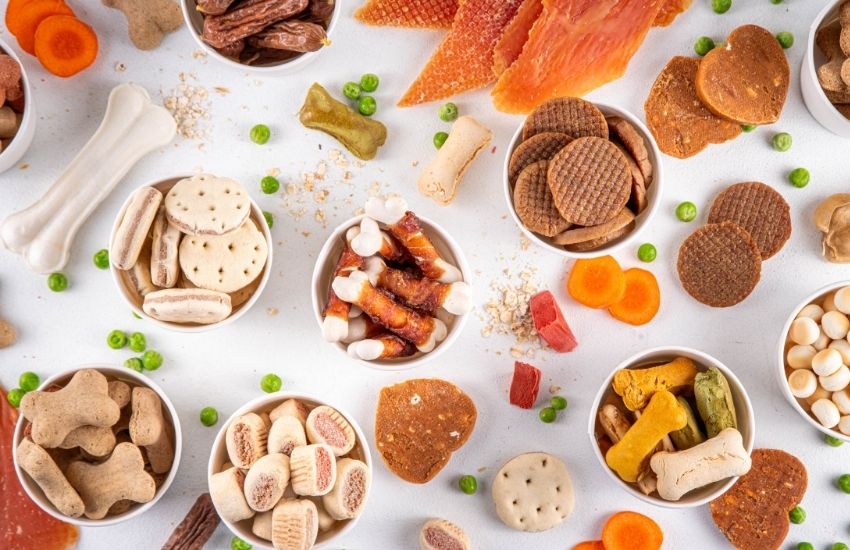
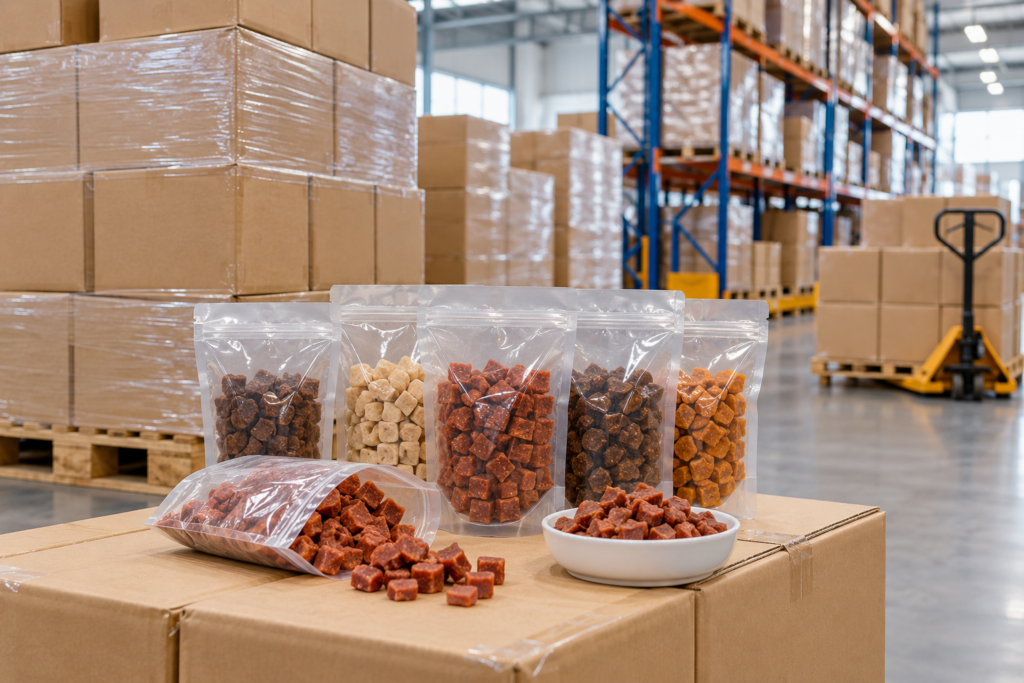
- Stand-up pouches
- Resealable zipper bags
- Small trial packs
- Individually wrapped portions
- Jars or tubs
- Display boxes
- Multipacks
- Gift boxes
The packaging material should be selected according to the product’s sensitivity to moisture, oxygen and light.
During packing, the production team may check:
- Product appearance
- Fill weight
- Package cleanliness
- Seal strength
- Printed information
- Batch coding
- Production date
- Expiration date
- Barcode placement
- Carton quantity
A good formula can still fail in the market if the packaging does not provide sufficient protection.
16. Label Review
Private label packaging must contain the information required by the destination market.
Depending on the country and product category, the label may need to show:
- Product name
- Intended animal species
- Ingredient list
- Analytical or guaranteed analysis
- Net weight
- Feeding instructions
- Storage instructions
- Batch number
- Production and expiration dates
- Country of origin
- Manufacturer or distributor information
- Required warnings
Marketing claims should also match the actual formula.
Claims such as “single ingredient,” “grain-free,” “high protein” or “natural” should only be used when the product and local regulations support them.
The brand owner or importer should confirm final label compliance before printing commercial packaging.
17. Final Inspection and Product Release
Before shipment, the quality team reviews the finished batch.
The release process may include checking:
- Production records
- Raw material traceability
- Processing parameters
- In-process inspection results
- Laboratory results
- Packaging information
- Net weight
- Metal detection records
- Carton condition
- Customer specifications
Only approved products should be released for storage and shipment.
If a result does not meet the agreed specification, the batch should be isolated while the factory investigates the issue.
18. Warehousing and Shipping
Finished dog treats are stored under conditions suitable for the product and packaging.
Warehouse controls may include:
- Clean and dry storage
- Temperature and humidity monitoring
- Pest-control procedures
- Separation from chemicals or unsuitable materials
- Batch identification
- First-expired, first-out management
- Carton and pallet protection
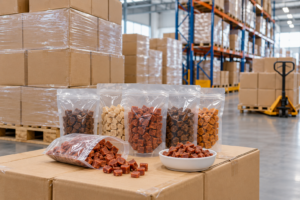
Before export, the manufacturer confirms the order quantity, shipping marks, carton details and required documents.
Proper loading is also important. Damaged cartons, excessive humidity or unsuitable transportation conditions can affect products even after they leave the factory.
How Production Differs by Dog Treat Type
Different treats require different manufacturing workflows.
| Dog treat type | Main processing method | Key production concern |
|---|---|---|
| Meat jerky | Cutting, marinating and dehydration | Moisture and thickness consistency |
| Training treats | Mixing, forming and controlled drying | Small size, softness and low crumbling |
| Freeze-dried treats | Freezing and vacuum freeze-drying | Final moisture and protective packaging |
| Rawhide chews | Shaping, wrapping and drying | Structure, size and chew durability |
| Collagen chews | Forming, wrapping and drying | Consistent hardness and dimensions |
| Chicken-wrapped chews | Meat preparation, wrapping and dehydration | Meat coverage and secure wrapping |
| Dental treats | Mixing and extrusion or molding | Texture, shape and chewing performance |
| Biscuits | Dough preparation, forming and baking | Bake consistency and breakage control |
| Soft chews | Mixing, forming and controlled cooking | Moisture, texture and shelf stability |
A factory may be experienced in one category but not another. Buyers should confirm that the manufacturer has the equipment and quality-control experience required for the specific product.
How Manufacturers Maintain Batch Consistency
Consistency is particularly important for private label dog treats because customers expect every order to match the approved sample.
Manufacturers maintain consistency through:
- Approved product specifications
- Standardized formulas
- Controlled raw material suppliers
- Batch weighing records
- Defined processing parameters
- In-process inspections
- Staff training
- Equipment calibration
- Finished-product testing
- Batch traceability
The approved sample should be supported by measurable specifications. Appearance alone is not enough to control commercial production.
How Long Does Dog Treat Production Take?
The total timeline depends on whether the brand selects an existing formula or develops a completely customized product.
The main stages include:
- Product requirement confirmation
- Formula development
- Sample production
- Sample approval
- Packaging design
- Label review
- Packaging printing
- Commercial production
- Quality testing
- Shipment preparation
A standard product with existing packaging can normally proceed faster than a custom formula with newly printed private label packaging.
At Matchwell, samples can generally be prepared in approximately seven days, while standard production lead times are usually around 15–20 days after the formula, packaging and order details have been confirmed.
What Is the MOQ for Private Label Dog Treats?
MOQ depends on:
- Product category
- Formula complexity
- Raw material requirements
- Production equipment
- Packaging format
- Number of flavors or SKUs
- Level of customization
Matchwell’s private label MOQ can start from 500 kg, subject to the product type and packaging requirements.
Brands planning several flavors should confirm whether the MOQ applies to the total order or to each individual SKU.
Questions to Ask a Dog Treat Manufacturer
Before choosing a production partner, ask the following questions:
- Which dog treat categories do you manufacture?
- Can you develop a custom formula?
- What is the minimum order quantity?
- How long does sampling take?
- What certifications does the factory hold?
- How are raw materials inspected?
- Which tests are completed on finished products?
- Can you support private label packaging?
- Can you meet the requirements of my target market?
- How is each production batch traced?
- What is the standard production lead time?
- Can I review a sample before placing a commercial order?
Clear answers help buyers distinguish a production partner from a supplier that only offers existing products.
Frequently Asked Questions
How are commercial dog treats made?
Commercial dog treats are produced through controlled stages that may include ingredient inspection, cutting, grinding, mixing, forming, cooking, drying, cooling, testing and packaging. The exact process depends on the type of treat.
Are all dog treats produced using the same method?
No. Freeze-dried treats, meat jerky, dental sticks, biscuits and chewy treats require different equipment and production parameters.
Can a manufacturer customize the formula?
Yes. An OEM dog treat manufacturer may customize the protein, flavor, shape, size, texture, functional ingredients and packaging. Feasibility depends on the product, equipment, MOQ and destination market.
How are dog treats tested for safety?
Testing may include moisture, water activity, microbiological indicators, pathogens, nutritional composition, metal detection and packaging integrity. The required tests depend on the product and market.
Can I use my own packaging design?
Yes. Private label manufacturers can normally work with a customer’s logo and packaging design. The final label should be reviewed for accuracy and market compliance before printing.
How long does it take to receive samples?
Matchwell can generally prepare samples within approximately seven days after confirming the product requirements and development direction.
What is Matchwell’s minimum order quantity?
The MOQ can start from 500 kg, depending on the formula, product category, number of SKUs and packaging format.
Start Your Private Label Dog Treat Project with Matchwell
A reliable dog treat production process connects product development, raw material management, controlled manufacturing, quality testing and protective packaging.
Matchwell provides OEM and private label manufacturing services for:
- Dog training treats
- Dehydrated meat treats
- Freeze-dried treats
- Rawhide chews
- Collagen chews
- Chicken-wrapped chews
- Dental treats
- Functional pet products
- Customized dog treat packaging
Our manufacturing advantages include:
- Approximately seven-day sample development
- MOQ starting from 500 kg
- Standard production lead times of around 15–20 days
- BRC, IFS and FSSC 22000 quality systems
- Custom formulas, shapes, sizes and packaging
- Raw material, production and finished-product quality controls
Whether you are developing your first private label product or expanding an established dog treat range, Matchwell can help turn your concept into a commercially manufacturable product.