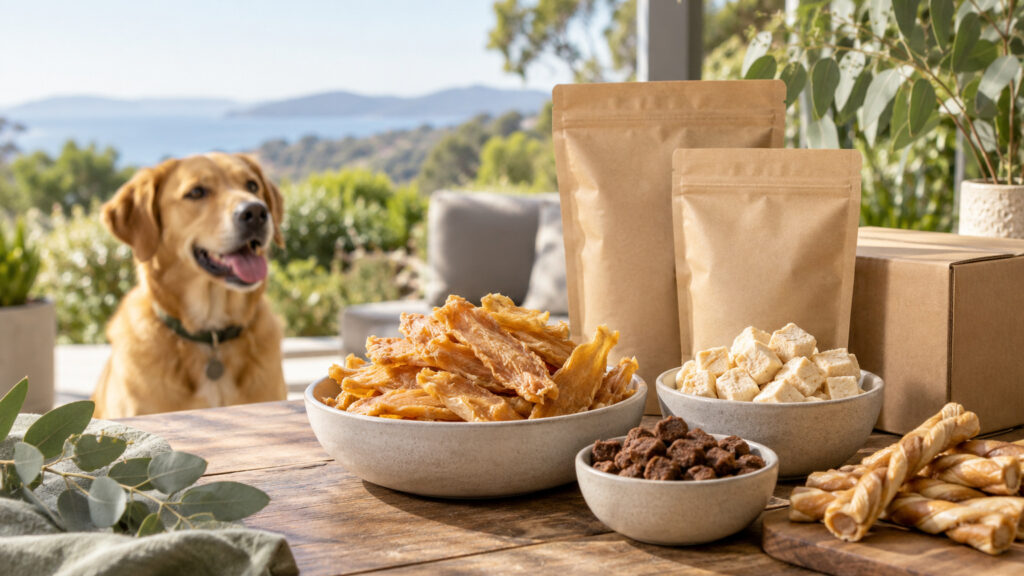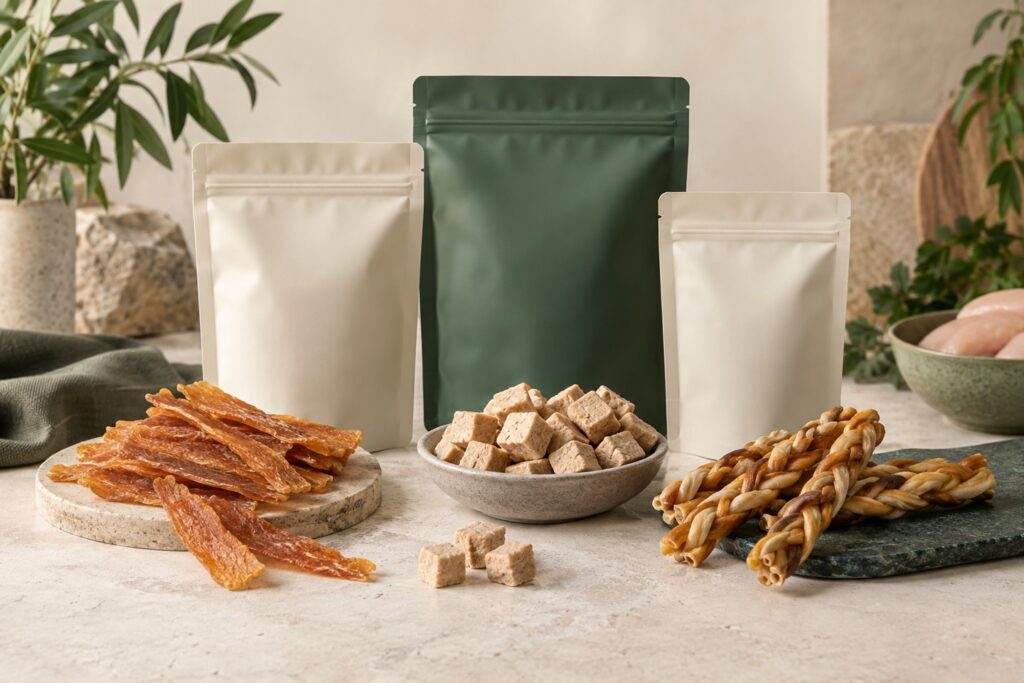

Choosing Between Local and Overseas Dog Treat Manufacturers
The global pet food industry continues to experience remarkable growth, with premium and private label dog treats becoming one of the fastest-growing product categories. As more retailers, wholesalers, pet brands, supermarkets, and Amazon sellers enter the market, one question inevitably arises:
Should you source your dog treats from a local manufacturer or an overseas manufacturer?
The answer isn’t always straightforward.
While local manufacturers often provide shorter lead times and easier communication, overseas manufacturers frequently deliver significant cost advantages, greater production capacity, broader product selections, and more flexible private label solutions.
In 2026, successful pet brands are no longer choosing suppliers based solely on geography—they’re evaluating manufacturers based on quality systems, innovation, scalability, regulatory compliance, and long-term business value.
This guide compares local and overseas dog treat manufacturers across every critical purchasing factor, helping you make the right sourcing decision for your brand.
Quick Answer
If your priorities are:
- Lower manufacturing costs
- Extensive private label customization
- Large-scale production
- Product variety
- Competitive pricing
An overseas dog treat manufacturer is usually the better choice.
If your priorities are:
- Small trial orders
- Face-to-face communication
- Extremely short delivery times
- Local regulatory familiarity
A local manufacturer may better suit your business.
For many growing pet brands, the most profitable approach combines overseas manufacturing with local inventory management and distribution.
Table of Contents
- Why More Brands Are Reconsidering Their Manufacturing Strategy
- Local vs Overseas Dog Treat Manufacturers at a Glance
- Cost Comparison
- Product Quality and Food Safety
- Private Label & OEM Capabilities
- MOQ and Scalability
- Shipping, Lead Times, and Inventory Planning
- Certifications and Regulatory Compliance
- Communication and Project Management
- Which Option Fits Your Business Model?
- Why Matchwell Pets Is Trusted Worldwide
- Frequently Asked Questions
Why More Pet Brands Are Looking Overseas
Over the past decade, overseas manufacturing has transformed dramatically.
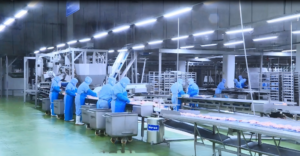
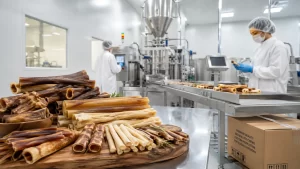
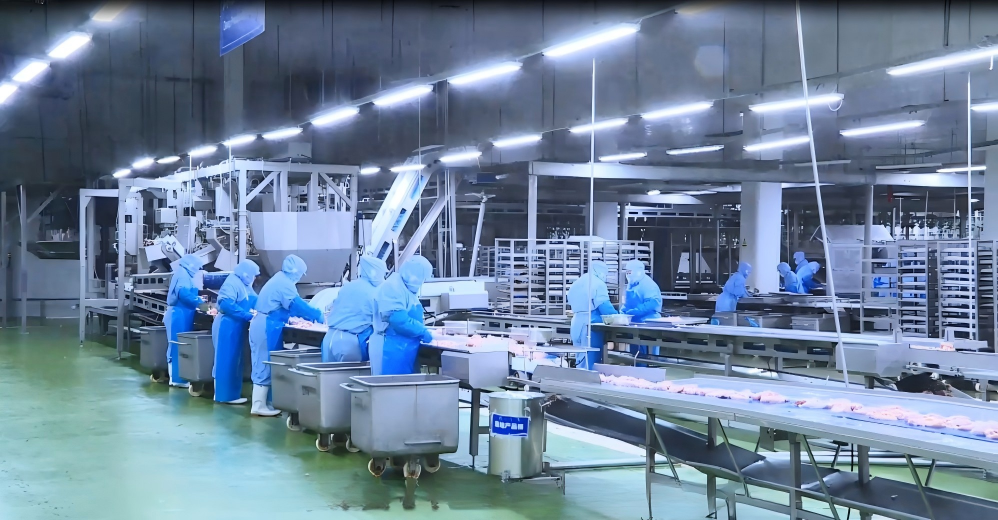
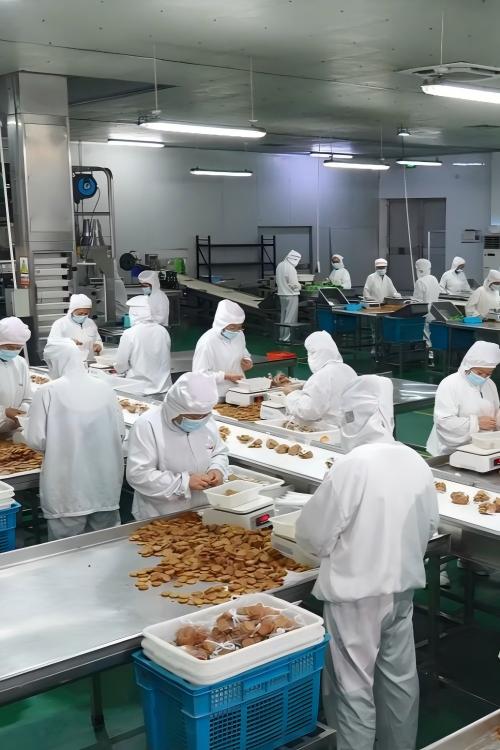
Modern manufacturers in Asia now operate highly automated production facilities certified under internationally recognized food safety standards. Many produce pet treats not only for regional brands but also for leading retailers in Europe, North America, Australia, and the Middle East.
Today’s overseas manufacturers offer far more than cost savings—they provide comprehensive OEM and private label services that help brands launch products faster and scale more efficiently.
Some of the biggest improvements include:
- BRC and IFS certified production facilities
- Automated quality inspection systems
- Advanced freeze-drying technology
- Premium ingredient sourcing
- Faster product development
- Flexible packaging customization
- Lower production costs without sacrificing quality
As transportation and global logistics continue to improve, many importers now find overseas sourcing to be both reliable and strategically advantageous.
Local vs Overseas Dog Treat Manufacturers: Side-by-Side Comparison
| Factor | Local Manufacturer | Overseas Manufacturer |
|---|---|---|
| Production Cost | Higher | Lower |
| MOQ | Lower | Medium |
| Product Variety | Limited | Extensive |
| OEM Capability | Moderate | Excellent |
| Packaging Options | Limited | Highly Customizable |
| Certifications | Varies | Often BRC / IFS / ISO22000 |
| Production Capacity | Small–Medium | Large Scale |
| Innovation | Moderate | Strong |
| Lead Time | Short Production | Longer Shipping |
| Long-Term Scalability | Moderate | Excellent |
Although local production offers convenience, overseas manufacturers typically provide greater flexibility and stronger long-term growth opportunities for expanding brands.

1. Manufacturing Cost: The Biggest Difference
Cost remains one of the most important factors when selecting a manufacturing partner.
Local production generally involves:
- Higher labor costs
- More expensive utilities
- Increased facility expenses
- Higher packaging costs
- Greater operating overhead
These costs ultimately increase the unit price of every dog treat.
Overseas manufacturers often benefit from:
- Efficient large-scale production
- Automated manufacturing
- Integrated supply chains
- Bulk ingredient purchasing
- Specialized production lines
This enables brands to achieve significantly lower manufacturing costs while maintaining premium product quality.
For companies planning nationwide retail expansion or Amazon growth, even small savings per bag can translate into substantial improvements in profitability.
2. Product Variety Matters More Than Ever
Consumer demand has evolved beyond traditional dog biscuits.
Today’s shoppers seek products tailored to specific health benefits, life stages, and feeding preferences.
Leading overseas manufacturers often offer a much broader product portfolio, including:
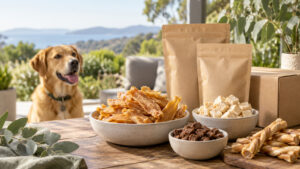
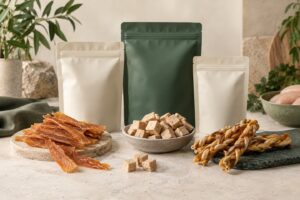
Freeze-Dried Dog Treats
High-protein, minimally processed treats that retain natural nutrients and flavor.
Functional Dog Treats
Recipes formulated to support:
- Joint health
- Digestive wellness
- Skin and coat care
- Dental hygiene
- Calming support
- Immune health
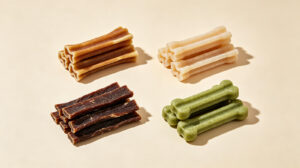
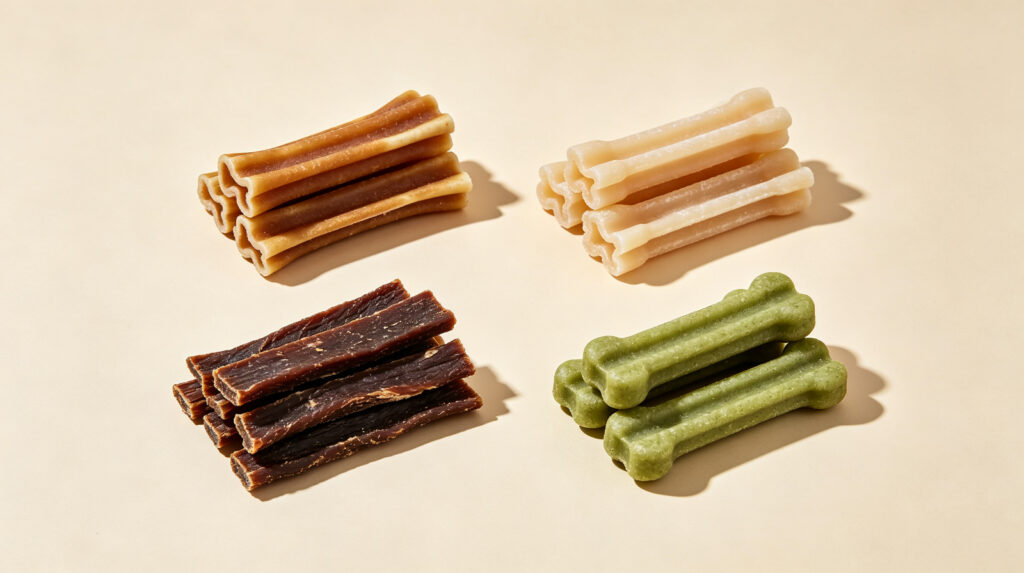
Natural Chews
Long-lasting treats made from responsibly sourced animal proteins.
Soft Training Treats
Small, low-calorie rewards designed for obedience training and positive reinforcement.
Grain-Free Recipes
Growing in popularity among premium pet owners seeking simplified ingredient lists.
Limited Ingredient Treats
Ideal for dogs with food sensitivities and elimination diets.
Offering multiple product categories through a single manufacturing partner simplifies procurement while enabling faster expansion into new market segments.
3. Private Label Customization Is Becoming a Competitive Advantage
Private label success depends on differentiation—not simply placing a logo on generic packaging.
Experienced overseas manufacturers typically provide comprehensive OEM and ODM services, allowing brands to customize nearly every aspect of the finished product.
Customization options may include:
- Recipe formulation
- Protein selection
- Functional ingredient blends
- Treat shapes and sizes
- Texture development
- Packaging materials
- Label design
- Retail-ready displays
- Multi-language packaging
- Seasonal product collections
This flexibility allows emerging brands to create products that stand out in increasingly competitive retail and e-commerce environments.

4. Minimum Order Quantity (MOQ) and Scalability
One of the biggest concerns for startups and growing pet brands is finding a manufacturer with an MOQ that matches their business stage.
Many local manufacturers offer relatively low minimum order quantities, making them attractive for businesses launching a new product line. However, lower MOQs often come with higher production costs and limited customization.
In contrast, overseas dog treat manufacturers generally require slightly higher MOQs because they optimize production through large-scale manufacturing. While this may seem like a disadvantage initially, it provides significant long-term benefits as your brand grows.
Local Manufacturer
Advantages
- Lower MOQ for trial orders
- Suitable for pilot product launches
- Faster replenishment
Limitations
- Higher cost per unit
- Limited production capacity
- Difficult to scale nationwide
Overseas Manufacturer
Advantages
- Lower unit cost at scale
- Higher production efficiency
- Flexible OEM packaging
- Stronger supply chain support
Best for
- Amazon sellers
- Pet store chains
- Importers
- Distributors
- Supermarkets
- Private label brands
As demand increases, working with a manufacturer capable of producing hundreds of tons per month becomes a strategic advantage rather than simply a sourcing decision.
5. Food Safety and Product Quality
Pet owners are paying closer attention than ever to ingredient quality, manufacturing transparency, and food safety standards. This trend is particularly evident across Europe, where retailers and consumers expect premium-quality products backed by internationally recognized certifications.
Regardless of whether you choose a local or overseas supplier, food safety should always be your highest priority.
A qualified dog treat manufacturer should implement strict quality control procedures covering every stage of production, including:
- Raw material inspection
- Supplier qualification
- Microbiological testing
- Heavy metal testing
- Production monitoring
- Finished product inspection
- Batch traceability
- Packaging integrity testing
Premium manufacturers also maintain dedicated quality assurance teams and comprehensive documentation systems to ensure every shipment meets customer specifications.
6. Certifications Matter More Than Location
Many buyers assume local manufacturers automatically meet higher quality standards. In reality, certifications—not geography—are the best indicator of manufacturing excellence.
When evaluating a supplier, look for internationally recognized certifications such as:
| Certification | Why It Matters |
|---|---|
| BRCGS | Recognized by major European retailers for food safety and quality management. |
| IFS Food | Widely accepted by supermarkets and distributors across Europe. |
| ISO 22000 | Demonstrates a comprehensive food safety management system. |
| HACCP | Identifies and controls food safety hazards throughout production. |
| FDA Registration | Important for exporting products to the United States. |
| EU Compliance | Ensures products meet European regulations regarding ingredients, labeling, and manufacturing practices. |
Rather than asking “Is this manufacturer local?”, buyers should ask:
- Do they maintain internationally recognized certifications?
- Can they provide recent audit reports?
- Are quality documents readily available?
- Can every batch be traced back to its raw materials?
These questions provide a much clearer picture of a manufacturer’s reliability.
7. Shipping and Lead Time
Shipping is often viewed as the primary drawback of overseas manufacturing. However, with proper planning, it becomes a manageable part of the supply chain.
Local Manufacturing
Typical production lead time:
- 2–4 weeks
Domestic transportation:
- 1–5 days
Advantages:
- Faster emergency replenishment
- Reduced freight complexity
- Easier warehouse coordination
Overseas Manufacturing
Typical production lead time:
- 20–35 days
Ocean shipping:
- Europe: approximately 30–45 days
- North America: approximately 25–40 days
- Australia: approximately 18–30 days
While overseas shipping takes longer, experienced importers usually manage inventory through rolling forecasts and safety stock. The savings achieved through lower production costs often outweigh the additional logistics time.
Working with a manufacturer that offers export documentation, container optimization, and logistics coordination can further simplify international sourcing.
8. Communication and Project Management
Communication plays a critical role in successful private label projects.
Local manufacturers often provide the advantage of operating in the same time zone and language, making meetings and site visits more convenient.
However, many leading overseas manufacturers now have dedicated international sales teams that offer:
- Fluent English communication
- Fast response times
- Online product development meetings
- Digital proof approval
- Sample tracking
- Production updates
- Quality inspection reports
- Shipment progress monitoring
When evaluating suppliers, responsiveness and professionalism are often more important than physical proximity.
Ask yourself:
- Do they respond within 24 hours?
- Can they answer technical questions clearly?
- Do they provide proactive updates?
- Are they transparent about production schedules?
Strong communication builds trust and helps prevent costly misunderstandings.

9. Innovation and Product Development
Consumer preferences in the pet treat market are evolving rapidly. Brands that continuously introduce new products are more likely to stay competitive.
Many overseas manufacturers invest heavily in research and development, enabling them to launch innovative products such as:
- Freeze-dried single-protein treats
- Air-dried premium snacks
- Functional calming treats
- Joint-support formulas
- Dental chews
- Probiotic treats
- Limited-ingredient recipes
- Organic pet treats
- High-meat training rewards
- Sustainable protein treats
Partnering with a manufacturer that actively develops new products allows your brand to respond quickly to changing market trends without building an in-house R&D team.
10. Regulatory Compliance for European Buyers
If you plan to sell dog treats in Europe, compliance with regional regulations is essential.
A reliable manufacturer should be familiar with:
- EU pet food regulations
- Ingredient restrictions
- Additive approvals
- Labeling requirements
- Packaging compliance
- Traceability systems
- Export documentation
They should also be able to provide supporting documents such as:
- Certificate of Analysis (COA)
- Health Certificate
- Ingredient specifications
- Microbiological test reports
- Nutritional analysis
- Product labels in multiple languages
Choosing a manufacturer experienced in exporting to Europe can help reduce customs delays and ensure smoother market entry.
11. Which Type of Manufacturer Is Right for Your Business?
There is no one-size-fits-all solution when choosing between a local and an overseas dog treat manufacturer. The best choice depends on your business model, sales channels, budget, and long-term growth strategy.
Here’s a quick guide to help you identify the best fit.
| Your Business Type | Recommended Manufacturing Option | Why |
|---|---|---|
| New Pet Brand | Local or Overseas (Low MOQ OEM) | Easier to test the market while keeping investment manageable. |
| Amazon FBA Seller | Overseas Manufacturer | Competitive pricing, custom packaging, and scalable production improve profit margins. |
| Pet Store Chain | Overseas Manufacturer | Consistent quality and reliable bulk supply support multiple retail locations. |
| Supermarket Buyer | Overseas Manufacturer | High production capacity and international certifications meet retailer requirements. |
| Pet Distributor | Overseas Manufacturer | Broad product portfolio and stable supply chain simplify sourcing. |
| Subscription Box Company | Either | Depends on order volume, delivery schedule, and product variety. |
| Premium Organic Brand | Certified Overseas or Local Specialist | Focus on ingredient sourcing, traceability, and premium certifications. |
As your business expands, priorities often shift from convenience to scalability, consistency, and profitability. Many successful brands start with smaller production runs but transition to experienced overseas partners as sales increase.
Why More Global Brands Choose Matchwell Pets
Selecting the right manufacturing partner is about more than finding the lowest price. It’s about working with a supplier that can support your brand as it grows.
At Matchwell Pets, we help brands around the world develop premium private label dog and cat treats through flexible OEM and ODM manufacturing services.
Comprehensive Product Portfolio
Whether you’re launching your first SKU or expanding an existing product line, we offer a wide range of pet treats, including:
- Freeze-Dried Dog Treats
- Freeze-Dried Cat Treats
- Soft Training Treats
- Natural Chews
- Dental Treats
- Functional Health Treats
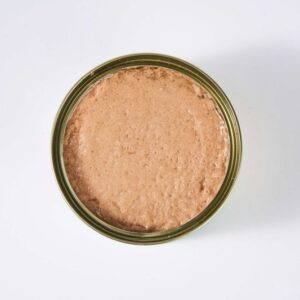
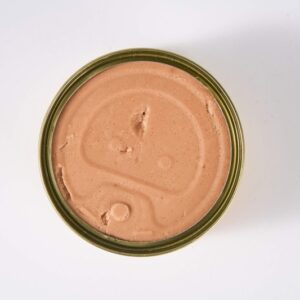
- Wet Dog Food
- Wet Cat Food
- Cat Soup & Broth
- Puppy Treats
- Kitten Treats
- Seasonal Gift Packs
This allows customers to consolidate sourcing with one trusted manufacturer instead of managing multiple suppliers.
Flexible Private Label Services
We understand that every brand has unique positioning.
Our OEM and private label solutions include:
- Custom recipes
- Protein selection
- Functional ingredient development
- Treat shapes and sizes
- Flavor customization
- Retail packaging design
- Multi-language labels
- Display cartons
- Promotional packaging
- Seasonal collections
Whether you’re targeting premium pet boutiques, Amazon shoppers, supermarkets, or distributors, our team helps you create products that align with your market.
Certified Manufacturing You Can Trust
Quality and food safety are at the core of everything we do.
Our manufacturing facilities operate under internationally recognized standards, including:
- BRCGS Certification
- IFS Food Certification
- ISO 22000 Food Safety Management
- HACCP-based quality control
From raw material sourcing to finished product inspection, every production stage follows strict quality assurance procedures to deliver safe, consistent, and reliable pet treats.
Reliable Global Export Experience
Matchwell Pets serves customers across:
- Europe
- North America
- Australia
- Southeast Asia
- Middle East
- South America
Our experienced export team supports customers with:
- Product documentation
- Label compliance
- Shipping coordination
- Customs documentation
- Container loading optimization
- Sample development
- Production scheduling
Whether you’re importing your first container or managing ongoing private label programs, we work to make the process straightforward and efficient.

Supplier Evaluation Checklist
Before signing with any dog treat manufacturer, ask these questions:
Product Quality
- Do they have internationally recognized food safety certifications?
- Can they provide laboratory test reports?
- Are ingredients fully traceable?
Manufacturing Capability
- Can they meet your expected monthly volume?
- Do they offer OEM and private label services?
- Can they develop custom formulations?
Communication
- Do they respond promptly?
- Is there a dedicated project manager?
- Are production updates provided regularly?
Logistics
- Do they have export experience?
- Can they assist with documentation?
- Are shipping timelines realistic and transparent?
Business Partnership
- Can they grow with your brand?
- Are they willing to develop new products?
- Do they invest in long-term customer relationships?
Choosing a manufacturer based on these criteria will reduce risk and improve long-term supply chain stability.
Frequently Asked Questions
Is it cheaper to manufacture dog treats overseas?
In most cases, yes. Overseas manufacturers often benefit from larger production capacity, integrated supply chains, and lower operating costs, resulting in more competitive pricing—especially for medium to high-volume orders.
Are overseas dog treat manufacturers safe?
Yes, provided you work with certified manufacturers that follow internationally recognized food safety standards such as BRCGS, IFS Food, ISO 22000, and HACCP. Always verify certifications and request supporting documentation before placing an order.
What certifications should I look for?
Look for certifications relevant to your target market, including:
- BRCGS
- IFS Food
- ISO 22000
- HACCP
- FDA Registration (for the U.S.)
- Compliance with EU pet food regulations
These certifications demonstrate a manufacturer’s commitment to quality and food safety.
What is a typical MOQ for private label dog treats?
Minimum order quantities vary depending on the product type, packaging format, and level of customization. Many overseas manufacturers offer flexible OEM programs suitable for both emerging brands and large-scale distributors.
Can I customize the recipe and packaging?
Yes. Most experienced private label manufacturers offer extensive customization options, including:
- Ingredients and protein sources
- Functional additives
- Treat shapes and textures
- Packaging design
- Label artwork
- Retail-ready displays
This helps brands create differentiated products that appeal to their target customers.
How long does production usually take?
Production lead times depend on the product and order size but generally range from 20–35 days, followed by international shipping. Planning inventory in advance helps ensure a stable supply.
Final Thoughts
Both local and overseas dog treat manufacturers have their advantages. Local production can offer faster turnaround times and easier face-to-face communication, while overseas manufacturers often provide better value through lower costs, greater production capacity, broader product portfolios, and advanced private label capabilities.
For businesses focused on long-term growth, expanding product lines, and improving margins, partnering with an experienced overseas manufacturer is increasingly becoming the preferred strategy.
The key is to choose a supplier based on quality, certifications, transparency, innovation, and reliability—not simply location.
A strong manufacturing partner should help your business launch products faster, maintain consistent quality, adapt to market trends, and scale confidently as demand grows.
Ready to Build Your Private Label Dog Treat Brand?
Whether you’re launching a new pet brand, expanding your product range, or looking for a more reliable manufacturing partner, Matchwell Pets is here to help.
With certified production facilities, comprehensive OEM and ODM services, and years of experience serving customers worldwide, we provide the expertise and flexibility needed to bring your vision to market.
Contact Matchwell Pets today to discuss your private label dog treat project, request product samples, or receive a customized quotation. Let’s create premium pet treats that help your brand stand out in the competitive global market.