
What to Ask a Private Label Dog Treat Manufacturer Before Ordering
Launching a private label dog treat brand sounds exciting — until you actually start talking to manufacturers.
Suddenly, you are dealing with MOQ requirements, certifications, ingredient sourcing, export regulations, packaging options, and production timelines. For many buyers, especially first-time importers or Amazon sellers, choosing the wrong manufacturer can lead to delayed shipments, poor product quality, inconsistent packaging, or even failed compliance inspections.
That is why asking the right questions before placing an order is critical.
Whether you are building a premium freeze dried dog treat brand, sourcing wholesale dog treats for retail distribution, or creating OEM pet snacks for supermarkets, this guide explains exactly what you should ask a private label dog treat manufacturer before moving forward.
Why Manufacturer Selection Matters So Much
Your manufacturer directly impacts:
- Product quality
- Brand reputation
- Customer retention
- Retailer confidence
- Regulatory compliance
- Profit margins
- Delivery timelines
A reliable manufacturing partner can help your business scale globally. A poor supplier can damage your brand before it even launches.
Modern buyers are also becoming more demanding. Consumers increasingly expect:

- Natural ingredients
- High-protein formulas
- Clean-label recipes
- Premium packaging
- Functional nutrition
- Traceable sourcing
Because of this, retailers and distributors are becoming more selective about which pet treat suppliers they work with.
Question 1: What Certifications Does Your Factory Have?
Food safety should always be the first priority.
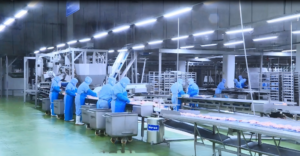
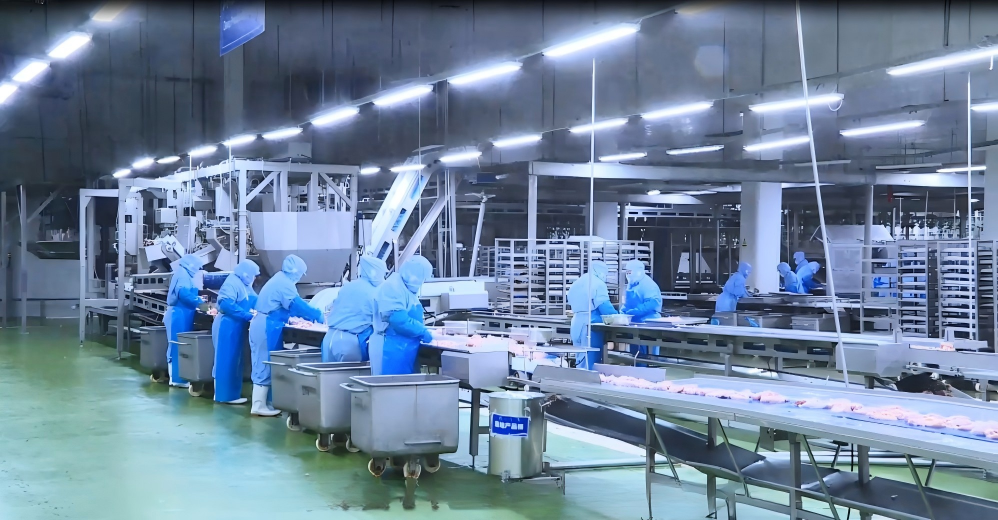
Professional pet treat manufacturers usually hold internationally recognized certifications that demonstrate production standards and quality control systems.
Important Certifications to Ask About
BRC Certification
BRC certification is widely recognized by supermarkets and international retailers.
IFS Certification
IFS focuses heavily on food safety and process consistency.
HACCP
Hazard Analysis and Critical Control Points systems help reduce food safety risks.
ISO22000
This certification demonstrates structured food safety management systems.
FDA Registration
Important for products entering the United States market.
Why Certifications Matter
Retailers, distributors, and importers often require certified suppliers before placing large orders.
Certifications can also help simplify customs clearance and reduce compliance risks.
Question 2: Do You Specialize in OEM or ODM Manufacturing?
Not all factories offer the same level of customization.
Some manufacturers only sell standard products with limited branding options. Others provide full OEM and ODM services.
OEM vs ODM
OEM (Original Equipment Manufacturing)
You provide the branding while the manufacturer produces according to your specifications.
ODM (Original Design Manufacturing)
The factory helps develop formulas, packaging, and product concepts.
Questions to Ask
- Can you customize formulas?
- Can you create exclusive recipes?
- Do you support custom packaging?
- Can you print private labels directly?
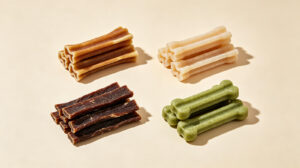
- Can you adjust treat texture and shape?
- Do you provide packaging design support?
The more flexible the supplier is, the easier it becomes to differentiate your brand.
Question 3: What Ingredients Are Used in Your Dog Treats?
Ingredient quality directly affects both product performance and consumer trust.
Modern pet owners pay close attention to ingredient panels.
Ask About Ingredient Sourcing
Questions include:
- Where are proteins sourced from?
- Are ingredients traceable?
- Are preservatives used?
- Do you use artificial flavors or colors?
- Are ingredients human-grade?
- Are antibiotics or hormones involved?
Ask About Protein Sources
Popular proteins include:
- Chicken
- Duck
- Beef
- Salmon
- Turkey
- Lamb
- Rabbit
Premium positioning often depends heavily on protein quality.
Question 4: What Product Categories Do You Offer?
Strong manufacturers usually offer multiple product categories.
This becomes important when scaling your business later.
Common Product Categories
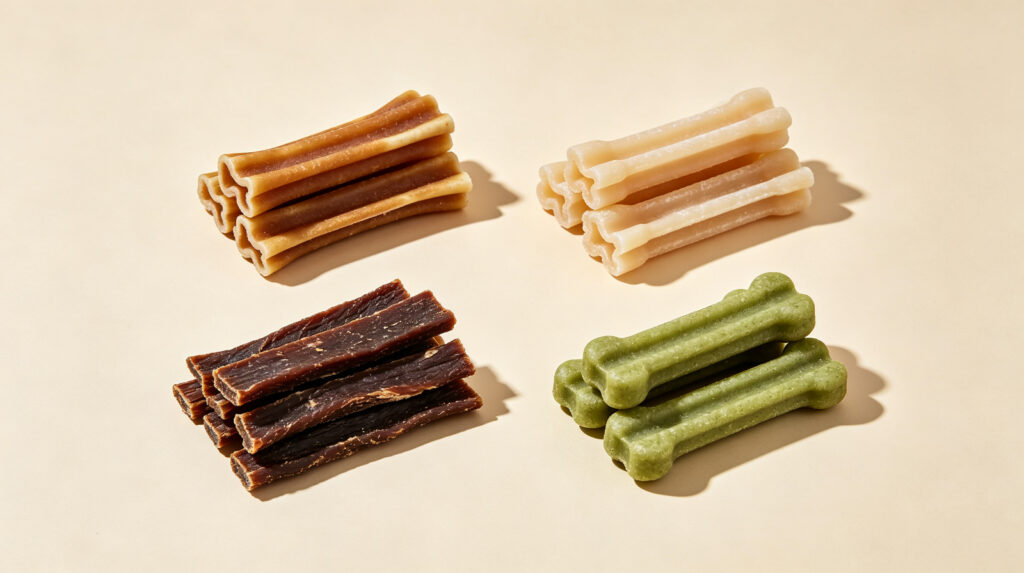
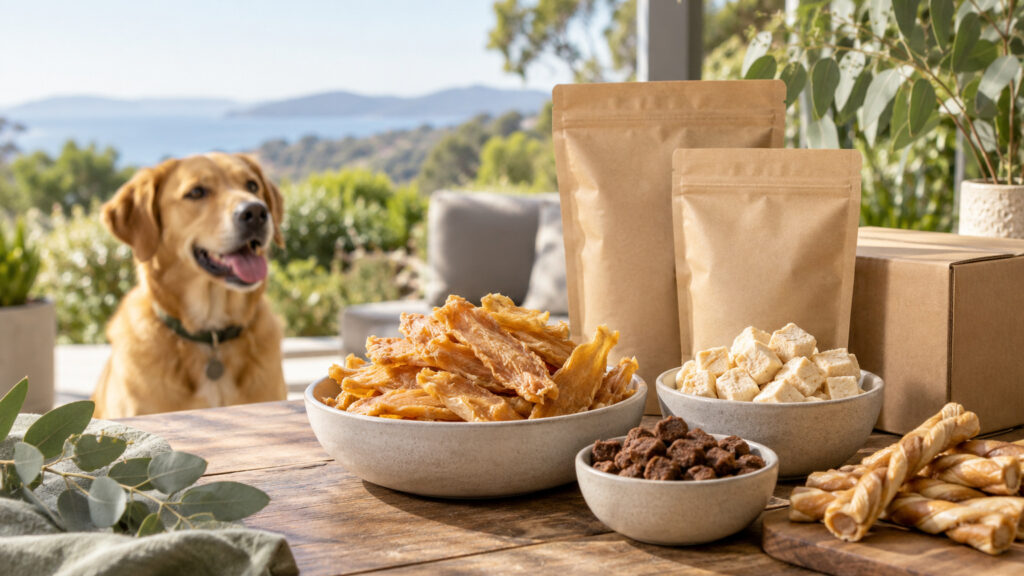
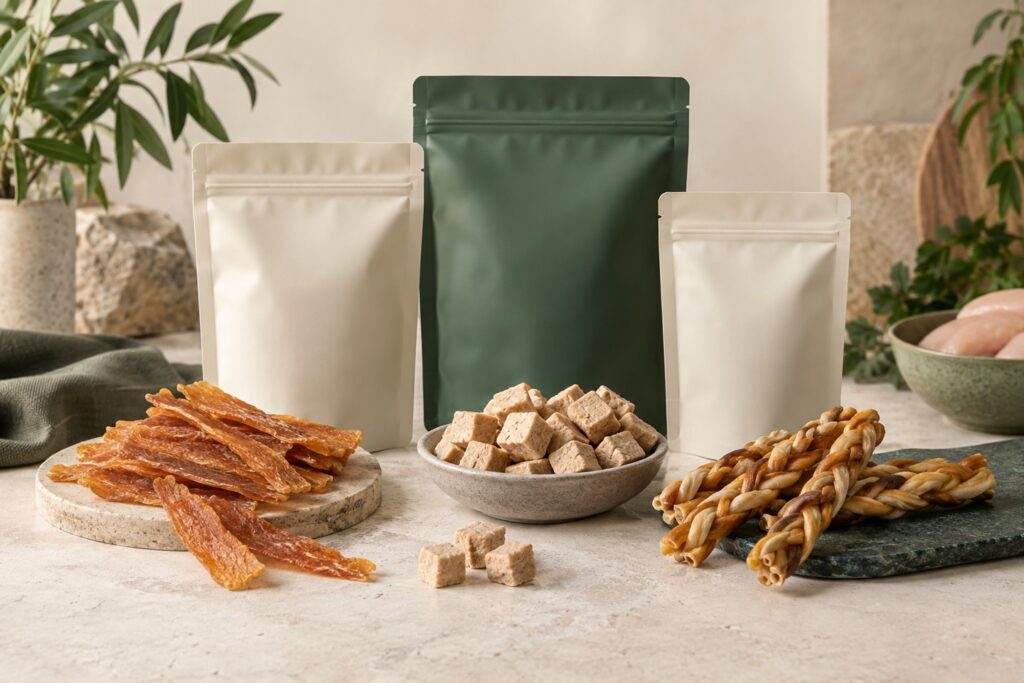
Freeze Dried Dog Treats
One of the fastest-growing premium categories globally.
Jerky Treats
Popular for both retail and training applications.
Functional Dog Treats
Products designed for:
- Joint support
- Skin and coat care
- Digestion
- Calming
- Dental health
Soft Chews
Frequently used for supplements and functional nutrition.
Why Product Variety Matters
If your supplier can support future expansion, you avoid changing factories later.
Question 5: What Is Your MOQ (Minimum Order Quantity)?
MOQ directly affects startup cost and inventory risk.
Typical MOQ Questions
- What is the MOQ per SKU?
- What is the MOQ per flavor?
- What is the MOQ for custom packaging?
- Do you support trial orders?
- Can you mix flavors in one order?
Important for Startups
Lower MOQs help:
- Test market demand
- Reduce inventory pressure
- Minimize launch risk
- Improve cash flow
Many newer brands begin with smaller product lines before scaling.
Question 6: Can You Provide Samples?
Never place a production order without testing samples first.
What to Evaluate in Samples
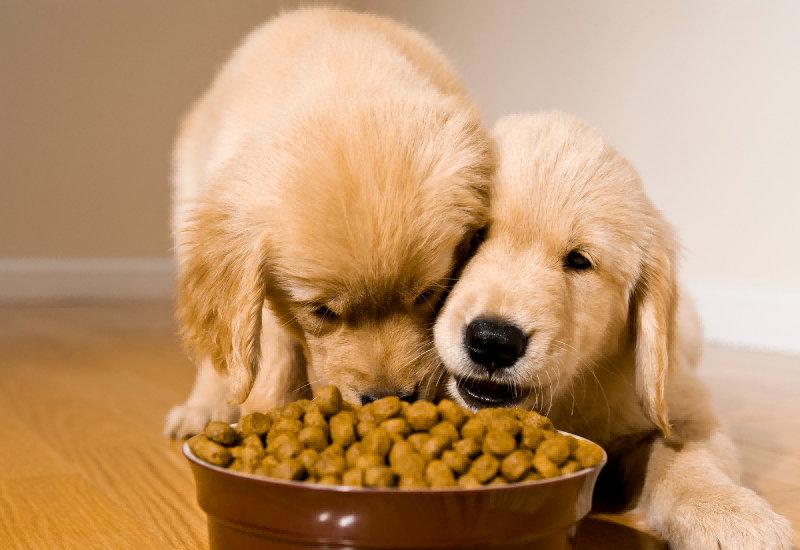
Palatability
Dogs should show strong feeding interest.
Texture
Texture consistency matters significantly for repeat purchases.
Aroma
Smell heavily impacts pet owner perception.
Packaging Quality
Poor packaging can reduce perceived product value.
Ask About Sample Costs
Questions include:
- Are samples free?
- Who pays shipping?
- How long is sample preparation?
- Can custom samples be developed?
Question 7: What Packaging Options Are Available?
Packaging strongly influences conversion rates online and offline.
Common Packaging Types
- Stand-up pouches
- Zipper bags
- Flat-bottom bags
- Retail display boxes
- Bulk cartons
Questions to Ask
- Do you support custom packaging?
- Can packaging include matte or glossy finishes?
- Are eco-friendly materials available?
- Do you offer resealable bags?
- Can QR codes be added?
- Do you support multilingual labels?
Retail-Ready Packaging Matters
Supermarkets and distributors usually require:
- Barcode support
- Shelf-ready displays
- Carton labeling
- Consistent printing quality
Question 8: What Is Your Production Lead Time?
Lead time problems can destroy inventory planning.
Ask About
- Sample lead times
- Packaging lead times
- Production lead times
- Peak season delays
- Shipping schedules
Why This Matters
Many pet treat categories experience seasonal spikes, especially before holidays.
Late deliveries can lead to:
- Amazon stockouts
- Lost retailer orders
- Increased shipping costs
Reliable scheduling becomes extremely important as your brand grows.
Question 9: Do You Have Export Experience?
Export experience is critical for international buyers.
An experienced exporter can prevent costly customs issues.
Questions to Ask
- Which countries do you currently export to?
- Can you provide health certificates?
- Can you support customs documentation?
- Do you understand FDA or EU requirements?
- Have you worked with Amazon FBA shipments?
Why Export Knowledge Matters
Different countries require:
- Ingredient declarations
- Label compliance
- Veterinary certificates
- Product testing
- Registration approvals
Factories familiar with international markets reduce operational risk significantly.
Question 10: What Quality Control Processes Do You Use?
Quality consistency determines whether customers reorder.
Ask About QC Procedures
Questions include:
- Do you test raw materials?
- How is moisture controlled?
- Do you conduct microbiological testing?
- How do you inspect packaging?
- Do you retain production samples?
Strong Factories Usually Have
- In-house laboratories
- Dedicated QC teams
- Traceability systems
- Batch records
- Third-party testing partnerships
Quality control becomes even more important for premium dog treat positioning.
Question 11: Can You Support Brand Growth Long-Term?
Many startups only think about the first order.
Smart buyers think about scaling from the beginning.
Ask About Future Scalability
Questions include:
- Can production capacity scale?
- Can you support multiple SKUs?
- Can packaging evolve later?
- Do you offer new product development?
- Can you support regional exclusivity?
Long-Term Partnerships Matter
Strong manufacturing relationships often lead to:
- Better pricing
- Faster lead times
- Priority scheduling
- Product innovation support
Question 12: What Are Your Payment Terms?
Understanding payment structure helps manage cash flow.
Common Terms
- 30% deposit + 70% before shipment
- Letter of credit
- Trade assurance
- Bank transfer
Ask Clearly About
- Currency accepted
- Refund policy
- Sample payment
- Packaging mold costs
- Additional hidden fees
Transparent suppliers usually communicate payment details clearly.
Question 13: Can You Help With Market Trends?
Experienced manufacturers often understand industry trends better than new brands.
Valuable Insights Suppliers May Provide
- Fast-growing treat categories
- Popular flavors
- Packaging trends
- Retail buyer preferences
- Ingredient trends
- Regional market demand
A knowledgeable supplier can become a strategic partner rather than simply a factory.
Red Flags to Watch Out For
Not all manufacturers operate professionally.
Warning Signs Include
Extremely Low Prices
Pricing that looks unrealistic often creates quality problems later.
Poor Communication
Slow replies usually become worse after payment.
No Certifications
This creates higher compliance risk.
Inconsistent Samples
Product inconsistency may indicate unstable production systems.
Unclear Ingredient Information
Lack of transparency is a major concern in pet food manufacturing.
Why More Brands Are Choosing Private Label Dog Treats
Private label manufacturing continues expanding because it allows brands to:
- Enter the market faster
- Reduce startup costs
- Focus on branding and marketing
- Avoid building manufacturing facilities
- Access professional formulations
For retailers and distributors, private label products often provide stronger margins and greater brand control.
Final Thoughts
Choosing the right private label dog treat manufacturer is one of the most important decisions your business will make.
The right supplier should provide more than production capacity. They should offer consistency, food safety expertise, export support, customization flexibility, and long-term partnership potential.
Before placing an order, take time to ask detailed questions about certifications, ingredients, MOQ, packaging, quality control, and production systems.
Strong communication during the early stages usually leads to smoother long-term cooperation.
If you are searching for an experienced OEM and ODM pet treats manufacturer offering customized wholesale dog treats, freeze dried dog treats, and private label solutions, visit Matchwell Pets.
Frequently Asked Questions
What is a private label dog treat manufacturer?
A private label dog treat manufacturer produces pet treats that can be customized with your own brand name, packaging, and product specifications.
What certifications should a pet treat factory have?
Common certifications include BRC, IFS, HACCP, ISO22000, and FDA registration.
What is the typical MOQ for private label dog treats?
MOQ varies depending on packaging and product type, but many factories offer flexible options for startups.
Can manufacturers create custom dog treat formulas?
Yes. Many OEM and ODM suppliers support customized ingredients, textures, flavors, and nutritional functions.
Are freeze dried dog treats good for private label brands?
Yes. Freeze dried dog treats are one of the fastest-growing premium pet treat categories worldwide.