
Private Label Soft Dog Treats: How to Turn a Product Idea into an OEM Brief
“We want a soft chicken treat with our logo” is a useful starting point, but it leaves most of the product-development decisions open.
How soft should the treat feel? Should it be offered whole or divided? What piece size suits the intended use? What packaging and shelf-life requirements must the manufacturer evaluate?
For brands developing private label soft dog treats, a precise brief helps the manufacturer understand the product you actually want to sell. It also gives your team a consistent way to compare samples and quotations.
This guide focuses on the decisions to make before approving a soft treat for commercial production.
Define One Main Use for the Product
Begin with the purchase occasion. A small reward offered during repeated training exercises has a different brief from a larger snack intended to be divided by the owner.
Choose one primary use and describe the intended customer. Avoid asking a single product to be a training reward, a long-lasting chew and a meal replacement at the same time.
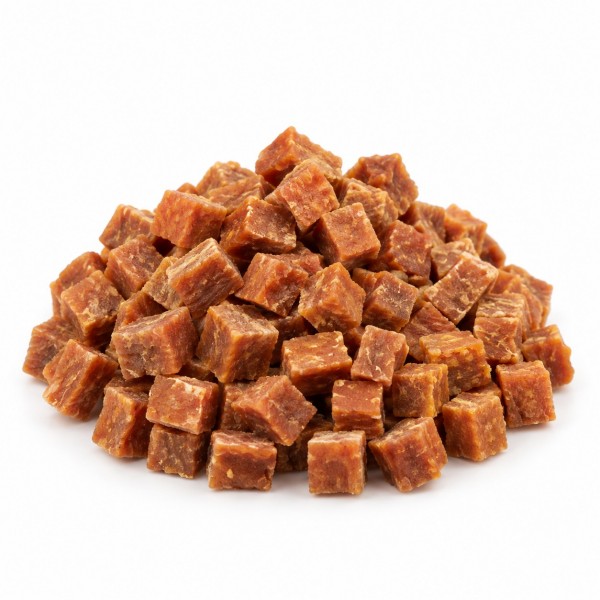
A useful opening statement could be: “A portionable chicken-based dog reward for adult-dog owners, supplied in a resealable retail pouch.” The next step is to translate each part of that statement into a specification that can be evaluated.
For an overview of available development directions, review Matchwell’s OEM and private label pet treat manufacturing.
Describe Texture in Terms You Can Check
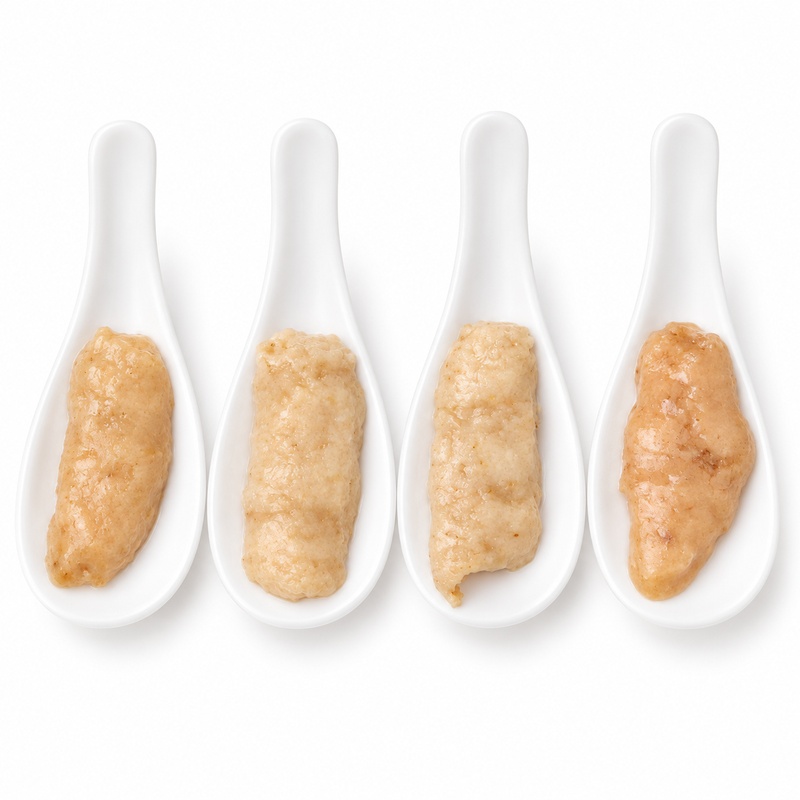
Words such as soft, chewy and tender can mean different things to different teams. Support your description with reference samples and practical acceptance criteria.
Decide whether the piece should hold its shape during handling, divide by hand or compress under light pressure. If you are comparing prototypes, evaluate them under consistent conditions and record how long each sample has been stored.
Do not use a fresh sample’s texture as the sole basis for a long shelf-life promise. Ask the manufacturer how texture and product stability will be evaluated in the intended packaging over the proposed shelf life.
The goal is to agree on a product standard that your quality and purchasing teams can use again, rather than relying only on a subjective comment such as “sample B feels better.”
Specify Piece Size as Well as Pack Weight
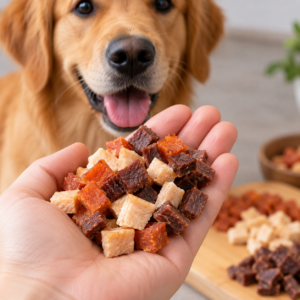
Two 100 g pouches can deliver different user experiences if one contains small, consistent pieces and the other contains a wide range of sizes.
Define target dimensions, average piece weight and acceptable variation with the manufacturer. Discuss whether the final packaging will make any count-related statements and what evidence would support them.
If you want to publish calories per treat, establish how that information will be calculated or measured and how piece-weight variation will be handled. Do not infer it simply from the size of a prototype.
| Development decision | Information to include in the brief |
|---|---|
| Intended use | Training reward, portionable snack or another defined use |
| Texture | Reference sample and agreed evaluation method |
| Dimensions | Target size, shape and acceptable variation |
| Recipe | Preferred ingredients and clearly stated exclusions |
| Retail pack | Target net weight, pack format and closure |
| Commercial plan | Destination market, order estimate and launch target |
Decide Ingredient Priorities Before Finalizing Claims
Separate essential requirements from preferences. A required ingredient exclusion affects development differently from a preference for a particular color or shape.
Ask for the complete proposed ingredient declaration and clarify any terms that could be interpreted differently. A chicken-named recipe does not automatically establish a single-protein composition.
Write packaging claims after reviewing the proposed formula and supporting information. If your brief includes a specific dietary or functional positioning, ask the technical team what evidence and market review would be needed before that wording can be approved.
This sequence keeps the product concept, ingredient selection and retail presentation connected throughout development.
Treat Packaging as Part of the Product Brief
Packaging is more than a surface for artwork. Ask the manufacturer to recommend a suitable structure for the proposed formula, storage conditions and shelf-life target.
Specify the desired net weight, pack dimensions, closure and display format. Discuss seal checks, transport handling and any post-opening instructions that must appear on the pack.
A resealable closure can be convenient, but it does not replace product-specific storage guidance. Confirm the instructions before final artwork approval.
Also ask whether printed packaging has a separate minimum order quantity. Product production, recipe variants and printed film may have different minimums, which can affect the practical size of your first launch.
Use a Written Sample Approval Record
Create a single approval record covering the formula version, dimensions, texture, appearance and packaging reference. Record requested changes rather than relying on a chain of informal messages.
When the prototype is close to approval, ask how commercial production will be compared with it and what tolerances will apply. Agree on the checks required for release and the procedure for reviewing proposed ingredient or process changes.
For cost comparisons, request quotations against the same specification. A lower price is difficult to interpret if the quotes differ in recipe, net weight, packaging or inspection requirements.
Build a Realistic Launch Schedule
Separate product development, sample review, packaging approval, production and shipment in your plan. A quoted manufacturing lead time may not include every earlier approval step.
Matchwell’s manufacturing page advertises a 500 kg MOQ, samples in seven days and a 15–20-day delivery window. Treat these as starting points for a project discussion: confirm applicability to your soft-treat formula, SKU split, packaging and required destination before committing to a launch date.
For broader supplier-selection questions, see the Matchwell pet snack manufacturer guide.
Frequently Asked Questions
Can I develop a custom shape for private label soft dog treats?
Include the proposed shape and dimensions in your inquiry. Ask the manufacturer to assess feasibility, tooling requirements, tolerances and the effect on minimum quantities and cost.
Can several flavors share one minimum order quantity?
Confirm this before budgeting. Minimums may apply by recipe, SKU or packaging design, and a total order quantity does not automatically mean every variant can be produced in a small batch.
What should I send to receive a useful OEM quotation?
Provide the destination market, intended use, reference texture, target size, recipe requirements, pack weight, packaging format and estimated quantity. Include artwork status and the desired launch date.
Start Your Soft Dog Treat Development Brief with Matchwell
Ready to turn your concept into a defined product? Use Matchwell’s pet treat manufacturing inquiry page to share your requirements and request a project-specific assessment.
Ask for a proposal covering formulation feasibility, sample development, packaging, minimum quantities and timing. A detailed brief gives both teams a clearer path from the first sample to an approved private label product.