
Grain-Free Dog Treats vs Traditional Treats: Which Is Better for Your Dog?
Dog treats are no longer just occasional rewards. Today, pet owners are paying closer attention to ingredients, nutritional value, and the specific dietary needs of their dogs. As a result, grain-free dog treats have become increasingly popular alongside traditional dog treats.
But does grain-free automatically mean healthier? And when should pet owners or retailers choose grain-free products over conventional treats?
For pet treat brands, distributors, and retailers, understanding the differences between these two categories is important when developing or sourcing products. This guide compares grain-free dog treats and traditional treats across ingredients, nutrition, target consumers, product positioning, and market potential.
What Are Grain-Free Dog Treats?
Grain-free dog treats are formulated without common cereal grains such as wheat, corn, rice, barley, oats, or sorghum, depending on the product formulation.
Instead, manufacturers may use alternative carbohydrate or plant-based ingredients, including:
- Sweet potatoes
- Peas
- Chickpeas
- Tapioca
- Potatoes
- Pumpkin
- Fruits and vegetables
Many grain-free treats also emphasize animal proteins such as chicken, beef, duck, salmon, or other meat ingredients.
It is important to distinguish grain-free from carbohydrate-free. A grain-free treat can still contain carbohydrates from vegetables, legumes, or other plant ingredients.
What Are Traditional Dog Treats?
Traditional dog treats generally use conventional ingredients that may include grains, cereals, meat, animal proteins, starches, and other functional ingredients.
Common ingredients can include:
- Wheat
- Corn
- Rice
- Oats
- Barley
- Chicken or beef
- Animal fats
- Starches
- Vitamins and minerals
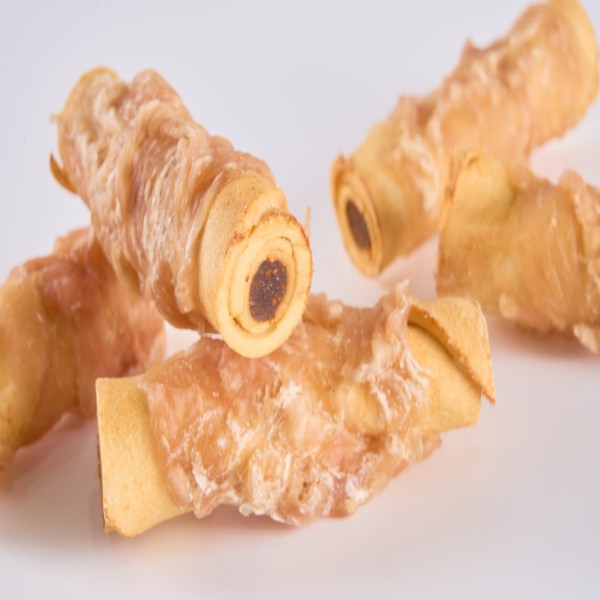
Traditional treats cover a broad range of products, including biscuits, cookies, jerky, training treats, dental treats, and baked snacks.
Because the category is broad, the nutritional quality of a traditional treat depends on its specific formulation rather than simply whether it contains grains.
Grain-Free vs Traditional Dog Treats: Key Differences
| Factor | Grain-Free Dog Treats | Traditional Dog Treats |
|---|---|---|
| Grain ingredients | No cereal grains | May contain wheat, corn, rice, oats, etc. |
| Common alternatives | Sweet potato, peas, potato, tapioca | Cereals, grains, starches |
| Consumer positioning | Premium, specialized, natural-oriented | Mainstream, affordable, familiar |
| Target consumers | Ingredient-conscious pet owners | Broad consumer market |
| Product cost | Often higher | Often more cost-efficient |
| Marketing opportunities | Grain-free, limited ingredient, novel protein | Classic flavors, value, functional benefits |
| Product variety | Rapidly expanding | Very broad and established |
Neither category is automatically better for every dog. Product suitability should be evaluated based on the dog’s individual dietary requirements and the complete ingredient and nutritional profile.
Are Grain-Free Dog Treats Healthier?
This is one of the most common questions surrounding grain-free products.
The answer is not necessarily.
A grain-free formulation can be a useful option for specific dogs, particularly when a veterinarian recommends avoiding certain ingredients. However, removing grains does not automatically make a treat more nutritious.
For example, a grain-free treat may replace grains with potatoes, peas, or other starch sources. Therefore, consumers should evaluate the complete formulation rather than relying solely on a “grain-free” claim.
For manufacturers, this means grain-free positioning should be supported by a clear product concept, appropriate ingredients, nutritional specifications, and transparent labeling.
When Can Grain-Free Treats Be a Good Choice?
Grain-free treats may appeal to several consumer groups.
1. Dogs With Specific Dietary Requirements
Some dogs may have food sensitivities or allergies. However, food allergies should be properly identified rather than assumed.
When a dog has a diagnosed dietary issue, pet owners should follow veterinary recommendations when selecting treats.
2. Ingredient-Conscious Consumers
Many modern pet owners read ingredient lists carefully and prefer products with recognizable ingredients.
Grain-free treats can fit naturally into a broader “clean label” or limited-ingredient product strategy, depending on the formulation.
3. Premium Pet Treat Buyers
Grain-free products are frequently positioned in premium and super-premium segments.
Brands can combine grain-free formulations with other attributes such as:
- Single or limited animal protein
- Natural ingredients
- High-meat content
- Freeze-dried processing
- Functional ingredients
- No artificial colors
- No artificial preservatives
The combination can create a stronger premium product proposition than grain-free positioning alone.
When Are Traditional Dog Treats a Better Option?
Traditional treats remain highly relevant because grains themselves are not inherently unsuitable for dogs.
For many dogs, conventional treats can provide a practical and economical reward option when the ingredients and nutritional profile are appropriate.
Traditional treats can also offer advantages for brands and retailers:
Cost Efficiency
Grain-based ingredients can be relatively cost-effective and can help manufacturers develop products for mainstream price points.
Broad Consumer Appeal
Traditional dog biscuits, baked treats, jerky, and training rewards are familiar to consumers and can serve a wide range of market segments.
Product Flexibility
Manufacturers can formulate traditional treats for different purposes, including:
- Training
- Dental care
- Daily rewards
- Joint support
- Skin and coat care
- Puppy treats
- Senior dog treats
Grain-Free Does Not Mean Ingredient-Free
One important consideration for consumers and buyers is that “grain-free” only describes the absence of certain grains.

It does not automatically indicate:
- High protein
- Low calorie
- Low carbohydrate
- Natural ingredients
- Limited ingredients
- Hypoallergenic formulation
- Better digestibility
For example, two grain-free treats can have completely different nutritional profiles.
This is why professional buyers should evaluate the full ingredient list, guaranteed analysis, feeding recommendations, production standards, and product claims before selecting a supplier.
What Should Retailers Consider When Choosing Between the Two?
For retailers, distributors, and private-label pet treat brands, the choice should be driven by the target market rather than by trends alone.
Target Customer
If your customers prioritize natural ingredients and premium nutrition, grain-free products may offer stronger positioning.
If your customers are highly price-sensitive, traditional treats may provide greater flexibility.
Retail Price
Grain-free products often support higher retail prices when combined with premium proteins, specialty ingredients, or functional benefits.
Traditional treats can be used to build accessible entry-level product lines.
Product Differentiation
A grain-free formulation can help a brand differentiate itself, but simply adding a “grain-free” claim may not be enough.
Consider combining it with a more specific product concept such as:
Grain-Free + Single Protein + Limited Ingredient
or
Grain-Free + Functional Benefits + Premium Packaging
This creates a clearer reason for consumers to choose the product.
Market Regulations
Pet food and treat labeling requirements vary by country and market. Brands should ensure that ingredient declarations, nutritional information, claims, and packaging comply with the regulations of the destination market.
Grain-Free and Traditional Treats Can Both Be Part of a Product Portfolio
For pet treat manufacturers and private-label brands, this does not necessarily have to be an either-or decision.
A diversified product portfolio can include both categories.
For example:
Mainstream Line
- Traditional dog biscuits
- Training treats
- Everyday rewards
- Competitive price positioning
Premium Line
- Grain-free dog treats
- Limited-ingredient treats
- Single-protein treats
- Freeze-dried treats
Functional Line
- Dental treats
- Joint-support treats
- Skin and coat treats
- Digestive-support treats
This approach allows a brand to target different consumer segments while maintaining a broader product offering.
How Matchwellpets Supports Custom Dog Treat Development
For brands looking to develop their own dog treat products, selecting the right formulation is only one part of the process.
At Matchwellpets, we support OEM and ODM pet treat development for wholesale buyers, distributors, retailers, and private-label brands.
Depending on your target market and product positioning, a customized dog treat project can be developed around factors such as:
- Grain-free or traditional formulations
- Animal protein selection
- Limited-ingredient concepts
- Functional ingredients
- Different textures and shapes
- Freeze-dried or other processing methods
- Custom packaging
- Private-label branding
- Market-specific requirements
The goal is not simply to create a grain-free product, but to develop a product that fits the target consumer, price range, nutritional concept, and retail channel.
Final Thoughts
The debate between grain-free dog treats and traditional treats should not be reduced to “grain-free is better.”
Grain-free treats can provide attractive opportunities for premium, specialized, and ingredient-conscious product lines. Traditional treats remain highly competitive because they offer familiarity, affordability, and extensive formulation flexibility.
For pet treat brands and buyers, the better question is:
Which formulation best matches your target market and product strategy?
A successful dog treat product combines the right ingredients with appropriate nutrition, appealing texture, reliable manufacturing, regulatory compliance, and strong market positioning.
If you are developing a private-label or wholesale dog treat line, Matchwellpets can help you evaluate different formulation concepts and develop products according to your target market.
Explore custom dog treat manufacturing with Matchwellpets for your next private-label project.