
Private Label Dog Chews: A Complete OEM Manufacturing Guide for Pet Brands
Launching a successful dog chew product involves more than choosing an attractive shape or adding a brand logo to existing packaging.
For pet brands, distributors, and importers, private label dog chews must meet specific requirements for ingredients, dimensions, durability, packaging, quality control, and target-market regulations.
Working with an experienced dog chew manufacturer allows businesses to develop products that fit their market positioning without investing in their own manufacturing facilities.
At Matchwell Pets, we specialize in B2B pet treat manufacturing, including OEM and ODM solutions for brands seeking customized pet snacks.
This guide explains the key decisions involved in developing private label dog chews, from selecting the right product format to preparing a manufacturing specification.
What Are Private Label Dog Chews?
Private label dog chews are chewing products manufactured by a third-party supplier and sold under a buyer’s brand.
Depending on the manufacturing arrangement, customization may include:
- Product shape and dimensions
- Protein and ingredient selection
- Product texture and structure
- Recipe development
- Packaging design
- Retail pack weight
- Product labeling
- Market-specific product requirements
Some projects begin with an existing product specification and customized packaging.
Others require a more extensive OEM or ODM development process involving new ingredients, dimensions, or manufacturing techniques.
The appropriate approach depends on the brand’s budget, product differentiation goals, and expected order volume.
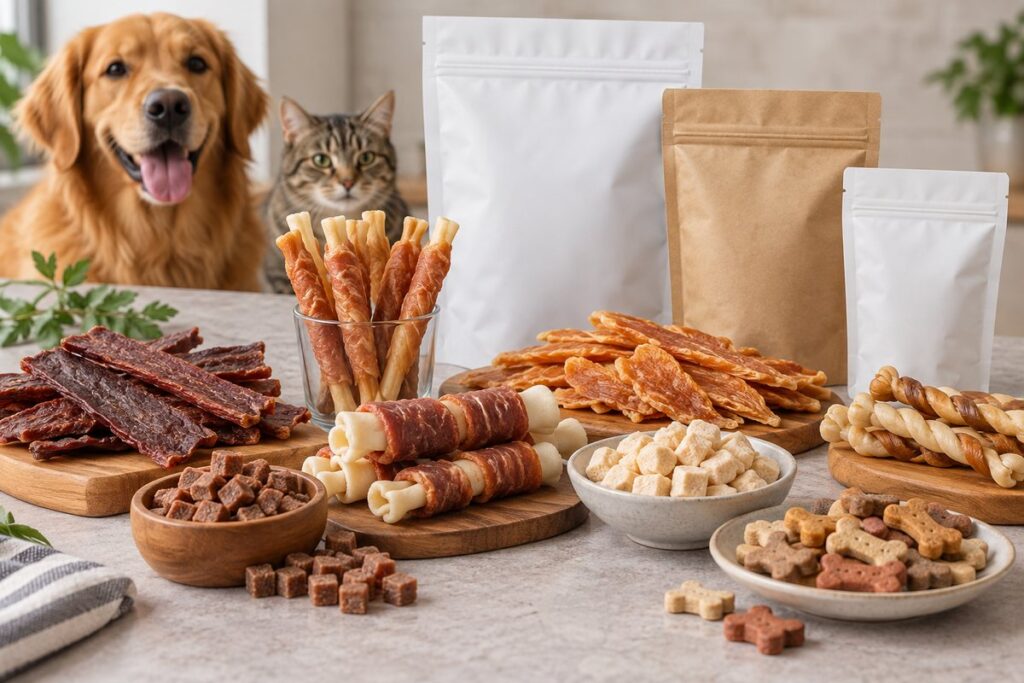
Popular Types of Dog Chews for Private Label Manufacturing
Different chew formats appeal to different customer groups.
Understanding these differences helps brands choose products that fit their retail channels and intended feeding occasions.
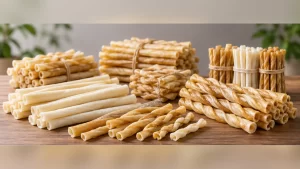
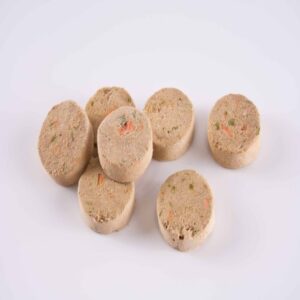
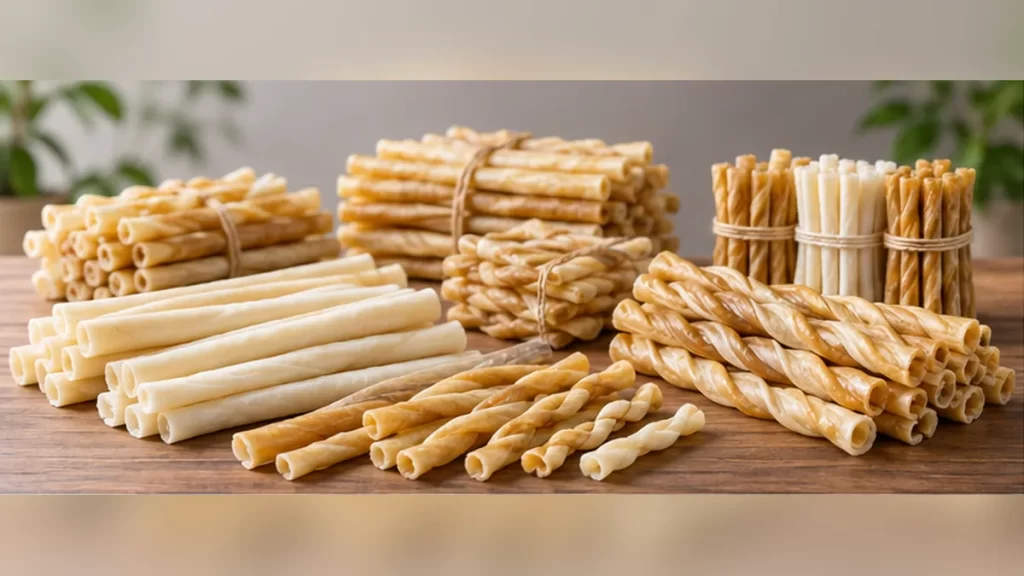
1. Pressed Dog Chews
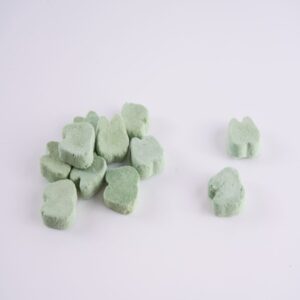
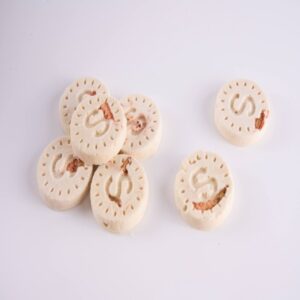
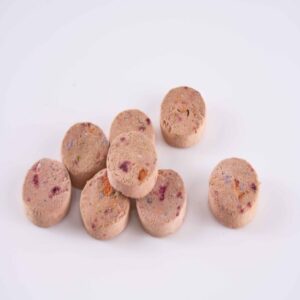
Pressed chews are formed into compact shapes through an appropriate manufacturing process.
For buyers, important specifications include dimensions, density, structure, and consistency between pieces.
These products may be considered for brands seeking traditional chew formats with clearly defined sizes.
When evaluating pressed chews, ask the manufacturer about ingredient composition and how product consistency is controlled during production.
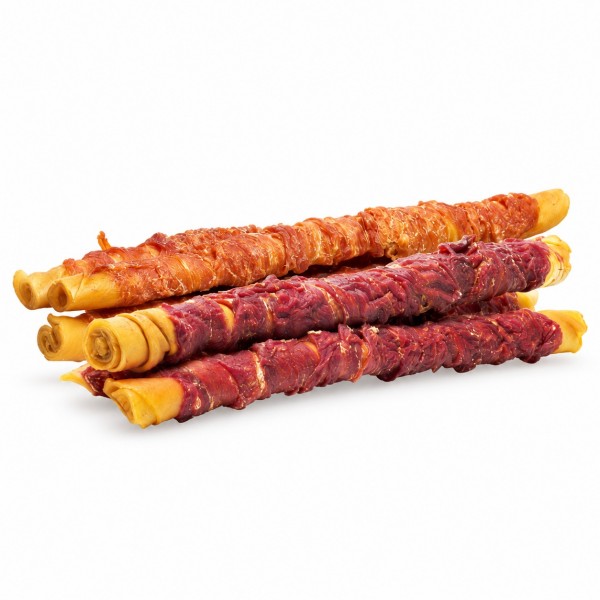
2. Twisted Dog Chews
Twisted chews feature a recognizable spiral or twisted structure.
Their distinctive appearance can help brands create visually differentiated retail products.
Depending on the formulation and manufacturing method, twisted products may combine different ingredients or layers.
Key considerations include:
- Twist consistency
- Product thickness
- Length tolerance
- Ingredient distribution
- Packaging protection
A clear visual specification is particularly important when developing custom twisted dog chews.
3. Knotted Dog Chews
Knotted chews use a familiar bone-like shape that many consumers recognize.
The product’s dimensions and structure should be selected according to the intended dog size and feeding guidance.
During sample evaluation, buyers should examine the consistency of the knot shape, material composition, and product integrity.
No chew should be marketed as universally safe or indestructible. Appropriate sizing and supervised use remain important.
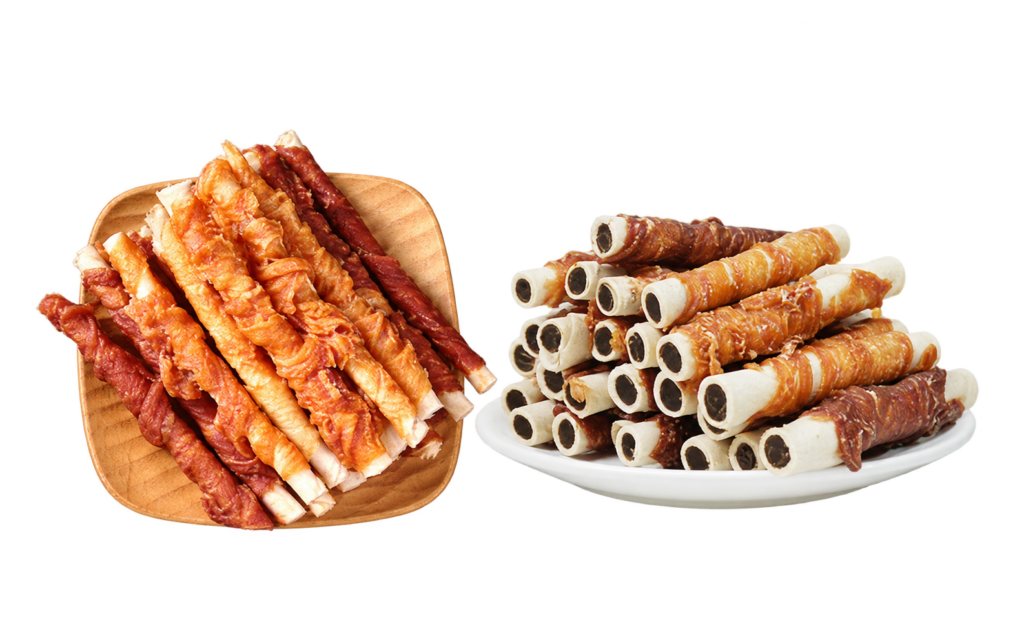
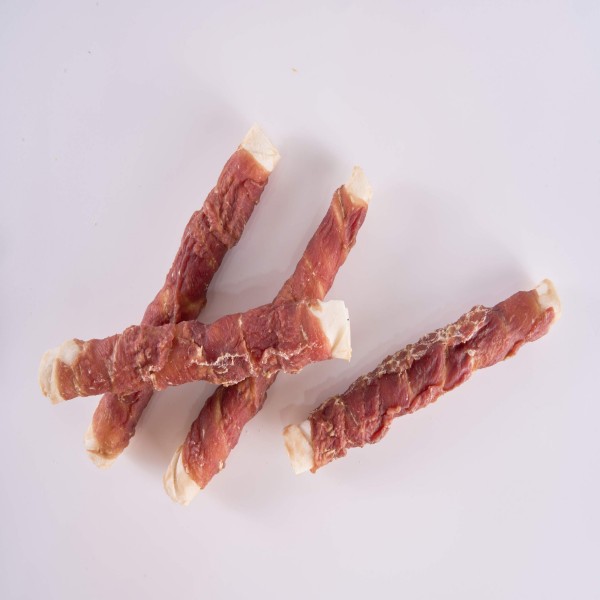
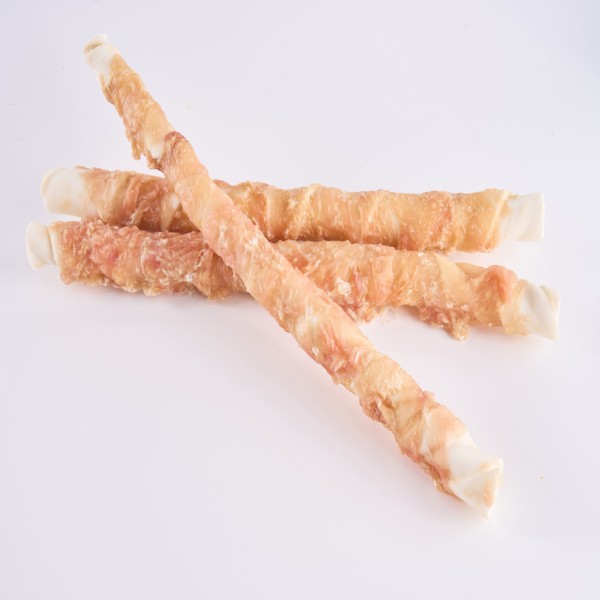
4. Meat-Wrapped Dog Chews
Meat-wrapped products combine a chew base with an outer layer of meat-based material.
Popular formulation directions may include chicken or duck wrapped around a suitable chew structure.
For private label brands, this format offers opportunities to differentiate products through ingredients, appearance, and retail presentation.
However, manufacturers must carefully control attachment, processing, product stability, and packaging.
Buyers should evaluate whether the outer layer remains intact during normal handling and shipping.
How to Choose the Right Materials for OEM Dog Chews
Ingredient selection influences the chew’s appearance, texture, processing behavior, and product positioning.
Before selecting a formula, consider the target consumer and intended application.
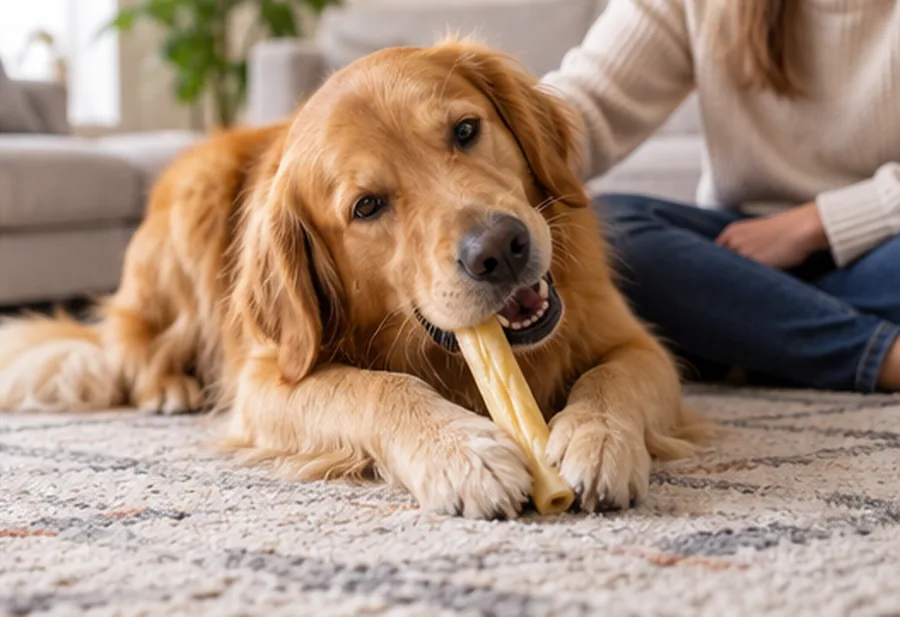
Rawhide-Based Chews
Rawhide-based products use processed animal hide material.
For brands considering this category, important purchasing questions include raw material traceability, processing controls, dimensional consistency, and suitability for the intended dog size.
The manufacturer should provide product-specific feeding and supervision guidance.
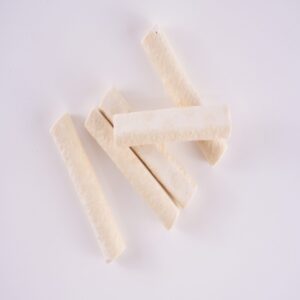
Alternative Chew Materials
Brands may also explore alternative chew formulations using suitable animal-derived or other ingredients.
These products require separate evaluation because their manufacturing characteristics can differ significantly from traditional rawhide-based formats.
Do not assume that two chew products have equivalent durability, digestibility, or feeding characteristics simply because their shapes look similar.
Meat-Based Ingredients
Meat components can contribute aroma, flavor, and product differentiation.
Chicken, duck, and other proteins may be considered according to recipe feasibility and target-market requirements.
When developing meat-containing chews, confirm ingredient declarations, processing controls, and finished-product stability.
Why Product Size and Shape Matter in Private Label Dog Chews
Product dimensions are critical manufacturing specifications.
A brand may request a chew described as medium-sized, but that description is not sufficiently precise for mass production.
A manufacturing brief should define:
- Target length
- Target width or diameter
- Average individual weight
- Acceptable dimensional variation
- Intended dog-size category
- Product appearance
- Packaging requirements
The manufacturer should evaluate the selected dimensions alongside the intended feeding guidance and any relevant safety considerations.
Written specifications help reduce misunderstandings during sampling and commercial production.
Packaging Options for Private Label Dog Chews
Packaging affects shelf presentation, storage, transportation, and the overall consumer experience.
Common packaging directions include resealable pouches, retail bags, and other product-appropriate formats.
Retail-Ready Packaging
Retail packaging should clearly communicate the product identity and intended use.
Depending on the market, the label may need information such as:
- Product name
- Ingredient declaration
- Net weight
- Feeding instructions
- Storage guidance
- Batch identification
- Responsible business information
Final label requirements depend on the destination country and applicable rules.
Bulk Packaging for Distributors
Some buyers require bulk packaging for further processing, approved repacking, or distribution.
Before choosing this option, confirm food-contact packaging suitability, product protection, traceability, and local repacking requirements.
Customized Branded Packaging
For OEM projects, printed packaging can help establish a consistent brand identity.
Discuss artwork specifications, packaging material, minimum print quantities, and approval procedures before confirming production.
Quality Control in Dog Chew Manufacturing
Quality control should begin before mass production.
An experienced manufacturing partner should have systems for evaluating incoming materials, production conditions, finished products, and shipment readiness.
Important checks may include:
Raw Material Inspection
Raw materials should be assessed according to the approved product specification.
Traceability records help identify the materials associated with individual production batches.
Processing Consistency
Manufacturing controls should help maintain consistent product dimensions, structure, appearance, and relevant physical properties.
Microbiological and Product Testing
Testing requirements should be determined by the product, manufacturing process, destination market, and applicable regulatory obligations.
Ask which tests are performed, how frequently they are conducted, and what release limits apply.
Finished Product and Packaging Inspection
Before shipment, buyers should confirm that finished products meet the agreed specification and that packaging is suitable for transportation.
A retained approved sample and written quality criteria can support future repeat orders.
Why Choose Matchwell Pets for OEM Dog Chews?
Matchwell Pets provides OEM and ODM pet treat manufacturing services for business customers.
Our product portfolio includes dog chews, jerky treats, freeze-dried meat snacks, training rewards, cat treats, and pet wet food.
We understand the importance of connecting product development with actual commercial requirements.
For private label dog chew projects, our team can discuss:
- Available chew formats
- Product specifications
- Ingredient and recipe options
- Packaging requirements
- Sample development
- Minimum order quantities
- Production arrangements
- Export documentation requirements
Matchwell Pets also maintains food-safety management certifications, including BRC and IFS, as described in our company information. Buyers should request current, product-relevant certificates and confirm their scope.
Explore our private label dog chews manufacturing solutions for more information about available product formats and OEM project requirements.
Frequently Asked Questions
Can I customize the shape of private label dog chews?
Customization may be possible depending on the material, manufacturing process, tooling, and order requirements. Confirm technical feasibility with the manufacturer.
What is the MOQ for private label dog chews?
Minimum order quantities depend on chew type, formulation, packaging, and SKU configuration. Request a quotation based on your intended product specification.
Can I create my own dog chew brand without owning a factory?
Yes. Private label and OEM manufacturing allow brands to work with an external manufacturer for product development and production.
What information should I provide to an OEM dog chew manufacturer?
Provide the desired chew format, ingredients, dimensions, packaging, target market, initial quantity, and expected launch schedule.
Can I request samples before mass production?
Sample evaluation should be part of the development process. Ask the manufacturer about sample specifications, availability, lead times, and approval procedures.
Conclusion: Choose an OEM Partner That Understands Your Product Requirements
Developing private label dog chews requires careful coordination between product design, manufacturing, quality control, and packaging.
The right manufacturing partner should understand both the technical requirements of the product and the commercial expectations of the brand.
Whether you are launching your first dog chew SKU or expanding an established pet treat portfolio, a clearly defined specification helps reduce development risks and support consistent repeat orders.
Looking for a reliable private label dog chews manufacturer?
Contact Matchwell Pets to discuss your OEM/ODM project, request product information, and explore customized dog chew manufacturing solutions.
Share your preferred product format, dimensions, packaging requirements, destination country, and estimated order quantity to receive a more relevant proposal.