
Why Consumers Prefer Limited Ingredient Dog Treats
Walk through a pet store in the United States or Canada and one message appears again and again: fewer, simpler, more recognizable ingredients. That preference is especially visible in the treat aisle, where shoppers can choose among jerky strips, freeze-dried bites, biscuits, training rewards, chews, and functional snacks.
For many pet parents, the appeal of limited ingredient dog treats is easy to understand. A short ingredient panel feels easier to read, the main protein is usually clear, and the product can fit more comfortably into a carefully managed feeding routine. In a category built around trust, those advantages can carry real weight.
Research supports the importance of ingredients in treat selection. A recent systematic review of pet food purchasing behavior found that ingredients and taste were among the attributes pet owners valued most when choosing treats, while price was relatively less important in the studies reviewed.
However, “limited ingredient” does not automatically mean better for every dog. Successful products still need good nutrition, strong palatability, safe processing, clear labeling, and honest positioning. For pet brands and retailers, the opportunity lies in combining simplicity with substance.

What Are Limited Ingredient Dog Treats?
There is no single recipe that every limited ingredient treat must follow. In the market, the term usually describes a deliberately simple formula made with:
- One clearly identified animal protein, such as chicken, duck, beef, lamb, salmon, or rabbit
- Few supporting ingredients
- No unnecessary colors, flavors, or complicated filler systems
- A straightforward product name and ingredient panel
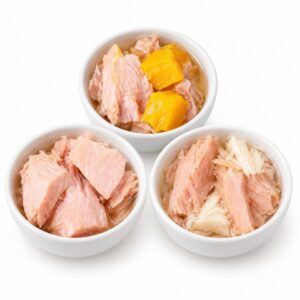
Some products contain only one ingredient, such as freeze-dried beef liver or air-dried chicken breast. Others may combine a protein with a small number of functional ingredients, such as chicken and sweet potato or salmon and pumpkin.
“Limited ingredient,” “single protein,” and “single ingredient” are related but not identical. A treat can use one animal protein while still containing several other ingredients. Brands should describe the formula precisely rather than treating the terms as interchangeable.
1. Shorter Labels Are Faster to Understand
Modern shoppers often make decisions in seconds. A long ingredient list filled with unfamiliar terms creates more work at the shelf or on a mobile product page. A short list reduces that friction.
In one U.S. consumer survey reported by Petfood Industry, 86% of respondents said they were more likely to purchase a pet food or treat when they recognized most of the ingredients. That does not mean every unfamiliar ingredient is undesirable. Many essential or useful ingredients have technical names. It does show, however, that recognizability strongly influences confidence.
Limited ingredient treats give brands a simple story to communicate:
Real chicken. Sweet potato. A carefully controlled process. Nothing included without a reason.
That message is easy to understand on a store shelf, Amazon listing, product detail page, or short-form video.

2. Pet Parents Want More Control Over What Their Dogs Eat
Owners increasingly consider treats part of the dog’s overall diet rather than an occasional extra. When several family members offer rewards throughout the day, the ingredient and calorie contribution can add up quickly.
A simpler treat makes daily feeding easier to track. Pet parents can identify the protein source, compare it with the dog’s main food, and avoid ingredients they have personally chosen not to feed.
This sense of control matters even when a dog has no diagnosed food allergy. Some owners are managing occasional digestive concerns, rotating proteins, following a veterinarian’s feeding plan, or simply trying to keep the total diet consistent.
The label remains essential. In the United States, the FDA requires animal food ingredients to be listed by their common or usual names in descending order by weight. A well-designed limited ingredient product makes that required information especially easy to use.
3. Simple Formulas Can Fit Ingredient-Avoidance Routines
Some consumers buy limited ingredient treats because they want to avoid a specific protein, grain, or additive. A clearly identified single-protein recipe can make that choice more manageable.
This benefit should be communicated carefully. A retail limited ingredient treat is not automatically a veterinary elimination diet, and it should not be marketed as a treatment for allergies. According to the Merck Veterinary Manual, diagnosing a food allergy requires a strictly controlled elimination or hydrolyzed diet planned with a veterinarian. Every food, treat, flavored medication, and supplement used during the trial can matter.
Responsible brand language focuses on verifiable product facts:
- “Made with one animal protein”
- “Chicken-free recipe” when the full formula and production controls support the claim
- “Three-ingredient formula”
- “No artificial colors or flavors” when accurate
Avoid claims such as “cures allergies,” “prevents itching,” or “safe for every sensitive dog.” Clear facts build more trust than exaggerated promises.

4. Limited Ingredient Products Match the Clean-Label Mindset
Pet food trends often mirror human food trends. North American consumers are accustomed to seeing short labels, recognizable ingredients, origin stories, and minimally processed positioning in their own grocery aisles. Many bring the same expectations to products for their dogs.
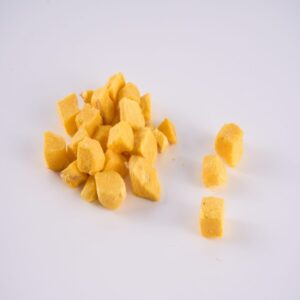
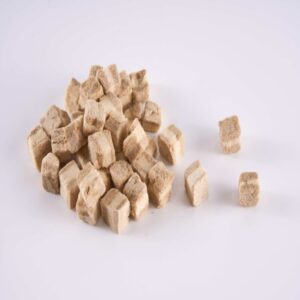
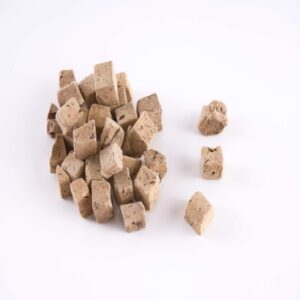
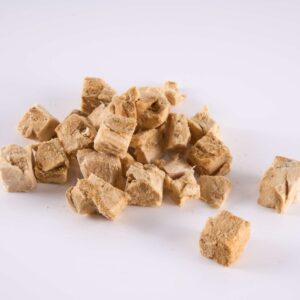
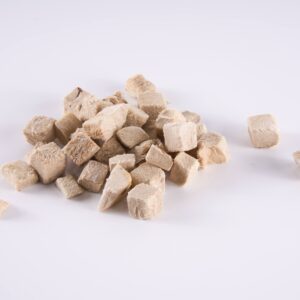
Limited ingredient treats fit this mindset because the value is visible. Chicken jerky looks like chicken. Freeze-dried liver retains the recognizable character of the original ingredient. Sweet potato chews have a color and texture consumers can connect with the source.
That visual honesty is particularly valuable online, where buyers cannot touch or smell the product before ordering. Clear close-up photography, a readable ingredient panel, sourcing information, and an explanation of the production method help reduce uncertainty.
For brands, “clean label” should be more than a front-of-pack style. It should connect the formula, supplier documentation, manufacturing controls, packaging claims, and product photography into one consistent story.
5. A Clear Protein Story Supports Premium Positioning
Consumers often perceive a treat centered on a named protein as more purposeful than a generic snack. “Duck jerky” or “freeze-dried salmon bites” immediately communicates flavor, format, and value.
That clarity can support a premium price—but only when the product experience delivers. Pet parents still expect:
- An aroma and texture dogs enjoy
- Consistent size, color, and moisture
- Pieces that are easy to portion
- Packaging that protects freshness
- Reliable food-safety and quality controls
- Honest country-of-origin and ingredient information
A short ingredient list cannot compensate for poor palatability, excessive breakage, inconsistent batches, or vague sourcing. The most competitive limited ingredient treats combine a focused formula with disciplined manufacturing.
6. They Work Well as Training and Everyday Rewards
Training treats are given frequently, so owners often prefer small, easy-to-portion rewards with a clear ingredient profile. Limited ingredient bites can work especially well when they are:

- Small enough for repeated reinforcement
- Soft or easy to break
- Aromatic enough to hold the dog’s attention
- Low in calories per piece
- Non-greasy and convenient to carry
Calorie communication is important regardless of ingredient count. The American Animal Hospital Association’s weight-management guidance recommends incorporating a treat allowance of up to 10% of total daily calories. Brands can help owners follow that guidance by providing calories per treat or per piece, realistic serving suggestions, and visible size references.
Convenience also expands the audience. A resealable pouch, stable texture, and multiple piece sizes can turn a simple formula into a practical product for puppy training, daily walks, travel, and enrichment toys.
7. Simplicity Makes Products Easier to Compare and Trust
Two products may use similar front-of-pack language, but consumers increasingly check the back panel. A limited ingredient formula gives them fewer variables to compare.
That can reduce purchase anxiety for first-time buyers and encourage repeat purchases when the dog responds well to the product. The effect is especially useful for independent pet retailers and e-commerce brands, where staff recommendations, reviews, and educational content influence the final decision.
Simple formulas also create strong merchandising opportunities. Retailers can organize products by:
- Protein source
- Texture or format
- Life stage or dog size
- Training, chewing, or everyday-reward occasion
- Ingredients excluded from the formula
The easier a product is to explain, the easier it is for store associates, customer-service teams, creators, and consumers to recommend it accurately.

What Consumers Still Expect Beyond a Short Ingredient List
Limited ingredient positioning gets attention, but it is not the whole product. Before launch, brands should validate five areas.
Palatability
Dogs make the final decision. Test aroma, texture, acceptance, and repeat interest across appropriate dogs—not just one household pet.
Safety and consistency
Review raw-material specifications, supplier approval, allergen management, foreign-material controls, microbiological testing, moisture targets, and batch traceability.
Claim accuracy
Verify every “free from,” single-protein, natural, and processing claim against the complete formula and production environment. Cross-contact controls are particularly important when several proteins run in one facility.
Shelf life and packaging
A simple formula may still require careful control of water activity, oxidation, and package barrier performance. Confirm the shelf-life target with product-specific validation.
Useful label information
Provide feeding guidance, calorie information, storage instructions, ingredient names, guaranteed analysis where required, manufacturer or distributor information, lot identification, and market-specific compliance details.
What Limited Ingredient Treats Mean for Pet Brands and Retailers
For B2B buyers, this category offers more than one SKU. A focused platform can support a coordinated product family across proteins and formats.
| Product concept | Consumer appeal | Possible format |
|---|---|---|
| Single-ingredient chicken | Familiar, easy to understand | Air-dried jerky or freeze-dried bites |
| Duck and sweet potato | Named protein with a simple supporting ingredient | Strips or soft bites |
| Salmon | Distinct flavor and premium positioning | Cubes, strips, or freeze-dried pieces |
| Rabbit or lamb | Alternative-protein variety | Jerky or training bites |
| Sweet potato | Meat-free treat option | Slices or chews |
Start with a clear target consumer and use occasion. A training treat needs different piece size, texture, calorie density, and packaging from a long-lasting chew. Formula simplicity should support the product’s job rather than become an arbitrary ingredient-count target.

Build a Limited Ingredient Dog Treat Line With Matchwell
Matchwell helps pet brands, distributors, retailers, and e-commerce sellers develop private label dog treats for international markets. Available development paths can include single-ingredient and limited ingredient recipes, named-protein concepts, jerky, training bites, air-dried products, freeze-dried treats, and customized packaging.
Our manufacturing and quality approach is supported by BRC, IFS, and FSSC 22000 certification, laboratory testing, and third-party inspection cooperation. Buyers can work with our team on formula selection, sample confirmation, packaging, quality specifications, and production planning.
Explore our pet treat manufacturing capabilities, learn more about private label dog treats, or contact Matchwell to discuss your target market, protein preference, format, package size, and order requirements.
Frequently Asked Questions
Are limited ingredient dog treats healthier?
Not automatically. A short ingredient list can be easier to understand and manage, but product quality also depends on the ingredients used, processing, calories, safety controls, serving size, and the individual dog’s needs.
Are limited ingredient treats the same as single-ingredient treats?
No. A single-ingredient treat contains one ingredient. A limited ingredient treat contains a small, focused group of ingredients. A single-protein treat may contain one animal protein plus other supporting ingredients.
Can limited ingredient dog treats help with food allergies?
They may make it easier for owners to avoid a known ingredient, but they are not a substitute for veterinary diagnosis. Suspected food allergies should be evaluated through a veterinarian-directed elimination or hydrolyzed diet trial.
What proteins are popular for limited ingredient dog treats?
Chicken, duck, beef, lamb, salmon, rabbit, turkey, and venison are common options. The right choice depends on the target market, consumer familiarity, sourcing, price, palatability, and the brand’s desired positioning.
Can limited ingredient treats be customized for private label?
Yes. Brands can customize the protein, supporting ingredients, format, size, texture, package type, and label design, subject to formulation, processing, regulatory, and minimum-order requirements.