
Common Mistakes Buyers Make When Choosing Dog Treat Suppliers
Choosing the right dog treat supplier can determine whether a product line becomes a profitable, repeatable business or a costly sourcing problem.
For importers, distributors, pet retailers, supermarket buyers, and private label brands, the decision involves much more than finding an attractive product at a low price. A supplier must be able to produce safe and consistent treats, meet the requirements of the destination market, support the desired packaging, deliver on schedule, and scale as sales grow.
Yet many buyers evaluate dog treat suppliers using only a quotation and a few samples. Important questions about ingredient control, quality systems, production capability, and total landed cost are left until after the order is placed.
Below are 12 common mistakes buyers make—and the practical steps that can prevent them.
1. Choosing a Supplier Based Only on the Lowest Price
Price matters, but the lowest quotation is not always the lowest-cost option.
A very low unit price may exclude essential items such as testing, export packaging, custom labels, cartons, documentation, inland transportation, or product development. It may also reflect less expensive raw materials, less strict process control, or inconsistent product specifications.
Quality failures can create costs that are far greater than the initial saving. These may include:
- Rejected shipments
- Customer complaints and refunds
- Relabeling or repacking
- Delayed launches
- Product recalls
- Damage to the buyer’s brand
Instead of comparing only the unit price, ask each wholesale dog treat supplier for a detailed quotation covering product weight, formula, packaging, testing, cartons, tooling, documentation, Incoterms, and payment terms. Compare suppliers on total value and risk—not price alone.
2. Failing to Confirm Whether the Supplier Is a Manufacturer
Some sourcing companies present themselves as factories even though production is outsourced to several facilities. A trading partner is not necessarily a poor choice, but buyers should know who actually controls production and quality.
If the seller does not own or directly manage the production site, it may have limited control over:
- Raw material changes
- Production scheduling
- Corrective actions
- Formula confidentiality
- Quality records
- Traceability
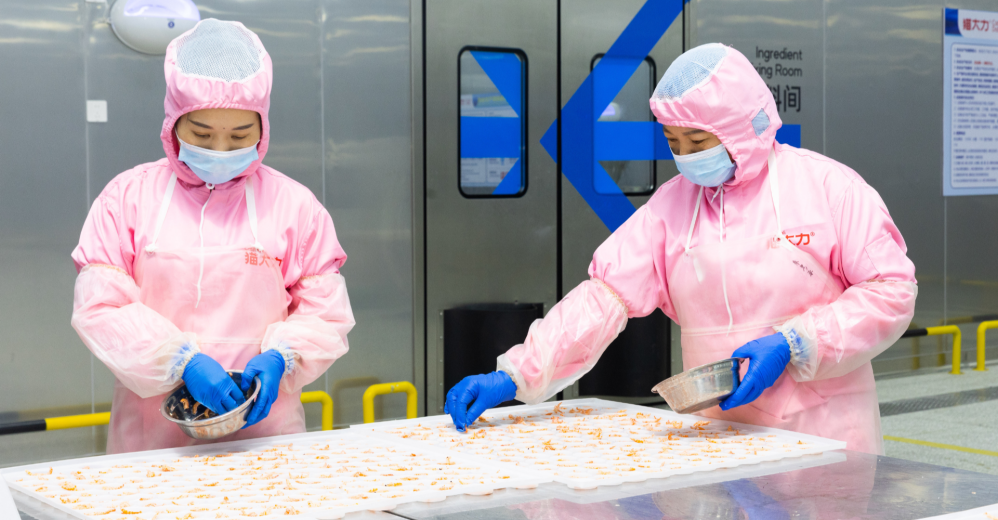
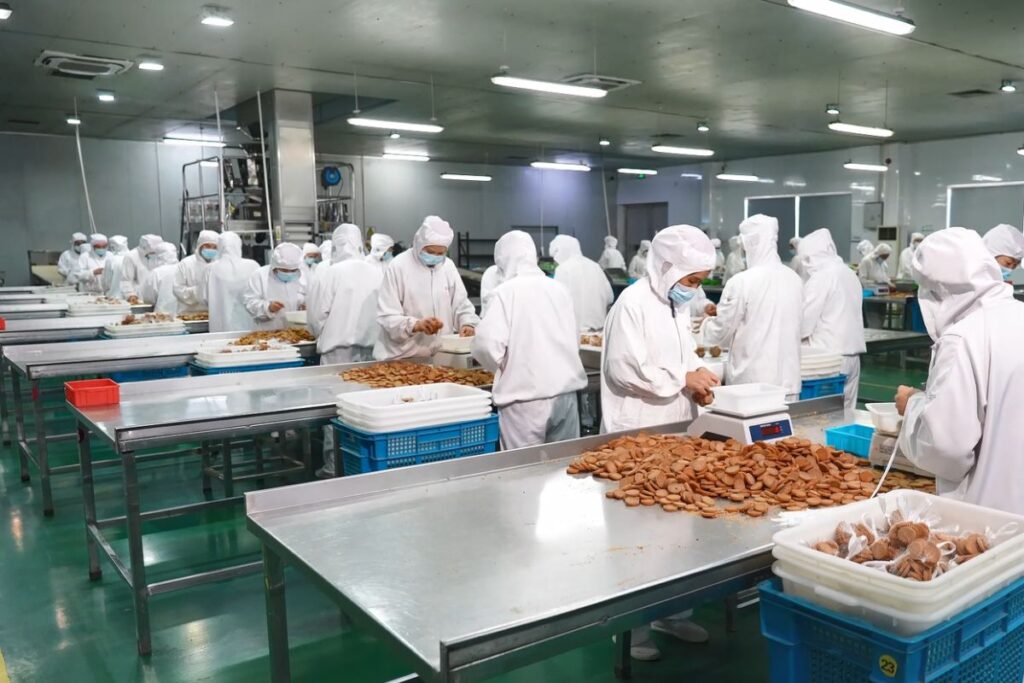
Ask for the factory’s legal name and address, current certifications, production-line information, audit reports where available, and a live video tour or on-site inspection. Confirm that the company shown on the documents matches the facility producing your products.
Transparency is the important point. A dependable partner should clearly explain its role in the supply chain.
3. Checking Certificates Without Verifying Their Scope
Buyers often ask, “Do you have BRC, IFS, HACCP, or FSSC 22000?” and stop after receiving a PDF.
A certificate should be verified more carefully. Check:
- The certified company name and factory address
- The issue and expiry dates
- The product categories covered
- The certification body
- Any exclusions or limitations
- Whether the certificate applies to the actual production site
A factory may be certified for one product category but not for the dog treats you intend to purchase. The supplier should also understand the documentation and product requirements of your destination market.
Certifications are evidence of a management system; they are not a substitute for reviewing how that system is applied to your specific product.
4. Contacting Suppliers Without a Clear Product Brief
“Please quote chicken dog treats” is not a complete sourcing request.
Dog treats that appear similar can have different compositions, dimensions, moisture levels, textures, packaging formats, and quality standards. When the product brief is vague, each supplier quotes a different specification. The resulting price comparison becomes misleading.
A useful request for quotation should define:
- Product category and format
- Target ingredients or protein source
- Ingredients to include or avoid
- Product dimensions and piece weight
- Texture and moisture target
- Guaranteed analysis requirements
- Functional positioning, if applicable
- Net weight per retail pack
- Packaging material and format
- Expected order quantity
- Destination country and sales channel
- Desired launch date
For a private label project, also explain whether you need a stock formula, a modified formula, or complete OEM/ODM development. A precise brief helps dog treat suppliers quote accurately and recommend realistic options.
5. Approving a Good Sample Without Evaluating Consistency
A supplier can make an excellent hand-selected sample. The more important question is whether the factory can reproduce the same quality in every commercial batch.
When assessing samples, do not evaluate appearance alone. Review:

- Odor and palatability
- Color and shape variation
- Size and weight tolerance
- Texture and breakage
- Moisture and water activity, where relevant
- Ingredient list and guaranteed analysis
- Shelf-life expectations
- Packaging seal performance
Keep an approved reference sample and document the agreed specifications before mass production. For a new supplier or new formula, consider a pilot order and request a pre-shipment sample from the actual production batch.
A strong dog treat factory should be able to explain its acceptable tolerances and how it controls batch-to-batch variation.
6. Ignoring Ingredient Traceability and Testing Plans
Dog treat safety begins with raw material control. Buyers should know more than the marketing description printed on the front of the package.
Ask the supplier how it approves ingredient vendors, identifies incoming lots, prevents cross-contamination, and traces materials through production. Depending on the product and destination market, the testing plan may cover microbiological hazards, chemical residues, heavy metals, moisture, water activity, nutritional values, or other risk-based parameters.
Useful questions include:
- Can each finished batch be traced back to its raw material lots?
- Which tests are performed in-house and which are outsourced?
- How often is testing conducted?
- Can the supplier provide a Certificate of Analysis?
- How are nonconforming materials isolated and handled?
- Are retention samples kept from production batches?
The required testing program should be defined according to the product, ingredients, process, sales claims, and importing-country requirements.
7. Comparing Quotations That Use Different Assumptions
Two suppliers may quote the “same” product while using different specifications. One price may be based on a 100 g pouch and another on 90 g. One may include a printed bag, while another assumes a stock pouch with a label. One may quote FOB and another EXW.
Before choosing a supplier, normalize the quotations.
| Comparison Item | What to Confirm |
|---|---|
| Product | Formula, dimensions, piece weight, moisture, and tolerances |
| Packaging | Net weight, pouch structure, printing, carton quantity, and labeling |
| Quality | Testing included, inspection standard, and documentation |
| Commercial terms | MOQ, unit price, tooling, sample fees, and payment terms |
| Logistics | Incoterm, port, palletization, carton size, and freight responsibility |
| Timing | Sample development, packaging production, manufacturing, and dispatch |
Request a revised quotation if any important assumption is unclear. An accurate comparison is more valuable than a fast comparison.
8. Looking Only at the Product MOQ
The minimum order quantity shown in a catalog may not be the true project MOQ.
Several minimums can apply to one private label order:
- Formula MOQ
- Production-run MOQ
- MOQ per flavor or SKU
- MOQ per bag size
- Printed packaging MOQ
- Carton MOQ
- Minimum purchase quantity for a special ingredient
Packaging frequently becomes the limiting factor. A factory might accept a modest quantity of finished treats while the packaging converter requires many more printed pouches.
Ask whether leftover packaging must be paid for, how it will be stored, and whether it can be used for future orders. New brands can sometimes reduce initial inventory risk by choosing an existing formula, a standard bag, and a custom label before moving to fully printed packaging.
The best MOQ is not automatically the lowest. It should balance unit economics, cash flow, shelf life, sales velocity, and reorder timing.
9. Assuming the Supplier Will Handle All Market Compliance
Manufacturers can provide valuable regulatory and documentation support, but the brand owner or importer remains responsible for confirming the requirements of the target market.
Requirements can differ by country and may affect:
- Permitted ingredients and additives
- Product registration or import permits
- Label language and mandatory statements
- Ingredient naming
- Guaranteed analysis format
- Feeding instructions
- Country-of-origin marking
- Nutritional or functional claims
Tell potential dog treat suppliers where and how the product will be sold. A formula suitable for one market may need changes before entering another.
Before printing thousands of packages, have the formula, product claims, and final label reviewed by an appropriate regulatory professional or importing authority. Packaging approval should be a formal project milestone, not an assumption.
10. Overlooking Capacity, Lead Time, and Supply Continuity
A supplier may perform well on a small trial order but struggle when demand increases or peak-season schedules become crowded.
Ask about realistic monthly capacity for your specific product line, not only total factory capacity. Review production lead time, packaging lead time, key raw material availability, maintenance planning, and peak-season constraints.
Buyers should also understand:
- How far in advance orders must be forecast
- Whether repeat orders receive reserved production capacity
- Which ingredients have long replenishment times
- How the factory handles equipment downtime
- Whether an alternative production line is available
- How delays are communicated
A reliable supplier should give an achievable timeline and explain its assumptions. An unrealistically short promise is less useful than a well-managed schedule.
11. Underestimating Communication and Development Support
Slow or unclear communication during supplier selection often becomes a larger problem during production.
Pay attention to whether the supplier:

- Answers technical questions directly
- Confirms details in writing
- Identifies risks before production
- Provides organized samples and documents
- Explains what can and cannot be customized
- Assigns a clear project contact
- Responds constructively when specifications change
For OEM and ODM projects, development capability is especially important. A capable private label dog treats manufacturer should help translate a market idea into a feasible formula, format, package, testing plan, and production schedule.
Good communication is not simply fast replies. It is accurate information, clear ownership, and documented decisions.
12. Skipping a Written Quality Agreement and Pre-Shipment Controls
Verbal approval leaves too much room for disagreement. Before commercial production, document the critical product and process requirements.
A practical quality agreement or approved specification may include:
- Final formula and ingredient declaration
- Product dimensions and tolerances
- Sensory standards
- Physical and nutritional specifications
- Microbiological and chemical limits
- Packaging materials and artwork version
- Coding and shelf-life format
- Sampling and inspection method
- Release documents
- Complaint and corrective-action process
- Procedure for formula, ingredient, or process changes
Also decide whether the buyer, supplier, or an independent inspection company will conduct pre-shipment checks. Specify what happens if a lot does not meet the agreed standard.
This documentation protects both parties and makes repeat orders easier to manage.
A Better Way to Compare Dog Treat Suppliers
Price should be only one part of the final decision. A weighted supplier scorecard can make the process more objective.
| Evaluation Area | Suggested Weight |
| Food safety and compliance | 25% |
| Product quality and consistency | 20% |
| Manufacturing capability and capacity | 15% |
| Total cost and commercial terms | 15% |
| Traceability and testing | 10% |
| OEM/ODM and packaging support | 10% |
| Communication and service | 5% |
Adjust the weighting to suit your business. For example, a supermarket program may place more weight on audits and capacity, while a new e-commerce brand may prioritize manageable MOQ and development flexibility.
Score every supplier against the same written brief, evidence requirements, and sample evaluation process. This reduces the influence of a single attractive price or presentation.
Questions to Ask Before Selecting a Dog Treat Supplier
Use these questions during your next supplier review:
- Which factory will manufacture our products?
- Which current certifications cover that site and product category?
- Can you provide ingredient specifications and traceability records?
- What testing is included in the quotation?
- What are the MOQs for the formula, each SKU, and custom packaging?
- Can you meet the requirements of our destination market?
- What are the sample, packaging, production, and shipping lead times?
- How do you control commercial production against an approved sample?
- What is your monthly capacity for this product?
- Can you support a pilot order and future volume growth?
- How are product changes, deviations, and complaints managed?
- Which costs are not included in the quoted unit price?
Suppliers that answer these questions with clear documents and realistic explanations are easier to assess than those offering only broad promises.
Why the Right Supplier Is a Long-Term Business Asset
The best dog treat suppliers do more than fill purchase orders. They help buyers manage product safety, improve specifications, shorten development cycles, prepare documentation, and plan production as demand changes.
That support becomes increasingly valuable when a brand expands into new flavors, packaging sizes, sales channels, or international markets. Changing factories after launch can require new samples, testing, packaging adjustments, registrations, and customer approvals. Careful supplier selection at the beginning can prevent major disruption later.
The goal is not to find a perfect supplier. It is to find a transparent, capable, and accountable manufacturing partner whose systems match your market and growth plan.
Work With an Experienced OEM and ODM Dog Treat Manufacturer
Matchwell supports wholesalers, distributors, retailers, and pet brands with OEM and ODM manufacturing for private label dog treats. Our capabilities cover product development, formula and packaging customization, quality control, third-party testing cooperation, and export project support.
Matchwell’s quality system includes BRC, IFS, and FSSC 22000 certifications, together with inspections covering raw materials, production, and finished products. We work with buyers to convert product concepts into scalable dog treat programs for their target channels.
If you are comparing dog treat suppliers, contact Matchwell to discuss your desired product type, ingredients, packaging, order quantity, destination market, and launch schedule. Our team can recommend a practical development path and prepare a customized quotation.
Contact Matchwell Pets to request a catalog, samples, or an OEM/ODM project consultation.
Frequently Asked Questions
What should buyers look for in dog treat suppliers?
Buyers should evaluate food safety certifications, ingredient traceability, product consistency, testing, manufacturing capacity, destination-market experience, MOQ, total cost, communication, and OEM/ODM support. These factors should be reviewed against the same written product brief.
Is the cheapest dog treat supplier usually the best choice?
No. The lowest unit price may exclude packaging, testing, documentation, tooling, or logistics costs. Buyers should compare total landed cost and supplier risk as well as the quoted price.
How can I verify a dog treat manufacturer?
Confirm the factory’s legal name and address, verify current certificates and their scope, review audit or inspection information where available, request production and quality-control records, and conduct a live video or on-site factory audit.
What is the difference between a stock formula and a custom formula?
A stock formula is an existing product that can usually be launched faster and with a lower development burden. A custom formula is developed or modified for the buyer’s specifications and may require higher MOQs, more testing, and a longer timeline.
Should I place a trial order before a large order?
For a new supplier or product, a pilot order can help verify production consistency, packaging performance, documentation, shipping, and customer response before the buyer commits to larger inventory.
What information should I send when requesting a quotation?
Provide the product format, ingredients, dimensions, texture, analysis requirements, package size, packaging type, estimated quantity, destination country, sales channel, and required launch date. The more precise the brief, the more accurate the quotation.