
Private Label Dog Training Treats: How to Write a Better Product Brief
“We want a small, soft training treat” sounds like a clear instruction. It still leaves a manufacturer with several unanswered questions.
Small for which dog? Soft at packing or after the pouch has been opened repeatedly? Should the treat stay intact in a pocket? How many rewards should a customer expect from one bag?
These details shape the product more directly than a long list of marketing adjectives. A precise brief helps your brand compare samples fairly, identify trade-offs, and explain what needs to change.
For private label dog training treats, start with the training situation and work backward to the specification.
What Should a Private Label Dog Training Treat Brief Include?
A useful brief defines the target dog, training situation, piece size and weight, texture, ingredient restrictions, energy information, packaging, target market, and approval criteria. It also explains the expected order volume and which requirements are essential. This gives the manufacturer a measurable starting point for development.
Your initial targets do not have to be final. They need to be clear enough for the supplier to identify what can be achieved, what needs testing, and what may conflict.
1. Describe One Training Situation First
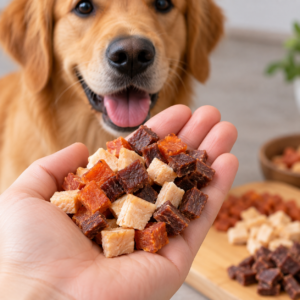
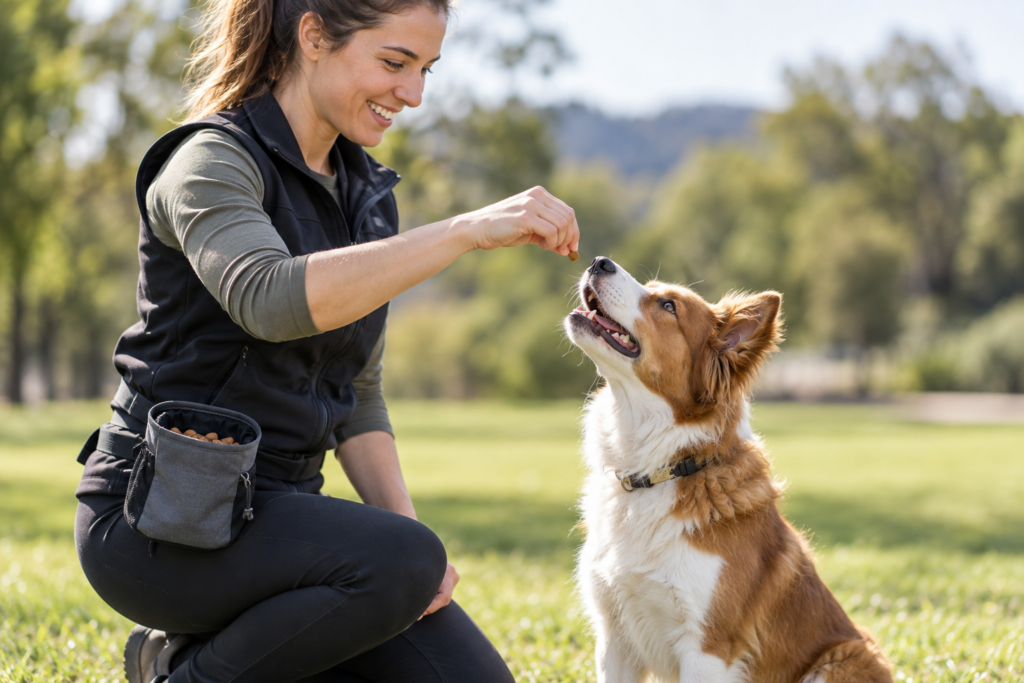
Choose a primary use case rather than trying to serve every owner with one product. Examples include frequent rewards during a puppy class, rewards carried on daily walks, or treats used by professional trainers.
For a class setting, the buyer may prioritize easy portioning and quick delivery. For a walking pouch, handling and resistance to crumbling may receive more attention.
Turn that use case into a short statement: “A reward that owners can retrieve with one hand, portion consistently, and carry through a typical training session.”
That statement is a development objective, not a performance claim. Samples still need to be evaluated against it.
2. Specify Dimensions and Piece Weight Together
Dimensions describe the treat’s shape, but weight helps explain portioning and approximate piece count. Ask the manufacturer to report both, including the proposed tolerance.
Avoid approving a sample solely because it looks small enough. Compare several pieces and record variation. An irregular product may be acceptable, but the commercial specification should explain what normal variation means.
If a 100-gram bag contains pieces averaging 0.5 grams, the theoretical count is about 200. At 1 gram per piece, it is about 100. These are arithmetic examples, not specifications for an existing Matchwellpets product.
Decide whether approximate piece count has a role in your customer proposition. If you intend to make a pack claim, establish how it will be supported despite natural weight variation.
3. Connect Energy Information to the Actual Reward
A per-piece figure is easier to interpret when the piece weight is controlled. Ask how energy information is determined and ensure the calculation uses the correct product and reporting basis.
For development arithmetic, kilocalories per piece equal kilocalories per gram multiplied by grams per piece. If either input changes, the resulting figure changes.
Treat this as a formulation and labeling discussion with the responsible specialists. A product should not be called “low calorie” simply because the piece looks small.
Include the intended feeding directions in the development review. Avoid promising that owners can reward without limits, and do not turn a training treat into a substitute for a complete diet through careless wording.
4. Define Texture Through Observable Behavior
“Soft” can describe several different experiences. Specify whether the treat should bend, break cleanly, compress between fingers, or split into smaller portions.
Then add the handling requirements. Does it leave noticeable residue? Does it stick to other pieces? Does repeated movement in a training pouch create excessive crumbs?
Assess the product under stated conditions and record when the pouch was opened. Comparing a freshly opened sample with another that has been exposed for several days can produce misleading conclusions.
Ask the manufacturer to propose texture checks appropriate to the formulation. Instrumental measurements can help, but the method should relate to the handling experience your product is intended to deliver.
| Brief item | Useful specification question |
|---|---|
| Intended user | Which dog size and training situation are primary? |
| Piece dimensions | What size range is acceptable? |
| Piece weight | What average and variation will be controlled? |
| Texture | What observable behavior defines an acceptable sample? |
| Handling | What residue, sticking or crumbling is acceptable? |
| Energy information | What is the basis for the declared value? |
| Packaging | How will owners open, carry and reclose the pack? |
| Approval | Which checks must pass before production release? |
5. Make Ingredient Restrictions Specific
List required ingredients separately from prohibited ingredients. Explain whether a restriction comes from brand positioning, an existing product range, or a technical requirement.
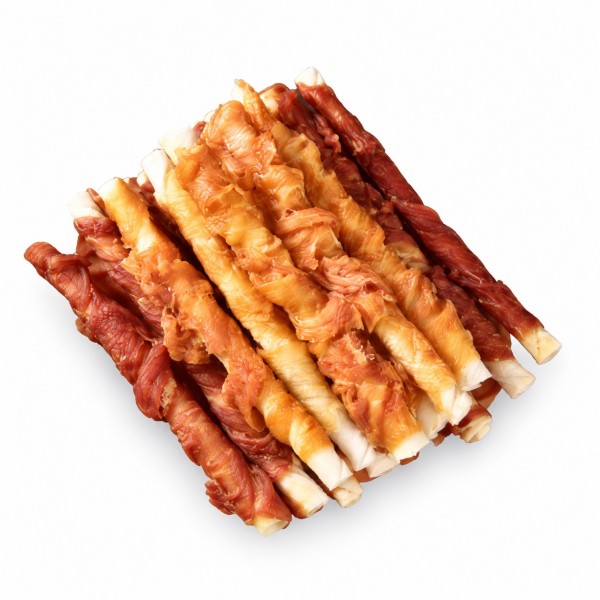
If you want a particular animal protein, ask about all relevant ingredient sources rather than checking only the ingredient emphasized on the front label. Flavor components and other materials can matter to the brief.
Do not use “limited ingredient” as a substitute for a complete formulation discussion. A short ingredient list also does not establish suitability for every dog with a dietary sensitivity.
Ask the manufacturer to flag any processing or packaging consequences of your restrictions. The purpose is to identify trade-offs before artwork and purchasing commitments are made.
6. Test the Pack as Part of the Product
Training treats are handled repeatedly. Evaluate opening, dispensing, and reclosing with the intended pouch, not only a temporary sample bag.
Check whether the opening makes one-handed access practical and whether the pouch fits the use case. A larger bag may suit home replenishment while a smaller format may be easier to carry.
Discuss film specifications, seal integrity, and the evidence supporting storage instructions and shelf life. A zipper is a convenience feature; its presence alone does not validate the product’s storage performance.
Review the finished pack after representative handling. Product and packaging decisions should reach approval together.
7. Approve Against a Written Scorecard
Set up a sample scorecard before the samples arrive. Separate mandatory requirements from preferences so that an attractive aroma or shape does not distract from a failed essential criterion.
Include piece measurements, handling observations, packaging, ingredient documentation, and the agreed evaluation of feeding acceptance. Keep photographs and sample identifiers with the results.
Ask for revisions that describe the observed problem. “Too crumbly after carrying in the pouch” gives the manufacturer more direction than “make it more premium.”
Retain the approved reference and revision history. Before commercial production, confirm whether the sample reflects the intended manufacturing process and final packaging.
8. Build the Commercial Brief Around the Approved Product
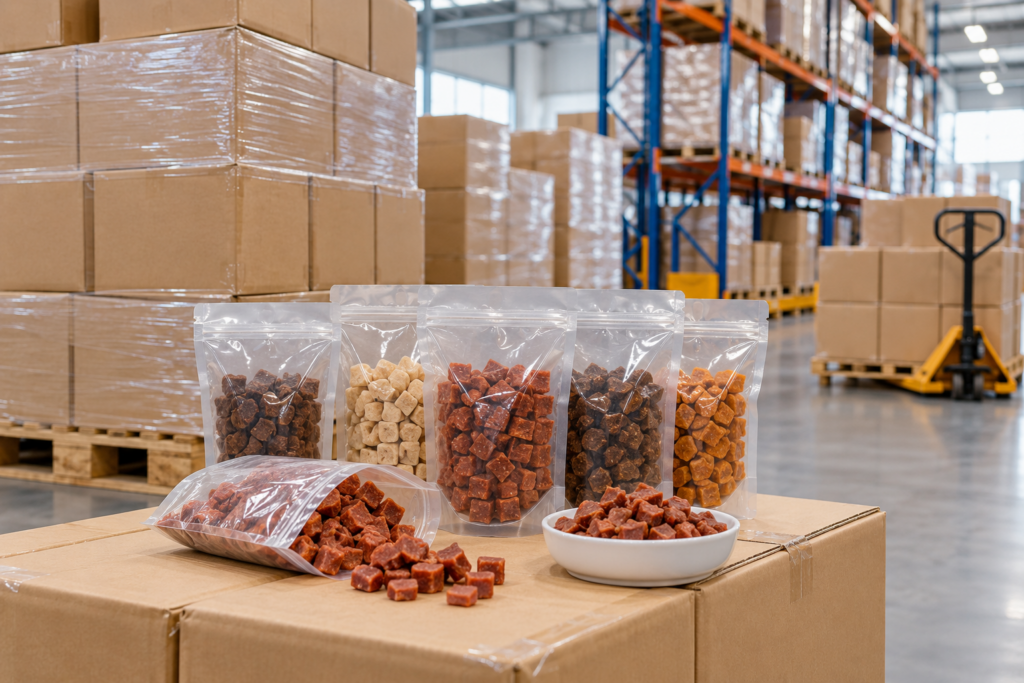
Once the product direction is clear, specify pack weight, case quantity, forecast volume, destination, artwork needs, and required delivery timing.
Request MOQ and lead time for the actual configuration. A different recipe, pouch, or printing requirement may change the quotation.
Matchwellpets provides dog training treats for wholesale and private label projects. Use a completed brief to make the first discussion more specific and the resulting samples easier to compare.

Frequently Asked Questions
What is the best size for a training treat?
There is no single size for every dog and training situation. Define the target use, then assess dimensions, weight, portioning, and handling together.
Can we request a custom shape?
Include the shape in your inquiry and ask the manufacturer to assess feasibility, tooling, tolerances, and commercial implications. Do not assume all designs use the same process.
Should every product requirement be fixed before sampling?
No. Define essential requirements and initial targets first. Sampling should resolve open questions, with revisions recorded before approval.
What information helps obtain a useful quotation?
Provide the formula direction, piece format, pack weight, packaging requirements, target market, estimated volume, and intended timing. Identify any requirements that cannot change.
Start Your Training Treat Development Brief
Bring your target use case and product requirements to Matchwellpets. Request a sample proposal and quotation for your intended configuration, then evaluate the product against agreed criteria before moving into production.