
Private Label Dental Chews for Dogs: A Complete OEM Manufacturing and Product Development Guide
Launching a private label dog dental chew is about more than selecting an attractive shape and adding a logo to the packaging.
For pet brands, retailers, and distributors, a successful chew needs to balance product design, ingredient selection, texture, manufacturing consistency, and commercial positioning.
The challenge is particularly important for dental chews because consumers often associate the category with specific oral-care benefits.
Those benefits must be supported by appropriate evidence, while the finished product must also meet relevant safety, labeling, and quality requirements.
For businesses evaluating private label dental chews for dogs, working with a manufacturer that understands product development and wholesale production can simplify the process.
This guide explains how OEM dental chew manufacturing works, what buyers should evaluate before approving samples, and how to prepare a product specification for commercial production.
What Are Private Label Dental Chews for Dogs?
Private label dental chews are dog chew products manufactured by a specialist producer and sold under another company’s brand.
The brand owner typically determines the intended market, product positioning, packaging, and commercial requirements.
The manufacturer develops or produces the agreed chew format according to approved specifications.
Depending on the project, private label dental chews may involve:
- Customized shapes and dimensions
- Different textures and chewing characteristics
- Selected protein or flavor ingredients
- Specific product colors and appearances
- Functional ingredient concepts
- Customized retail packaging
- Different pack counts and product sizes
The extent of customization depends on the manufacturer’s production capabilities and the project’s commercial requirements.
For buyers developing an entire chew collection, working with a private label dog chew manufacturer can provide access to several formats within a coordinated sourcing program.
1. Start With a Clearly Defined Target Customer
Before discussing product formulas, private label buyers should define the intended customer.
A chew developed for a small dog may require different dimensions and physical characteristics from a product intended for larger breeds.
The same applies to the intended shopping occasion.
For example, a retailer may want an everyday chew product positioned within a general dog treat assortment.
Another brand may want a premium oral-care product supported by suitable testing and technical documentation.
These concepts may look similar on the shelf but involve different development requirements.
A useful product brief should identify the intended dog size, relevant age considerations, product format, target retail price, and destination market.
Defining these requirements early makes communication with the manufacturer more productive.
2. Choose the Right Dental Chew Format
Dental chew products are available in different physical formats.
The appropriate choice depends on the intended chewing experience, manufacturing feasibility, and target positioning.
Ridged Chew Sticks
Ridged sticks use defined surface shapes and profiles.
They can be developed in different lengths, thicknesses, and cross-sectional designs.
These features may influence how the product is held and chewed.
However, a ridged appearance alone does not prove that the product reduces plaque or tartar.
Any specific dental-performance claim should be supported by suitable evidence.
Shaped Dental Chews
Shaped chews may use geometric profiles designed to create a distinctive appearance or chewing experience.
From a private label perspective, the shape can contribute to product differentiation.
Buyers should consider dimensional consistency, manufacturing tolerances, packaging fit, and suitability for the intended dog population.
Functional Chew Concepts
Some product concepts incorporate additional ingredients intended to support particular product positioning.
These may include flavor components or other ingredients selected for a specific formulation objective.
Manufacturers should verify ingredient compatibility, processing stability, and applicable labeling requirements.
Brands should not assume that the presence of an ingredient automatically establishes a health benefit.
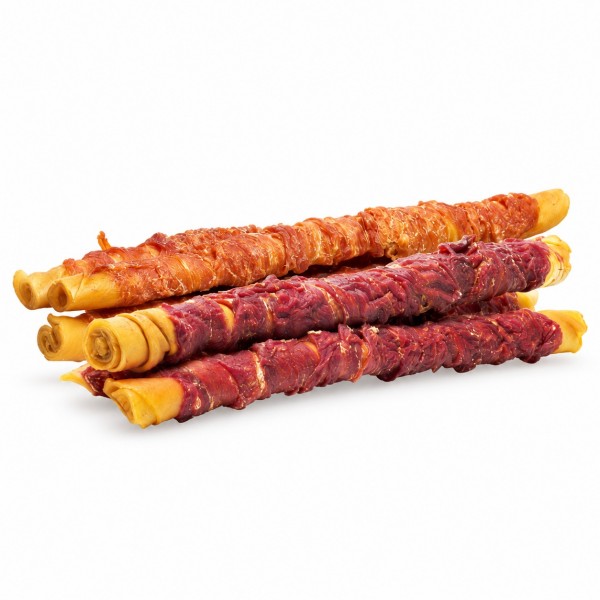
For examples of available product concepts, buyers can review Matchwell’s dog dental chew sticks and discuss which characteristics can be adapted for an OEM project.
3. Texture and Chewing Characteristics Matter
Texture is one of the most important aspects of dental chew development.
A product’s physical characteristics affect how dogs interact with it.
Factors that influence chew texture include ingredient composition, moisture level, geometry, density, and manufacturing conditions.
For private label buyers, the objective should be to create a consistent product suited to its intended use.
Hardness
The chew should have appropriate physical characteristics for its target consumers.
Excessive hardness can create safety concerns, including dental injury risks, while a product that breaks apart too easily may not provide the intended chewing experience.
The appropriate specification should be established through product development and relevant safety evaluation.
Flexibility and Breakage
Some formulations are more flexible, while others are comparatively rigid.
Manufacturers should evaluate whether a product fractures, crumbles, or changes texture under expected handling and use conditions.
The behavior of broken pieces can also be relevant to product safety.
Consistency Between Batches
A sample may meet the buyer’s expectations, but repeat production must deliver comparable results.
Buyers should therefore agree on measurable physical specifications before approving mass production.
These may include dimensions, weight tolerances, moisture specifications, and relevant texture parameters.
4. Ingredients and Flavor Development
Even a carefully designed chew will face commercial challenges if dogs are reluctant to consume it.
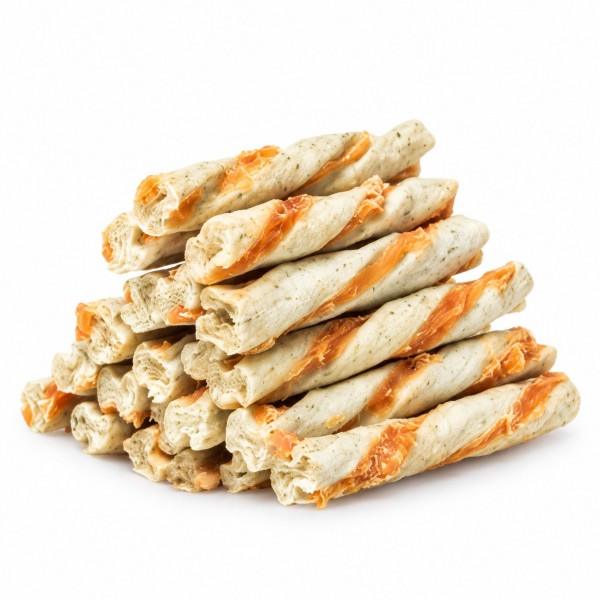
Flavor development is therefore an important part of product design.
Manufacturers may explore appropriate animal-derived ingredients, flavor systems, and other formulation components to achieve the desired sensory profile.
Chicken, duck, beef, and other available flavors may be considered depending on the product concept and sourcing feasibility.
However, a flavor that performs well in one chew formulation may not produce the same result in another.
Processing temperature, moisture, ingredient interactions, and product texture can influence the final sensory characteristics.
For this reason, manufacturers should evaluate the complete product rather than relying on ingredient selection alone.
For private label projects, the formula should also support consistent manufacturing and meet applicable ingredient and labeling requirements.
5. Evaluate Safety, Quality, and Product Claims
Dental chew development requires a disciplined approach to product safety.
Before commercial production, buyers should request appropriate technical documentation and discuss the manufacturer’s quality-control procedures.
Raw Material Control
Manufacturers should establish procedures for evaluating incoming ingredients and verifying relevant supplier information.
Ingredient specifications and traceability records are important components of the quality system.
Production Controls
Processing conditions should be managed to support the agreed product specifications.
Depending on the manufacturing method, controls may involve mixing, forming, moisture management, drying, inspection, and packaging.
Finished Product Testing
Relevant checks may include:
- Microbiological quality
- Moisture and other physical parameters
- Piece dimensions and weight
- Packaging and seal integrity
- Shelf-life stability
- Applicable contaminant testing
- Product-specific safety assessments
Testing requirements should be based on the formulation, production process, intended use, and destination market.
Dental Health Claims
A product’s name or appearance does not independently establish oral-health efficacy.
If a brand intends to claim plaque reduction, tartar reduction, or another measurable dental benefit, it should identify the evidence and regulatory review needed to support that claim.
Appropriate controlled testing may be necessary.
This distinction is important for brands selling in markets with different labeling and advertising requirements.
For buyers who want to better understand production consistency, Matchwell also provides a guide to the dog chew manufacturing process.
6. Develop Packaging That Supports the Product
Packaging influences retail presentation, product protection, transportation, and consumer convenience.
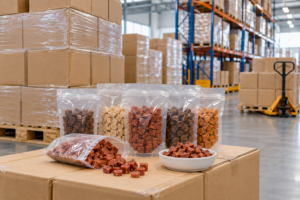
Private label dental chews may be packaged in resealable pouches, jars, multipacks, or other formats suitable for the product.
Each option offers different commercial and operational considerations.
For example, a resealable pouch may be convenient for a multi-piece retail pack.
A jar may be appropriate for certain product shapes and retail positioning.
Multipacks may help brands introduce several compatible product options.
However, packaging should be selected according to the actual product’s stability and protection requirements.
A visually attractive package is not sufficient if it fails to maintain the required product quality.
When developing packaging, buyers should confirm product weight, piece count, material specifications, label information, carton dimensions, and transportation requirements.
Artwork should be finalized only after the relevant product specifications and compliance requirements have been confirmed.
7. How the Private Label Dental Chew Manufacturing Process Works
A structured OEM project helps both the buyer and manufacturer reduce unnecessary revisions.
A typical workflow includes several stages.
Step 1: Share the Product Concept
The buyer provides the intended product type, reference images, dimensions, target market, packaging requirements, estimated quantity, and target pricing.
Step 2: Review Manufacturing Feasibility
The factory evaluates available chew formats, ingredient options, equipment compatibility, and packaging requirements.
At this stage, the supplier can identify which features are available within existing production capabilities and which require additional development.
Step 3: Develop and Evaluate Samples
The manufacturer prepares samples against the agreed specifications.
The buyer evaluates appearance, dimensions, texture, aroma, packaging suitability, and other relevant quality characteristics.
Additional revisions may be required.
Step 4: Confirm the Commercial Specification
Once a suitable sample has been approved, the parties confirm product specifications, packaging details, quality requirements, pricing, and production arrangements.
Relevant documentation and any necessary testing should be agreed upon before the production order is finalized.
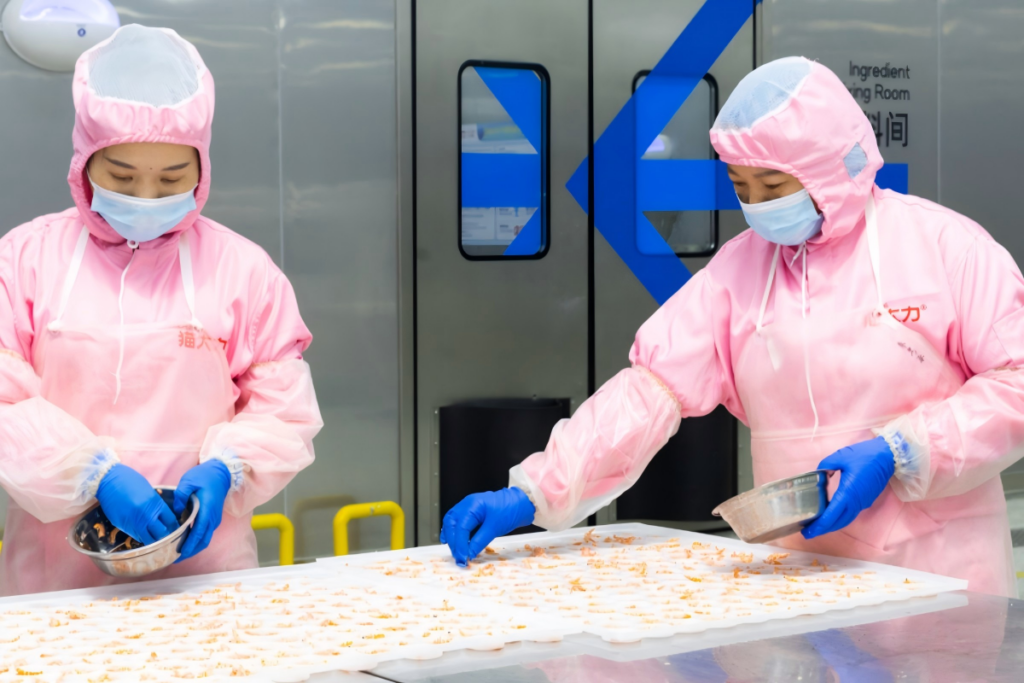
Step 5: Mass Production and Quality Inspection
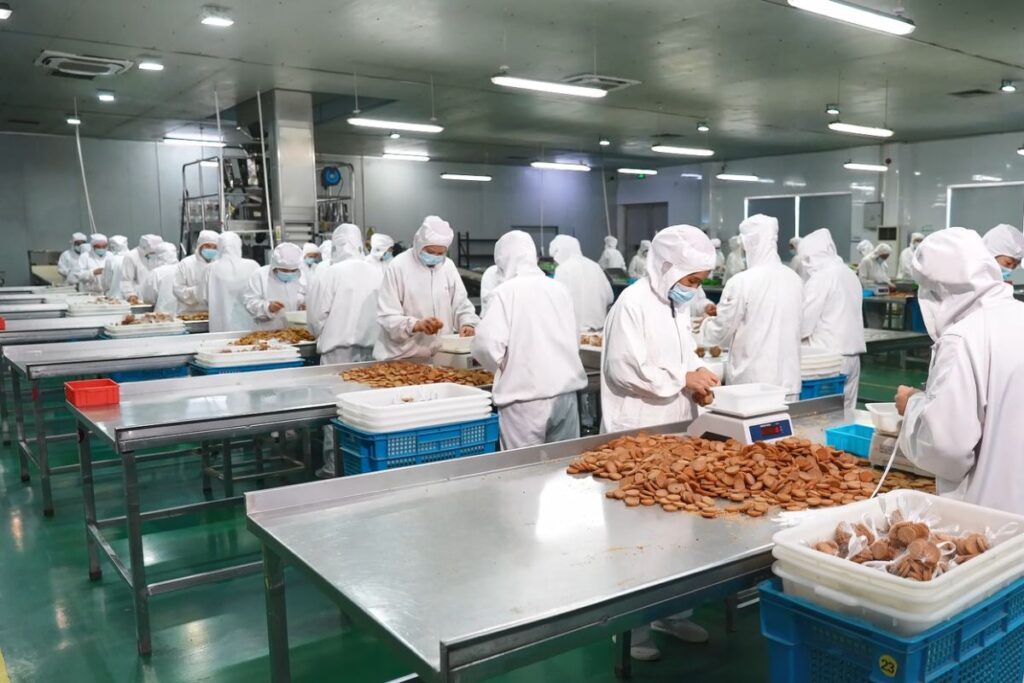
The factory manufactures the approved product under controlled conditions.
Finished products are inspected against the agreed requirements before shipment.
Matchwell’s published dog chew manufacturing information lists a standard MOQ starting from 500 kg, with standard samples typically available in approximately seven days and production commonly taking 15–20 days after the relevant approvals and order conditions are completed.
These are planning references rather than guaranteed timelines for every custom formulation.
Complex product development, packaging revisions, and testing requirements can affect the schedule.
8. How to Prepare an OEM Dental Chew RFQ
A detailed request for quotation helps manufacturers provide commercially relevant information.
Before contacting a supplier, prepare the following information:
| Requirement | Information to Provide |
|---|---|
| Target market | USA, Europe, Australia, or another destination |
| Product type | Ridged stick, shaped chew, or another concept |
| Target dog size | Small, medium, large, or defined range |
| Ingredients | Preferred proteins and relevant restrictions |
| Physical specification | Target dimensions, weight, and texture |
| Packaging | Pouch, jar, multipack, or display carton |
| Initial quantity | Estimated order volume per SKU |
| Quality requirements | Testing, documentation, and relevant standards |
| Launch plan | Desired sampling and delivery schedule |
A clear RFQ allows the supplier to evaluate manufacturing feasibility and prepare a quotation based on the intended commercial product.
It also makes it easier to compare proposals from different manufacturers.
9. Why Work With Matchwell for Private Label Dog Chews?
Matchwell supports OEM and private label pet treat projects for brands, wholesalers, distributors, and retailers.
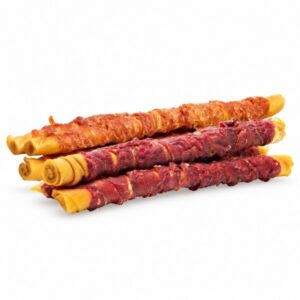
Its dog chew product range includes rawhide, collagen, meat-wrapped, and dental or functional chew concepts.
Depending on the project, buyers can discuss sizes, shapes, textures, flavors, packaging formats, and branding requirements.
Matchwell’s published manufacturing information also highlights raw-material inspection, production-stage controls, finished-product quality checks, and documentation support.
For international buyers, these capabilities can help create a more structured product-development and sourcing process.
The final formula, MOQ, delivery schedule, technical documents, and applicable claims should be confirmed for each project.
Frequently Asked Questions
Can I create my own brand of dog dental chews?
Yes. Private label manufacturing allows businesses to develop or source an agreed chew product for sale under their own brand, subject to the manufacturer’s customization capabilities and commercial terms.
What is the MOQ for private label dog dental chews?
Matchwell’s published dog chew program starts from 500 kg. The final MOQ depends on the product concept, ingredients, dimensions, packaging, and SKU configuration.
Can dental chews be customized by shape and texture?
Many OEM projects can explore customized dimensions, shapes, and texture characteristics. Feasibility must be confirmed by the manufacturer.
How long does OEM dental chew development take?
Development timing depends on the formula, sample revisions, testing, and packaging requirements. Standard samples may be relatively quick to prepare, while complex customized products can require additional development time.
Do dental chews need scientific testing?
The appropriate testing depends on the product and its intended claims. Safety and quality controls are essential, and specific dental efficacy claims may require additional evidence.
Conclusion: Build a Better Dental Chew With the Right Manufacturing Partner
Private label dental chews for dogs offer pet brands an opportunity to develop products that combine distinctive design with clear market positioning.
However, successful development requires more than selecting a chew shape.
Texture, ingredients, safety, manufacturing consistency, packaging, and regulatory requirements must all be considered.
A well-defined product brief and a structured sample-approval process can help buyers make better sourcing decisions.
Looking for an OEM dog dental chew manufacturer?
Matchwell provides private label and wholesale dog chew manufacturing solutions for international pet brands and distributors.