
Pet Snack Manufacturer: A Buyer’s Guide to Private Label Treats
Finding a pet snack manufacturer is easy. Finding one that can turn your product brief into consistent, retail-ready treats takes a closer look.
For pet brands, distributors, and retailers, the right manufacturing partner needs to do more than quote a price per kilogram. You need a clear product specification, reliable samples, suitable packaging, and a practical plan for repeat orders.
This guide explains what to compare when sourcing private label pet snacks, which questions to ask before placing an order, and how to prepare a brief that gets you a useful quotation.
What Does a Pet Snack Manufacturer Do?

A pet snack manufacturer produces treats for dogs, cats, or both. Depending on its capabilities, it may offer established products for wholesale purchase, private label packaging, or custom product development.
These routes involve different levels of development work:
| Sourcing route | Typical starting point | What to clarify |
|---|---|---|
| Wholesale | An existing product and specification | Available formats, pack sizes, and order quantities |
| Private label | An existing or adapted product sold under your brand | Branding options, packaging minimums, and recipe changes |
| Custom development | A specific recipe, texture, shape, or product concept | Development scope, sample rounds, ownership, and production feasibility |
Suppliers may use OEM and ODM differently. Explain what you want to own and customize instead of relying on an acronym alone.
Matchwell works with international B2B customers on OEM and ODM projects. Learn more about its manufacturing approach on the About Matchwell page.
Start With a Product That Fits Your Sales Channel
A successful brief starts with how the treat will be sold and used. A small training reward, a premium jerky strip, and a larger chew each need different specifications.
Jerky and meat-based treats
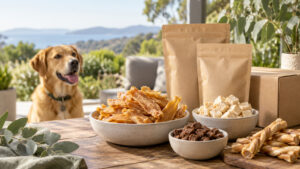
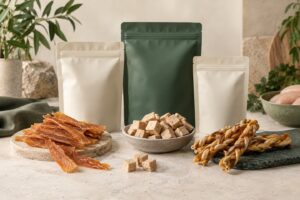
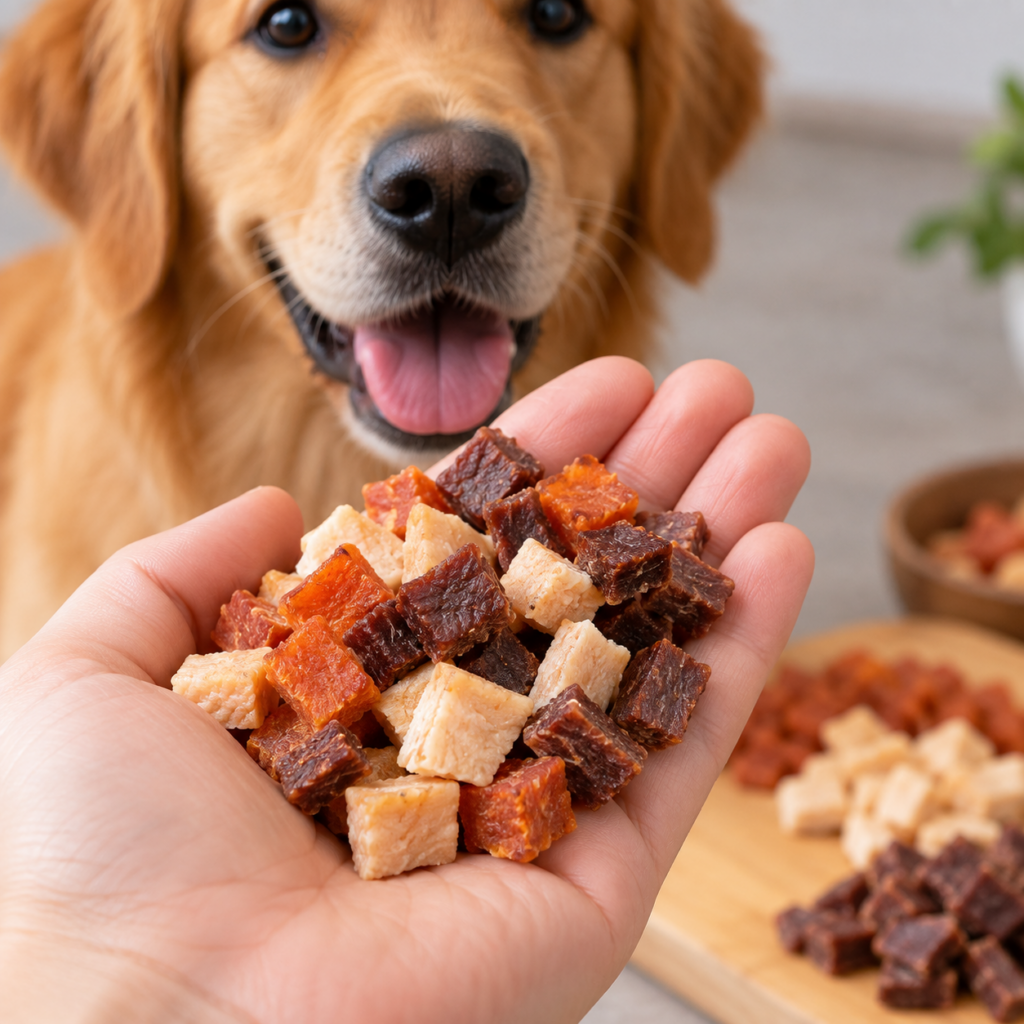
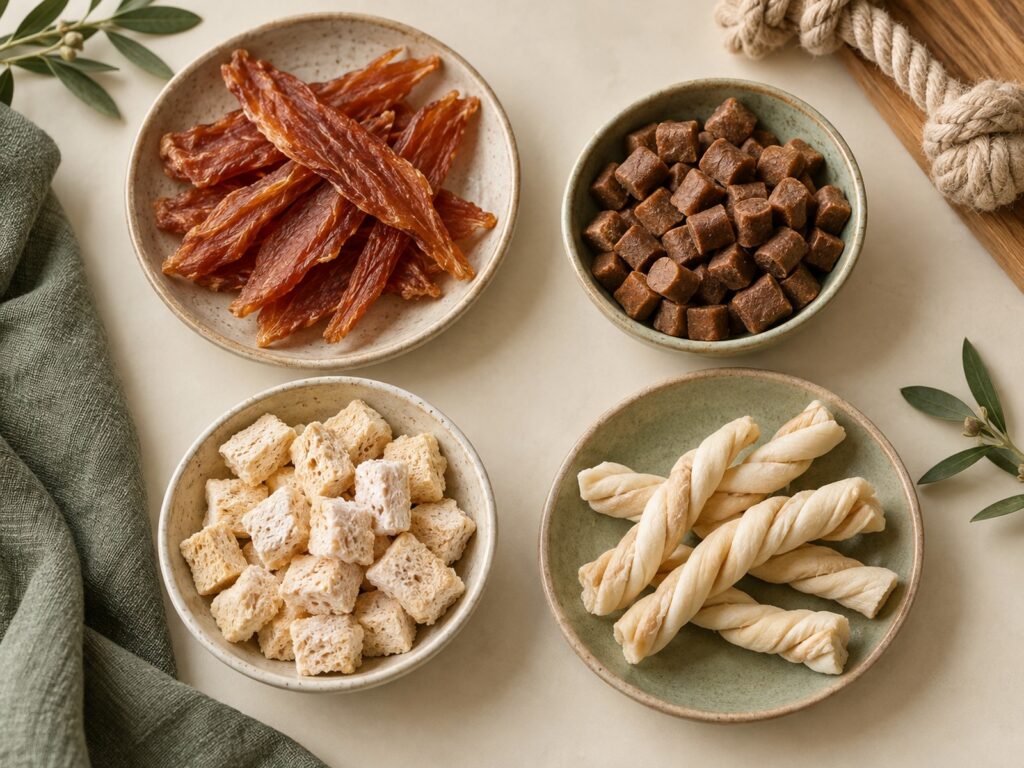
Jerky can suit brands looking for a recognizable meat format with a distinctive texture. When comparing samples, check piece thickness, flexibility, aroma, and how easily the product breaks into smaller portions.
Matchwell’s duck and chicken jerky treats provide one starting point for discussing a meat-based range. Confirm the exact recipe and dimensions for your proposed SKU.
Training bites
Training treats should fit repeated reward occasions. Ask for a defined piece-weight range, manageable portion size, and packaging that is convenient to open and close.
Evaluate what happens after handling: do the pieces leave excessive crumbs, stick together, or become difficult to portion? A good-looking sample should also work in everyday use.
Freeze-dried treats
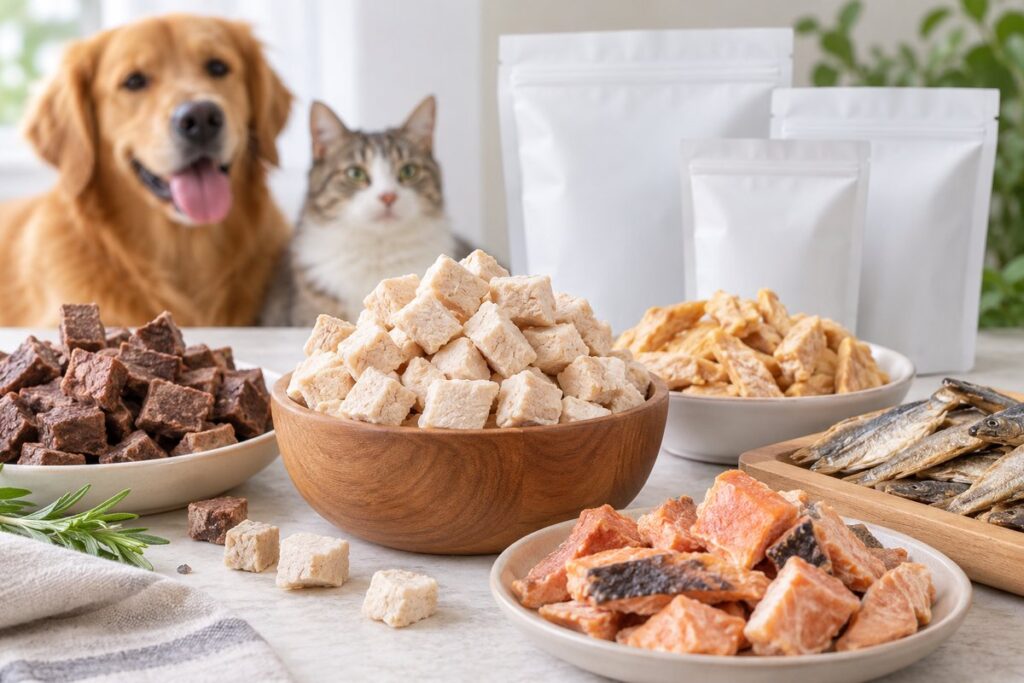
Freeze-dried formats can suit a range built around recognizable ingredients and a light, porous texture. During sample review, focus on breakage, dust inside the pack, consistency, and packaging protection.
For more sourcing questions specific to this category, read Matchwell’s private label freeze-dried dog treat guide.
Chews and wrapped treats
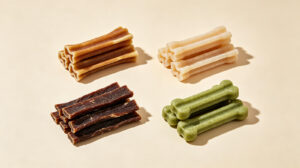
For a chew range, define dimensions, piece weight, composition, and intended dog size early. Request clear product-use guidance and agree on acceptable variation between pieces.
Explore Matchwell’s dog chew treats to identify formats for your initial brief.
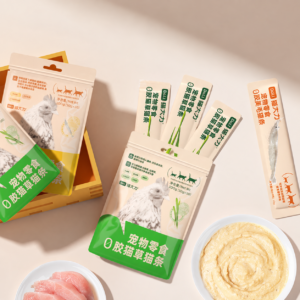
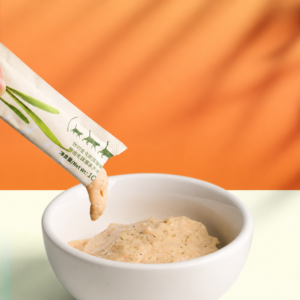
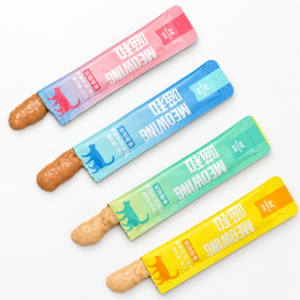
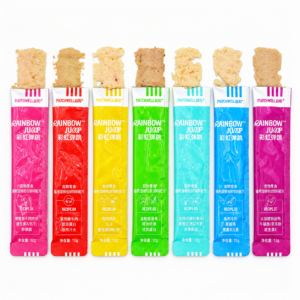
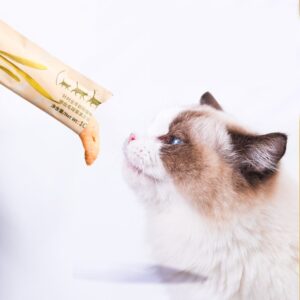
Cat snacks
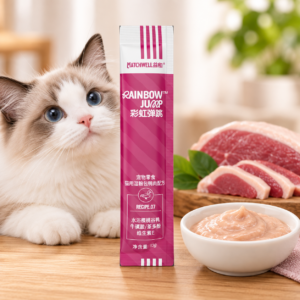
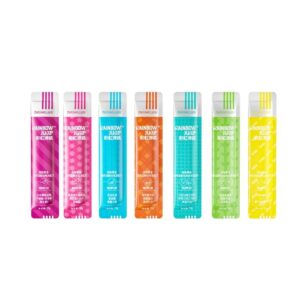
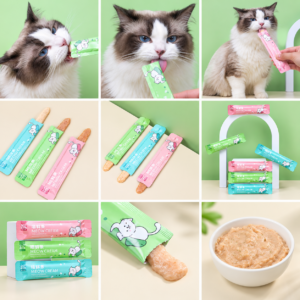
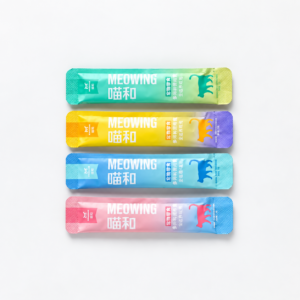
If you are developing cat treats, prepare a separate brief for the species. Specify the desired serving format, portion size, texture, and ingredient requirements rather than simply adapting a dog product’s packaging.
Seven Questions to Ask a Pet Snack Manufacturer

1. Can you supply an agreed written specification?
Before approving a product, request a specification that covers ingredients, dimensions, piece weight, analytical targets, packaging, storage, and shelf life.
Agree on tolerances where variation is expected. “Small chicken bites” is open to interpretation; a defined size and weight range gives both sides something measurable.
2. How will you keep repeat orders consistent?
Ask how the supplier records raw-material batches, production settings, inspection results, and finished-product lot codes. Discuss how ingredient substitutions or process changes are communicated.
Keep an approved reference sample alongside the written specification. Appearance matters, but it should not be the only acceptance criterion.
3. What quality documents can you provide?
Request current documents relevant to the actual production site and product category. Ask what each certificate covers, when it expires, and which testing records will accompany your order.
Useful discussion points include raw-material checks, finished-product testing, traceability, and the handling of nonconforming batches. Ask for evidence that relates to the product you are buying.
4. Which customizations are practical?
Possible discussion areas include protein choice, formulation, shape, texture, piece size, bag weight, and packaging design. Availability depends on the product and production line.
Prioritize changes that matter to your customer. For a first launch, adapting a suitable existing product may be more practical than developing several entirely new recipes at once.
5. What are the minimum order quantities?
Ask for separate minimums for the product, each recipe or flavor, each SKU, and printed packaging. These quantities may differ.
A production minimum does not automatically mean you can divide the order across unlimited flavors and bag designs. Clarify whether unused packaging will be stored and how it will be charged.
6. What does the quoted lead time include?
Break the schedule into sample preparation, revisions, artwork approval, packaging procurement, production, inspection, and dispatch.
Ask which approval starts the production clock. Also separate factory lead time from freight and destination clearance when planning your launch.
7. What information is needed for my destination market?
Tell the manufacturer where you intend to sell before finalizing the product. Ask which product, origin, ingredient, and shipment documents it can supply for review by your importer or local adviser.
Resolve market-specific requirements before committing to printed packaging. A supplier’s general export experience does not, by itself, confirm that every proposed product is suitable for every destination.
Evaluate Samples Like a Buyer, Not Just a Pet Owner
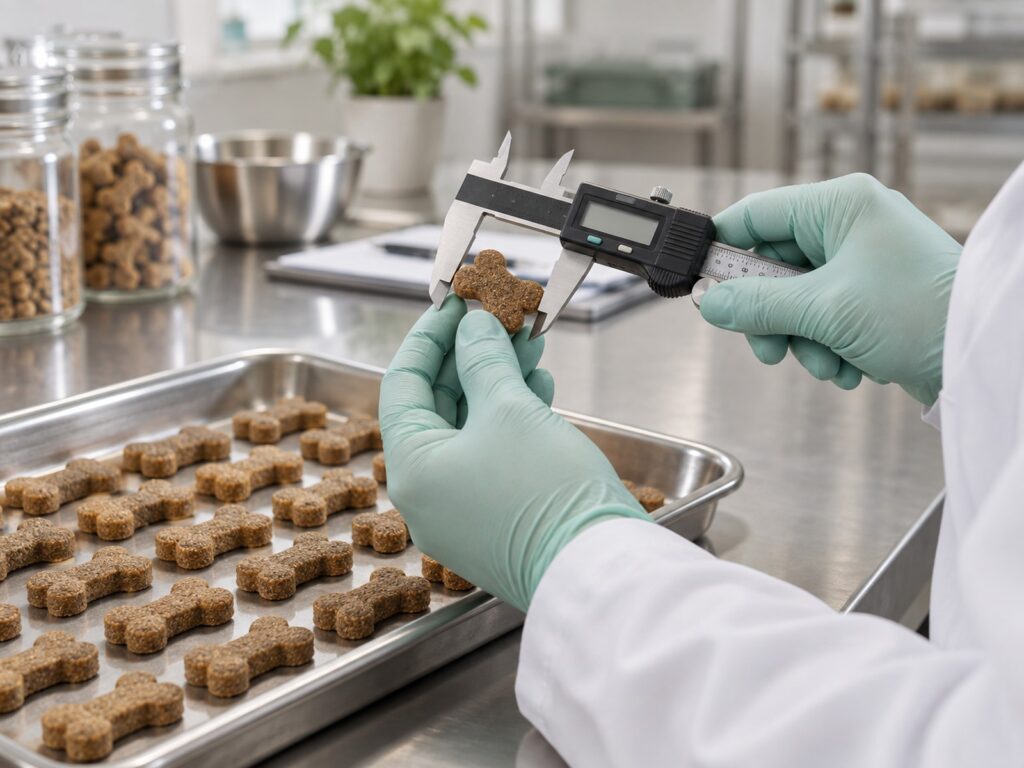
One pet enjoying one sample is useful feedback, but it does not answer every commercial question. Use the same review sheet for each candidate so comparisons remain fair.
| Review area | What to record |
|---|---|
| Appearance | Color, shape, surface condition, and variation |
| Portioning | Piece size, weight, ease of breaking, and crumbs |
| Texture | Firmness, flexibility, stickiness, and handling |
| Packaging | Seal quality, reclosure, presentation, and protection |
| Product experience | Acceptance during an appropriate, supervised evaluation |
| Documentation | Whether the sample matches the proposed specification |
Photograph the samples, assign reference codes, and send consolidated feedback. Specific comments such as “reduce piece size” or “improve resistance to breakage” are more useful than “make it better.”
Plan Private Label Packaging Early
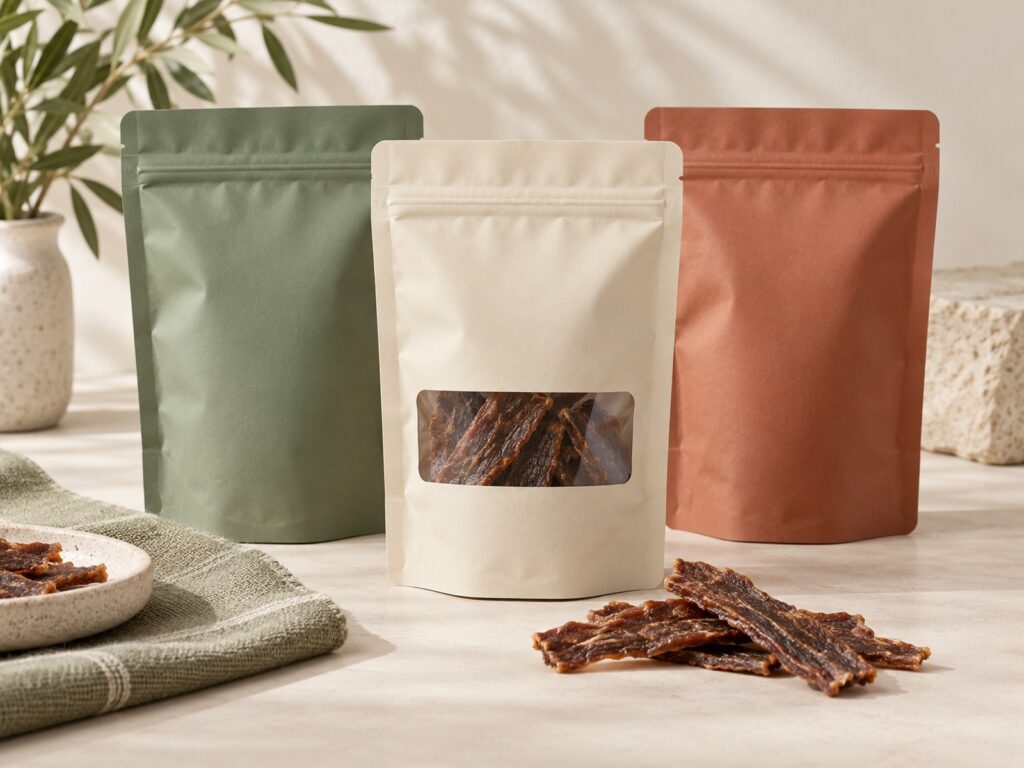
Packaging affects presentation, order quantities, shipping efficiency, and the condition in which customers receive the treats.
Discuss the product’s protection needs before choosing a pouch purely for its appearance. Then confirm bag dimensions, net weight, sealing format, carton configuration, and artwork requirements.
For online sales, consider whether the pack fits your fulfillment process. For store shelves, check whether the product name, flavor, and intended use remain easy to read at a glance.
Ask the manufacturer to review the packaging concept alongside the product brief. This helps identify an impractical bag size or an unexpected printing minimum before the design is finalized.
Compare the Cost of a Sellable Pack
Two prices per kilogram are not directly comparable if the products use different recipes, pack sizes, or packaging materials.
Request quotations against the same specification, with the currency and trade terms clearly stated. Separate product cost, packaging, development or setup charges, testing, and transport where applicable.
Your internal costing should also allow for destination charges and fulfillment costs relevant to your business. Use those figures to compare the landed cost per sellable pack, rather than choosing solely on the lowest factory price.
If you are still narrowing down the range, browse Matchwell’s wholesale dog treats and shortlist a few formats before requesting detailed pricing.
How to Request a Useful Quotation
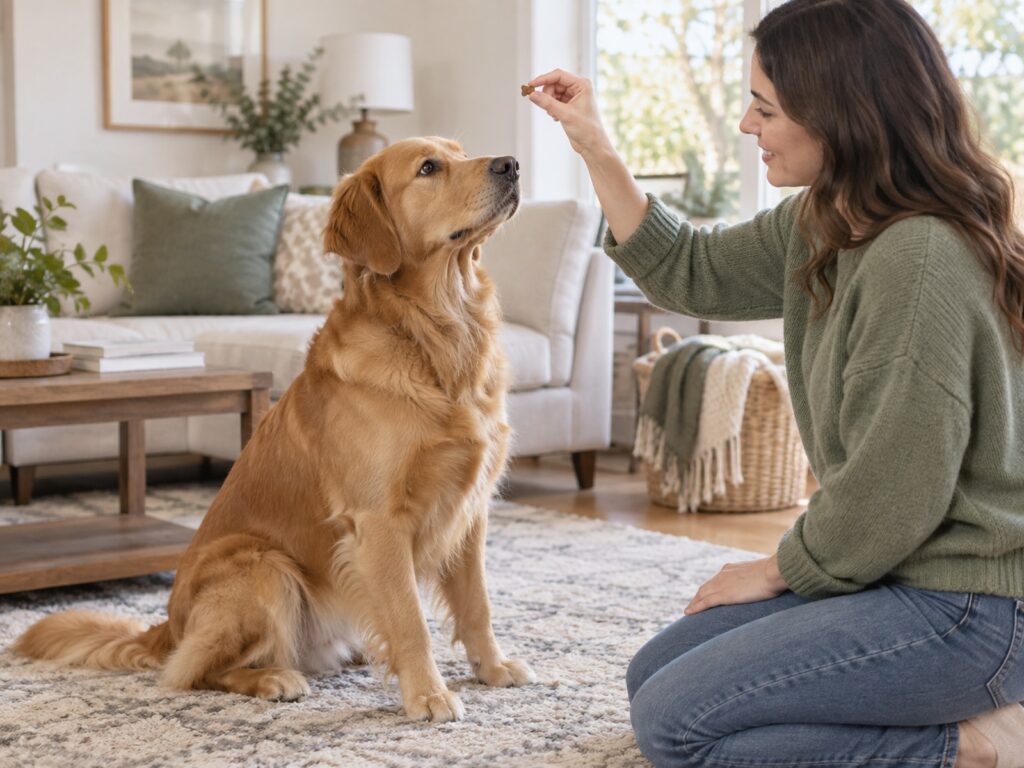
A clear brief helps the supplier recommend relevant products and flag issues early. Include:
- Your company name, website, and business type.
- Destination country and sales channel.
- Dog or cat product, preferred format, and protein.
- Required ingredients and ingredients to exclude.
- Target piece size and retail pack weight.
- Estimated first order per SKU and expected reorder volume.
- Existing-product, private label, or custom-development preference.
- Target launch date and any reference samples.
If the concept is not final, identify the decisions that are still open. For example, ask the manufacturer to compare two suitable formats against your intended pack size and price position.
Discuss Your Pet Snack Project With Matchwell
Matchwell is based in China and serves international wholesale customers through OEM and ODM services. Its company introduction describes raw-material inspection, production inspection, and third-party examination as part of its quality approach. Review the company and quality information and request current project-specific documentation during supplier evaluation.
Whether you are planning a focused jerky range, training rewards, or a broader treat assortment, start with a product brief that connects your customers’ needs with a workable production plan.
Ready to compare options? Contact Matchwell with your destination market, preferred treat type, pack size, and estimated order quantity. Request suitable product recommendations, sample options, and a quotation for your private label project.
Frequently Asked Questions
Can a pet snack manufacturer produce treats under my brand?
Many manufacturers offer private label services, but the scope varies. Confirm whether the proposal includes an existing recipe, recipe adaptation, custom packaging, or full product development.
What is the minimum order for private label pet snacks?
The minimum depends on the product, recipe, production run, and packaging. Request a written MOQ for each SKU and a separate minimum for printed packaging.
Can I request samples before placing a bulk order?
Ask about available samples, customization charges, shipping costs, and preparation time. Confirm whether the sample represents an existing product or your proposed final specification.
How long does a custom pet treat project take?
Timing depends on development work, sample revisions, packaging, production scheduling, and delivery arrangements. Request a milestone-based schedule after the supplier reviews your brief.
What should I send when asking for a quote?
Start with your destination country, product type, preferred protein, bag weight, estimated quantity per SKU, and branding requirements. Reference products or samples can help clarify the result you want.