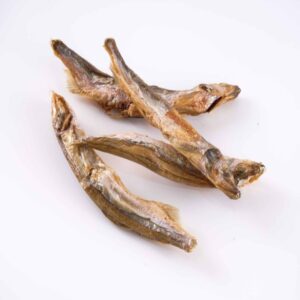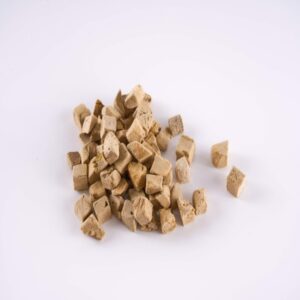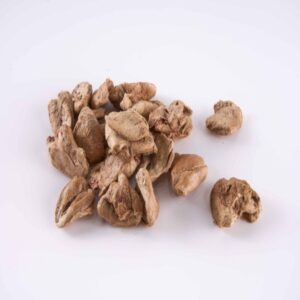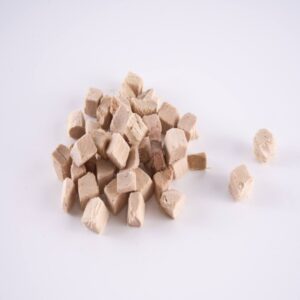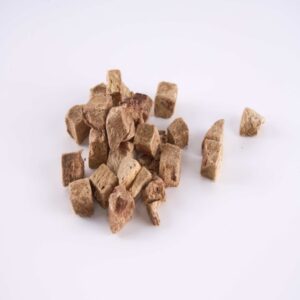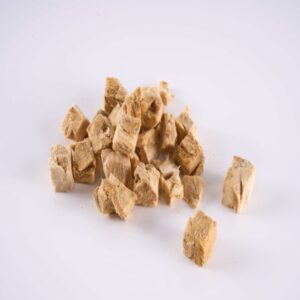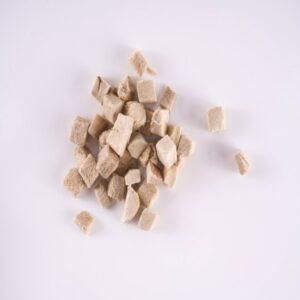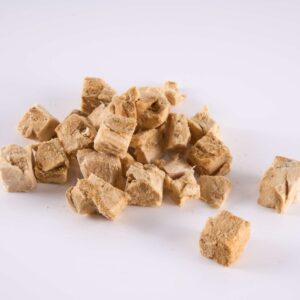

Private Label Freeze-Dried Dog Treats
Imagine it’s late afternoon: you’re sitting at your desk, scrolling through product ideas for your pet-treats business, and you keep seeing that crisp option — freeze-dried dog treats. Like the kind you break into bits, the dog goes crazy for, and you as a buyer instantly think: there’s something here. That “something” is what we’ll dig into today—why freeze-dried dog treats are turning heads among wholesalers, OEMs/ODMs, and retailers—and how you can make them part of your private-label (or white-label) pet-treat offering. (Website link: matchwellpets.com. Identity: pet treats manufacturer.)
From your perspective as a buyer—whether you’re stocking Amazon, big box retail, or an independent chain—this isn’t a marketing pitch. It’s a walkthrough of the opportunity, the realities, and how you can navigate them for your business in the world of wholesale pet treats, wholesale dog treats, private label pet treats, and white label dog treats.
1. Why freeze-dried dog treats are generating buzz
Real numbers, real momentum
- The global freeze-dried pet snacks market (dog + cat) was estimated at US$14.8 billion in 2024, with projections to reach about US$29.35 billion by 2032. Future Market Report
- For the U.S. pet treats market broadly: about US$10.5 billion in 2025, with freeze-dried and jerky treats projected to grow at ~8.8% CAGR through 2030. Mordor Intelligence+1
- In a study of pet owners, 24% of dog and cat treat buyers reported purchasing freeze-dried/dehydrated treats in a given 12-month period — showing that the format is moving mainstream. GlobalPETS
Why this growth is happening
- Pets aren’t just pets anymore—they’re family. That humanisation trend means owners are willing to spend more on quality snacks.
- Freeze-drying retains much of the original meat’s nutrition and flavour, giving a premium feel compared to standard baked or extruded treats.
- Logistics favour lighter, shelf-stable formats like freeze-dried. Good for shipping, good for margins.
- For buyers like you: offering a freeze-dried private label can differentiate your catalogue in a crowded market.
In short: the demand is there, the consumer mindset supports it, and the format offers unique advantages.
2. What makes freeze-dried dog treats a unique category
The “feel” of freeze-dried
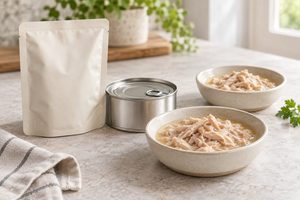
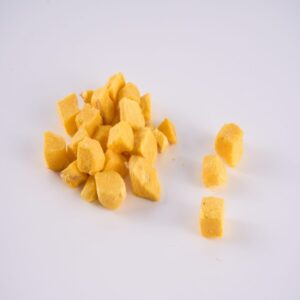
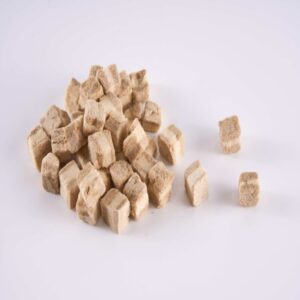
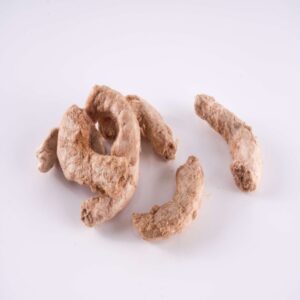
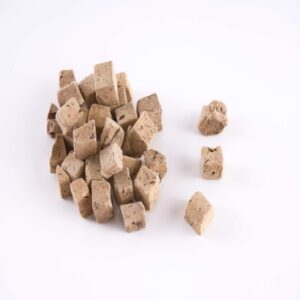
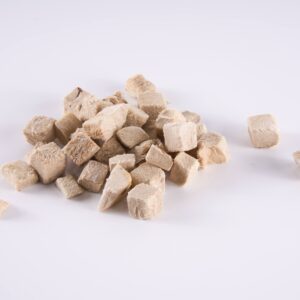
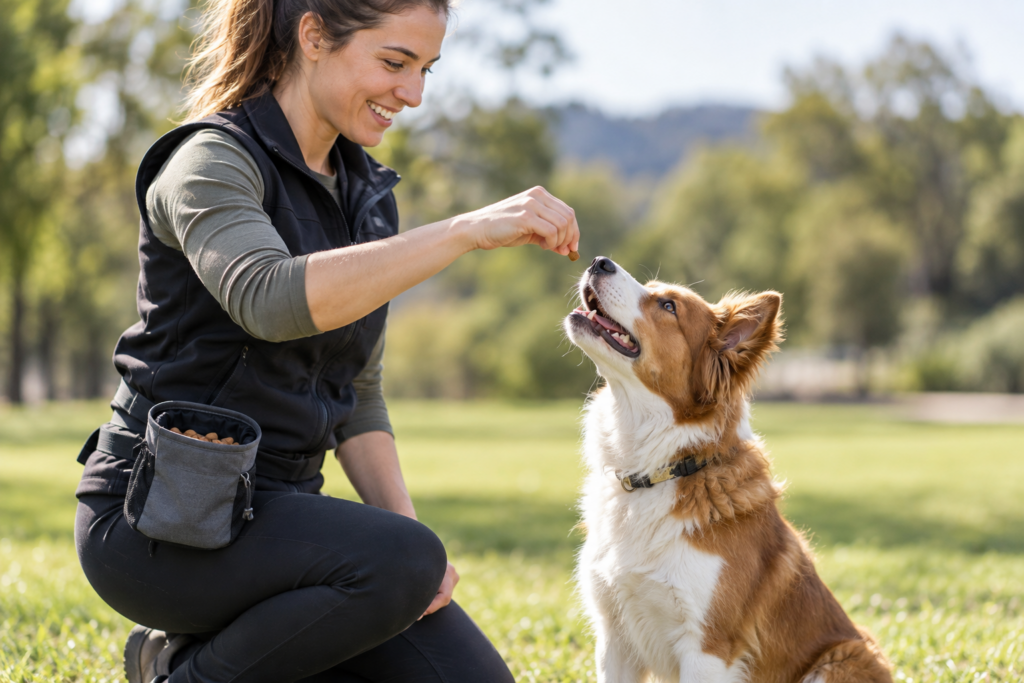
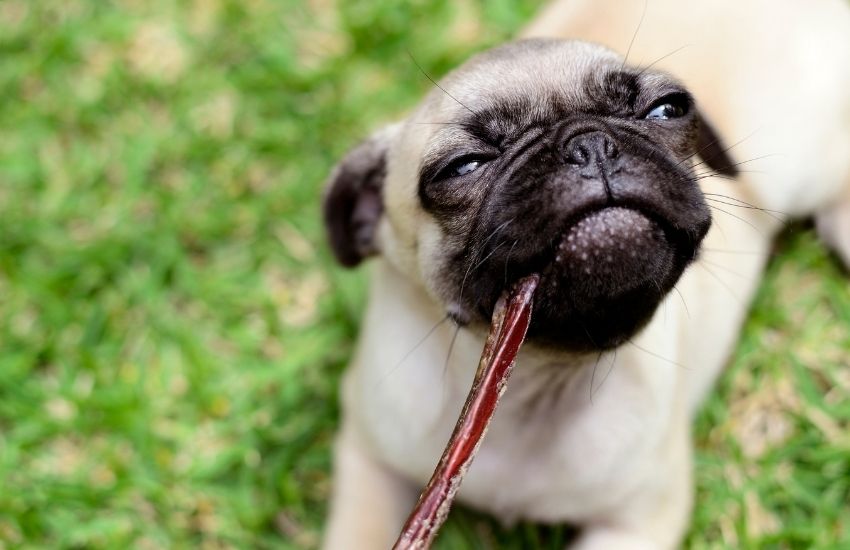
Think of it this way: when you toss your dog a freeze-dried bite, you’re offering something crunchy yet pure—maybe chicken breast only, maybe salmon only—no fillers, minimal processing. The product looks and feels premium.
From a purchasing-and-retail lens
As a buyer or wholesaler, what’s appealing:
- High perceived value: Because production costs are higher, these treats can command higher prices.
- Brand differentiation potential: If you introduce your own private-label freeze-dried line, you stand out from standard treat lines.
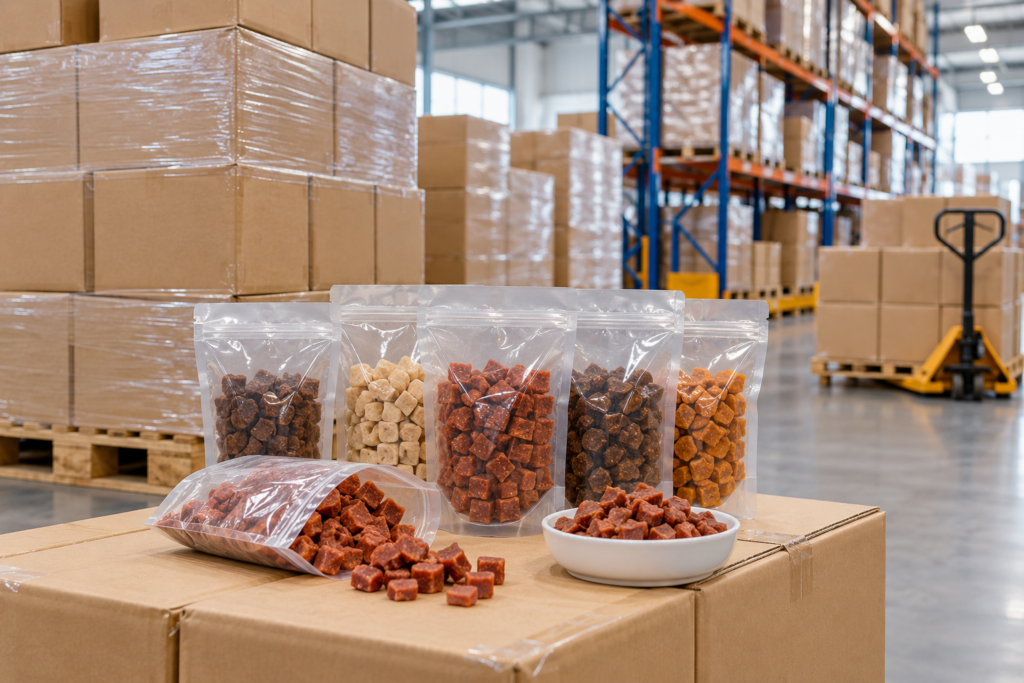
- Shelf-and-logistics advantages: Less moisture, often lighter; shipping and storage can be more efficient.
- Trend alignment: Clean‐label, single‐ingredient, “freeze-dried” are buzzwords among today’s pet-owner audience.
But—yes, there are caveats
- Because freeze-drying is more costly, cost control is key.
- Quality must be top-tier: ingredient sourcing, processing, packaging all matter.
- Retail price must align with consumer expectations—too premium and you reduce volume; too cheap and you lose credibility.
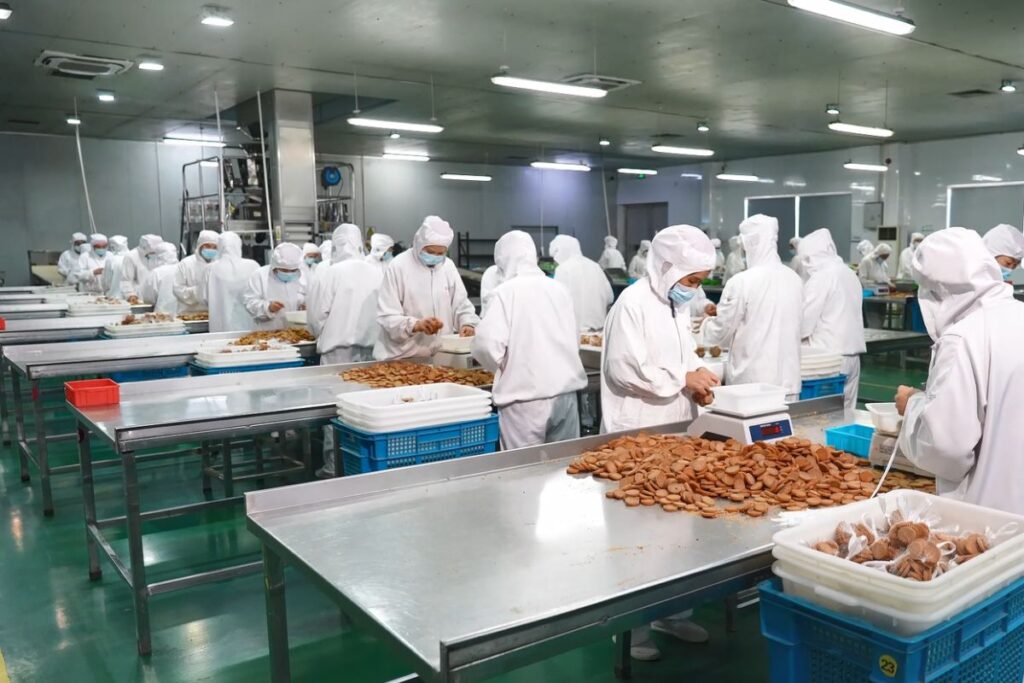
- For private label / white label: you need a manufacturing partner who understands freeze-drying, can meet MOQ, and support your branding needs.
3. What you should ask when sourcing private-label freeze-dried dog treats
You’re the buyer making decisions. Here are the questions you should have ready:
- Ingredients & sourcing – Are they human-grade? Single-protein (chicken, turkey, salmon)? Are there fillers or artificial additives?
- Freeze-dry process & moisture content – How dry is the end product? What’s the protein/fat content? How consistent is the process?
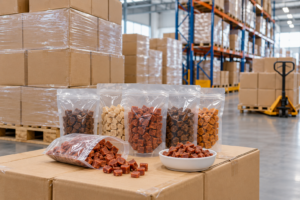
- Packaging & shelf life – Does it come in resealable bags? What is the expected shelf life? What protection is there against moisture/humidity?
- Customization & MOQ – As you’re doing private label, what’s the minimum order quantity? Can you brand the packaging, specify size/weight, flavour variants?
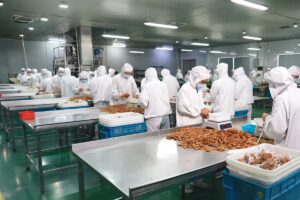
- Compliance & certifications – Does the manufacturer have HACCP, GMP, or other pet-food safety certifications? Are sourcing records traceable?
- Logistics & unit economics – What is the landed cost including manufacturing, packaging, freight, duties? What’s the retail positioning you’ll aim for, and what margin do you expect?
- Support & scalability – Can the manufacturer scale as you grow? Are lead-times reasonable? Is there packaging design support or SKU expansion capability?
If you’re working with us at Matchwell Pets (matchwellpets.com), we walk through all these and help you tailor to your private-label needs.
4. Snapshot of the opportunity (so you can quantify it)
- In 2024, freeze-dried treats recorded strong growth; one dataset shows treat sales for freeze-dried dog products surged by 44% month-on-month in July 2025. Accio
- Clean-label and freeze-dried formats are outpacing many older formats: in the natural dog-treats market, freeze-dried/air-dried formats are expected to grow at ~11.6% CAGR through 2030. Mordor Intelligence
- On cost side: manufacturing, logistics and packaging remain critical to keep margins viable.
What this means for you: you’re not chasing a tiny niche. This is a segment visibly growing. If you position right, you can build a strong wholesale business line.
5. How a private-label freeze-dried line could work (in real life)
Let’s walk through a real-world example (with your business hat on).
Scenario: You’re a wholesaler serving big-box pet stores and online marketplaces. You decide to launch a “YourBrand Freeze-Dried Dog Treats” private-label line.
Step 1: Choose product spec
You decide on a clean, single-ingredient chicken breast freeze-dried treat, 50 g resealable pouch, branded “YourBrand Premium Freeze-Dried Chicken Bites”.
Step 2: Partner with manufacturer
You reach out to Matchwell Pets. They provide: MOQ of 10,000 units, custom packaging, ability to add your branding, etc.
Step 3: Costing & pricing
Manufacturer quotes your cost per unit (including packaging, freight to your warehouse). You work backwards from your target retail price (say US$14.99) to ensure your wholesale cost allows a solid margin.
Step 4: Packaging & branding
Design product package emphasising “Freeze-Dried”, “Single-Ingredient”, “Grain-Free”, “Made in USA” (or whichever you choose), “Perfect for training/reward”.
Step 5: Launch & distribution
You roll out the product to your customer base (online retailer, physical stores). You highlight the line as “premium training treat” and tout its freeze-dried format as a differentiator.
Step 6: Expand & iterate
After initial success, you add variants: turkey, salmon, small-breed bits, etc. You track which SKU sells best and expand accordingly.
6. Trend watch: What’s next in freeze-dried private-label treats
Here’s what’s gaining traction—so you can plan ahead instead of reacting:
- Minimalist single-ingredient treats: Chicken breast, beef liver, wild-caught salmon. Clean label rules. Parker Freeze Dry+1
- Functional treats: Freeze-dried bits with added joint-health ingredients, skin/coat support, digestive aid.
- Sustainable sourcing & packaging: Pet-owners increasingly care about where the meat comes from, how the packaging is handled. Freeze-dried format aligns well with the clean-premium narrative. Parker Freeze Dry
- Online & subscription distribution: The e-commerce channel continues to grow faster than brick-and-mortar for premium pet-treat formats.
- Cost-effective premiumization: As more players enter the space, you’ll need to ensure your private-label offering keeps the premium feel but controls cost so you can offer competitive pricing.
7. Is this right for you? Quick checklist
Before you commit, ask yourself:
- Do you want to differentiate your treat offering (vs. standard baked or extruded treats)?
- Are you prepared to invest a bit more per unit (freeze-drying costs) in exchange for a premium margin and positioning?
- Will your customers/resellers pay a higher price point for quality?
- Do you have clarity on the branding, packaging, SKU sizing, and marketing story that sets your private-label line apart?
- Have you vetted a manufacturing partner (like Matchwell Pets) that can deliver consistent quality, reliable supply, and customization?
- Do you have distribution channels (online and/or retail) ready to support a premium treat line?
If you checked most of these, then yes—you are in a good position to ride the freeze-dried treat wave.
Final thoughts
Walking through this, the takeaway is simple: private-label freeze-dried dog treats represent a real opportunity for wholesalers, OEM/ODM suppliers and private-label retailers. The category is growing, consumer demand is shifting, and the format allows for higher value and meaningful differentiation. If you approach this thoughtfully—selecting the right product specs, partner, packaging, branding and distribution—you can build a treat line that resonates with today’s pet-owner sentiment and stands out in the wholesale space.
If you’d like to explore how to build your own private-label freeze-dried dog treat line—MOQ, custom flavours, packaging, lead-times—reach out at matchwellpets.com. We’re here to help you turn this opportunity into your next business line.