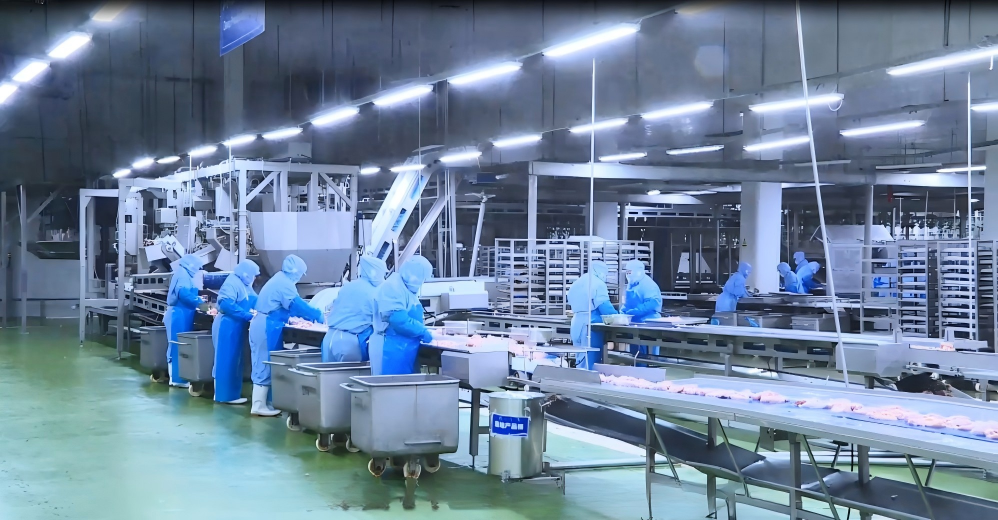

China Wet Food Factory: A Buyer’s Guide to OEM & Private Label Pet Food Manufacturing
Finding the right China wet food factory is about much more than comparing prices.
For pet food brands, importers, distributors and private label companies, the right manufacturing partner needs to deliver consistent product quality, reliable production capacity, suitable packaging, food safety controls and professional export support.
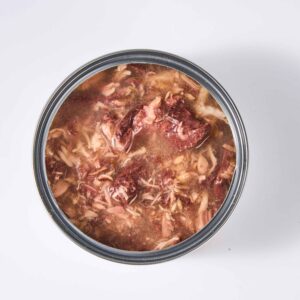
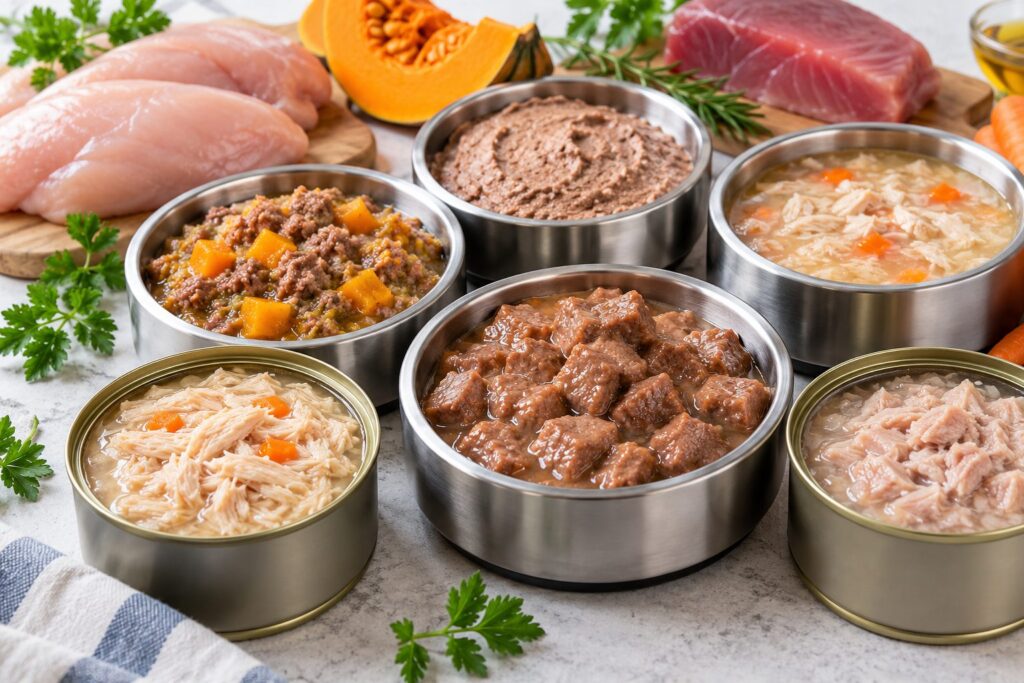
China has become an important sourcing base for wet pet food, including canned cat food, canned dog food, shredded meat recipes, chunks in gravy, pâté, broth-based products and other high-moisture pet foods.
However, not every manufacturer offers the same capabilities.
This guide explains what international buyers should look for when choosing a wet pet food manufacturer in China and how to develop a successful OEM or private label wet food project.
What Does a China Wet Food Factory Produce?
A professional wet food manufacturer may produce a wide range of products for both cats and dogs.
Common wet pet food formats include:
- Canned wet cat food
- Canned wet dog food
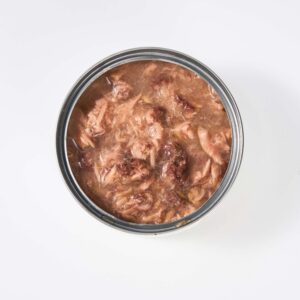
- Shredded chicken recipes
- Tuna-based wet food
- Meat chunks in gravy
- Meat chunks in jelly
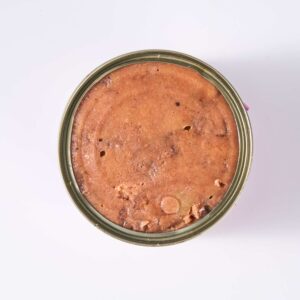
- Pâté-style pet food
- Mousse formulas
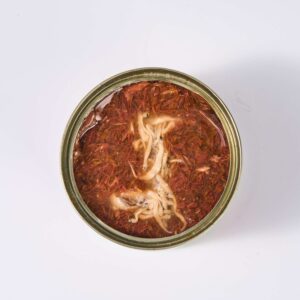
- Cat soup
- Broth-based wet food
- Kitten wet food
- Puppy wet food
- Functional wet food
- Private label wet pet food
Buyers looking for existing product formats can explore Matchwell’s pet canned wet food range before starting a customized project.
The right product format depends on your target consumer, sales channel, price positioning, ingredients and packaging strategy.
For example, a supermarket wet food line may require a different formulation and cost structure from a premium pet specialty product.
Why Do International Buyers Source Wet Pet Food from China?
Price is important, but it is rarely the only reason brands choose a China wet food factory.
A capable Chinese pet food manufacturer can also provide flexibility in product development, packaging and production.
1. Flexible Product Development
OEM manufacturing allows buyers to develop products around the needs of their own market.
Depending on the project, customization may include:
- Protein source
- Flavor
- Meat percentage
- Texture
- Moisture level
- Functional ingredients
- Product weight
- Packaging
- Label design
- Carton configuration
- Target price positioning
This gives pet brands more flexibility than simply purchasing a standard finished product.
2. Multiple Wet Food Formats
A capable wet pet food manufacturer can help buyers create an entire product range instead of sourcing only one SKU.
For example, a cat wet food range may include:
- Chicken shredded meat
- Tuna and chicken
- Chicken and beef
- Tuna and pumpkin
- Broth-based cat food
- Meat chunks in gravy
- Premium pâté formulas
You can also explore Matchwell’s broader cat food product range when planning multiple SKUs.
3. OEM and Private Label Support
Private label manufacturing allows brands and distributors to launch pet food products without investing in their own manufacturing facilities.
Depending on the project, a factory may support:
- Product formulation
- Sample development
- Packaging selection
- Label development
- Mass production
- Quality inspection
- Export documentation
For buyers developing wet cat food, our guide to cat food wet OEM explains the private label development process in more detail.
What Should You Check Before Choosing a China Wet Food Factory?
Choosing a factory based only on quotation price creates unnecessary sourcing risk.
Professional buyers should evaluate the manufacturer from several different areas.
1. Food Safety Certifications
Wet pet food contains a high percentage of moisture, making food safety and manufacturing controls especially important.
Before placing an order, buyers should ask the manufacturer to provide valid certification documents.
Common international food safety certifications include:
- BRC
- IFS
- FSSC 22000
- HACCP
- ISO-based food safety management systems
Matchwell provides information about its manufacturing capabilities, certifications and quality controls on its About Us page.
When reviewing certifications, buyers should check:
- Certificate validity
- Factory name
- Factory address
- Certification scope
- Audit date
- Expiration date
Certifications are especially important when supplying supermarkets, pet store chains or large distributors.
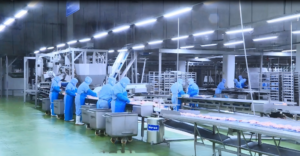
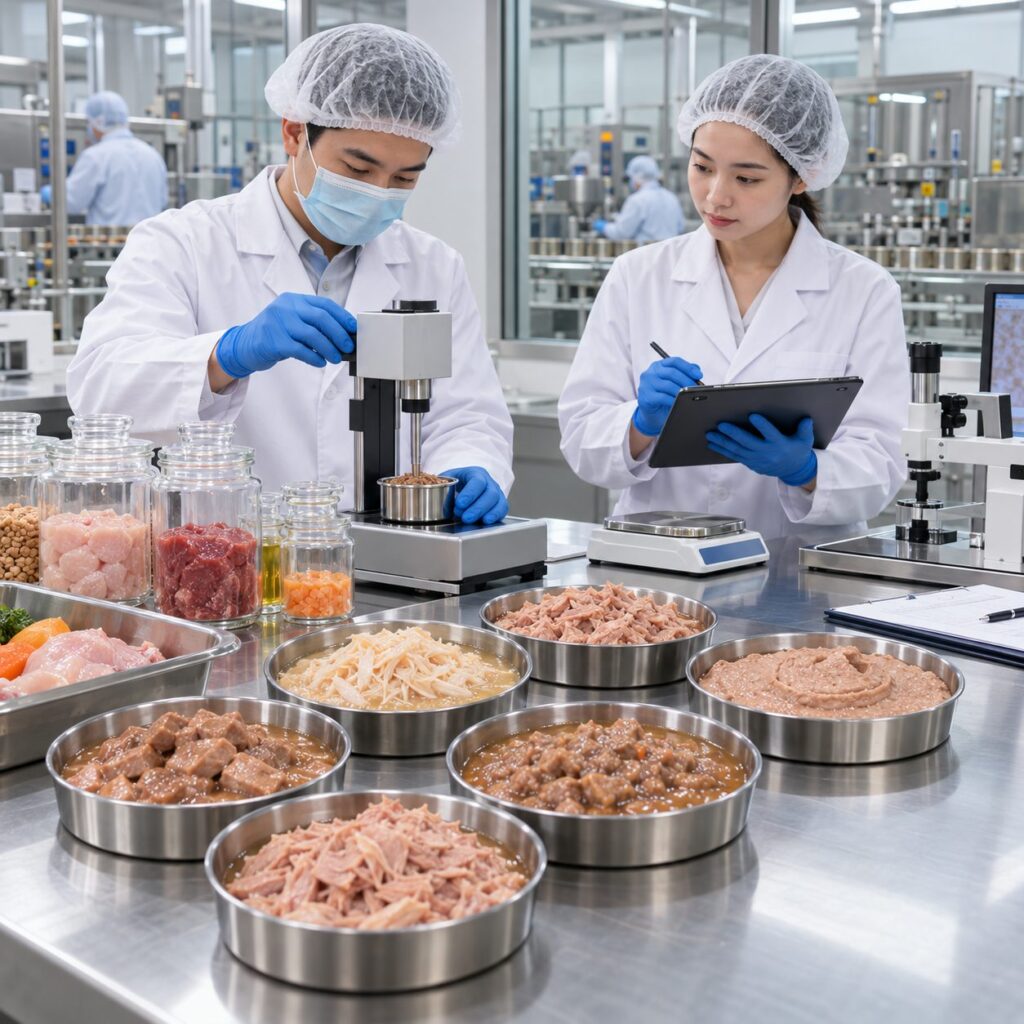
2. Wet Food Production and Sterilization Control
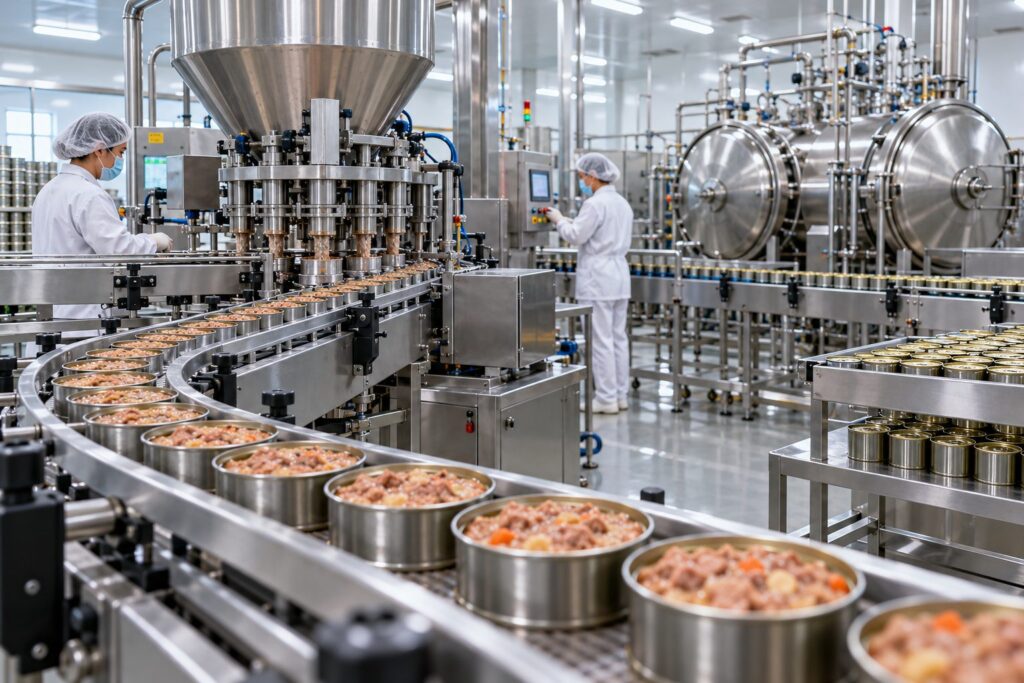
Commercial wet pet food requires controlled processing to maintain product safety and stability.
A professional factory should have established procedures for:
- Ingredient preparation
- Mixing
- Filling
- Sealing
- Retort sterilization
- Cooling
- Batch identification
- Finished product inspection
The objective is not simply to have modern equipment.
A reliable factory should also have standardized production procedures and documentation to ensure that every batch remains consistent.
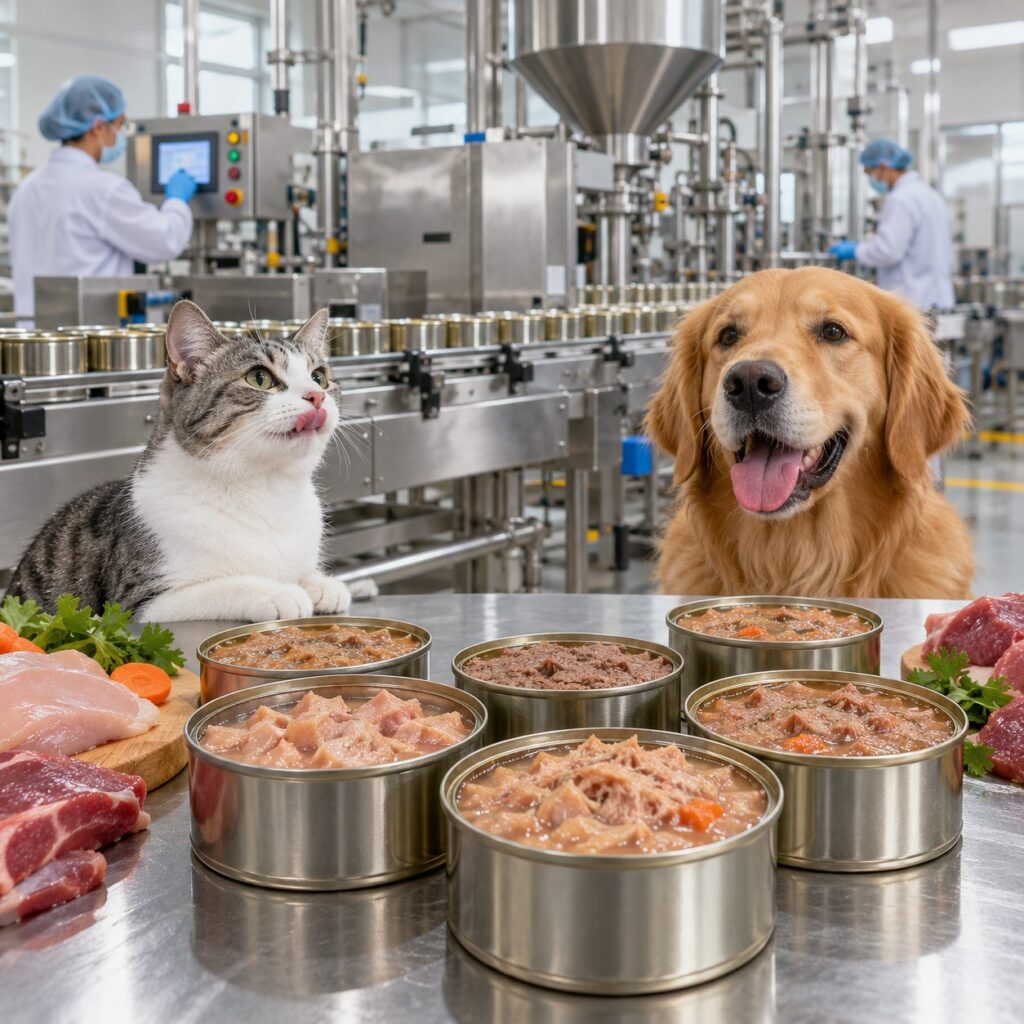
3. Raw Material Control
The quality of finished wet pet food depends heavily on the quality of its raw materials.
Buyers should ask how the factory manages incoming ingredients.
Important questions include:
- How are meat suppliers selected?
- Are incoming materials inspected?
- How are raw materials stored?
- Is batch traceability available?
- How are ingredient specifications controlled?
Raw material control becomes particularly important for products using chicken, beef, tuna, duck and other animal proteins.
4. Production Quality Inspection
Quality control should happen throughout production rather than only after products are finished.
Common inspection points may include:
- Product appearance
- Product weight
- Seal integrity
- Packaging condition
- Texture
- Moisture
- Microbiological parameters
- Nutritional specifications
- Batch traceability
- Label accuracy
International buyers may also request third-party testing depending on destination-market requirements.
5. R&D Capability
Not every buyer wants to purchase a standard formula.
Private label brands often need customized products to differentiate themselves from competitors.
A wet pet food factory with R&D capabilities may help adjust:
- Protein source
- Flavor
- Meat content
- Texture
- Moisture
- Functional ingredients
- Product weight
- Packaging
- Target cost
A good OEM discussion should therefore begin with a clear product brief rather than simply asking:
“What is your cheapest wet food?”
A stronger sourcing request should include your target animal, packaging, order quantity, destination market and expected product positioning.
Choosing the Right Wet Pet Food Format
Different wet food formats appeal to different consumers and markets.
Shredded Meat Wet Food
Shredded chicken, tuna or other visible meat textures are commonly used for premium cat food.
The visible meat structure can help create a more natural and premium product appearance.
This format may work well for:

- Premium cat food
- Complementary feeding products
- High-meat recipes
- Broth-based products
Meat Chunks in Gravy
Chunks in gravy are widely recognized by pet owners and can be used in both mainstream and premium product lines.
Factories may adjust:
- Chunk size
- Gravy thickness
- Flavor
- Meat source
- Moisture level
This makes the format relatively flexible for different markets.
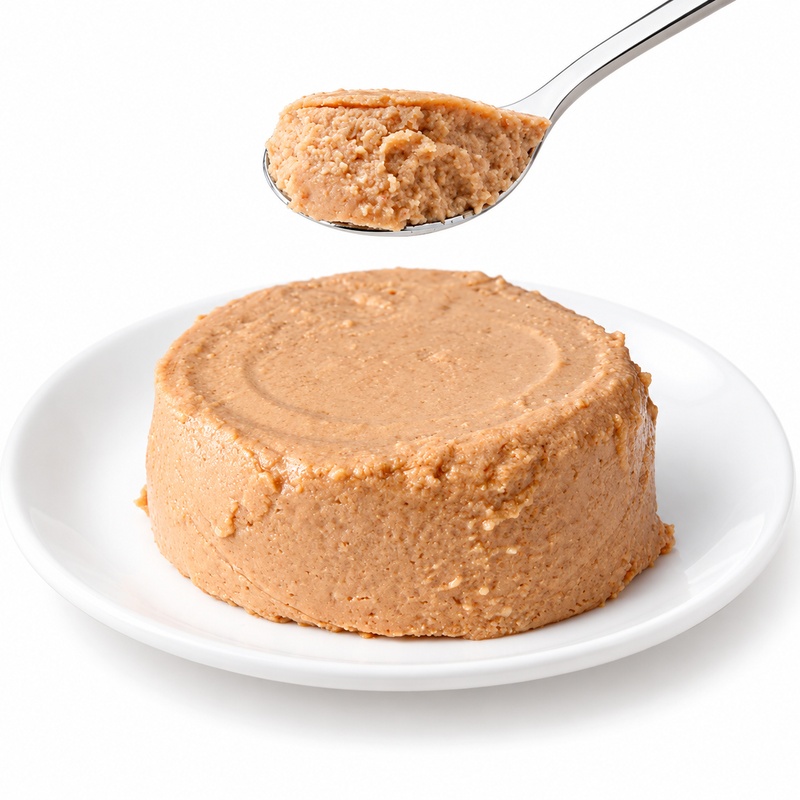
Pâté and Mousse
Pâté and mousse provide a smooth and uniform texture.
These products are commonly used for:
- Adult cats
- Kittens
- Senior pets
- Premium product ranges
- Complete wet food
Texture consistency is especially important when developing this type of product.
Soup and Broth-Based Wet Food
Soup-style products are increasingly used as complementary food, toppers and hydration-focused cat products.
Brands can differentiate these products through:
- Broth percentage
- Meat shreds
- Flavor combinations
- Vegetable ingredients
- Functional ingredients
Packaging Options for Wet Pet Food
Packaging plays an important role in both product positioning and supply chain efficiency.
Common wet pet food packaging formats include:
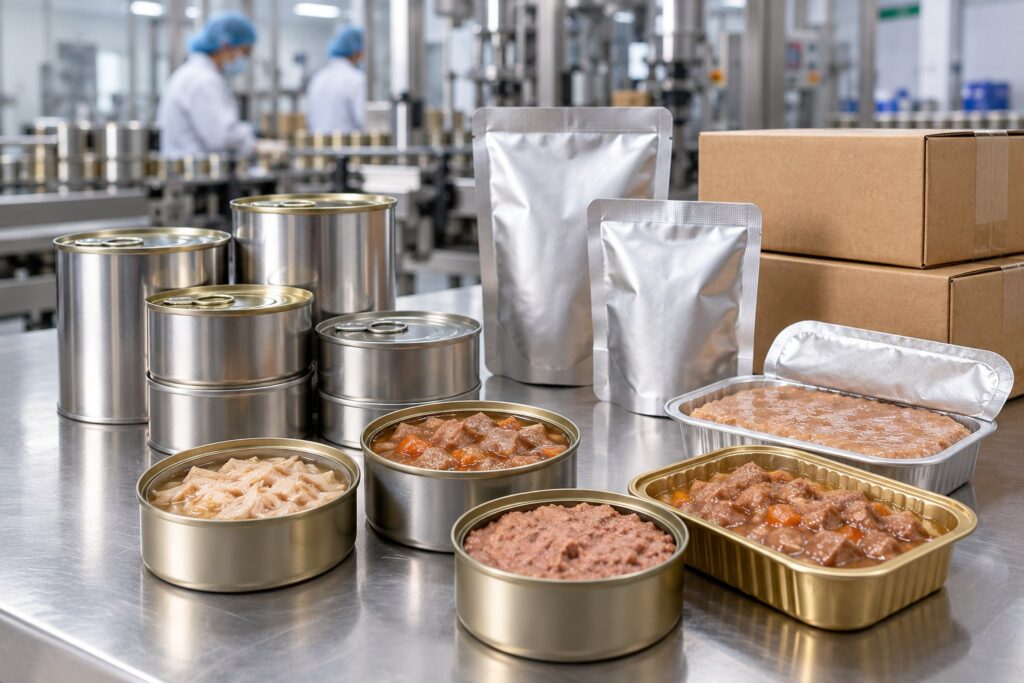
- Aluminum cans
- Tinplate cans
- Retort pouches
- Aluminum trays
- Multi-can packs
- Printed cartons
Before requesting a quotation, buyers should provide:
- Product weight
- Packaging format
- Number of units per carton
- Private label requirements
- Destination market
- Estimated order quantity
Packaging specifications can significantly affect the final product cost.
Buyers considering other pet food and treat categories can also browse Matchwell’s pet food and treat products.
Existing Formula vs. Customized OEM Formula
There are usually three common sourcing options.
Existing Factory Formula
Best for:
- New brands
- Market testing
- Faster product launches
- Buyers with limited development requirements
The main advantage is a shorter development process.
Modified Existing Formula
Best for:
- Brands wanting some differentiation
- Buyers needing different ingredients or flavors
- Medium-size projects
This option provides a balance between customization and development speed.
Fully Customized OEM Formula
Best for:
- Established brands
- Large distributors
- Unique product concepts
- Long-term private label projects
A customized formula provides greater differentiation but usually requires more product development.
How to Request Wet Pet Food Samples
Sampling is one of the most important steps when evaluating a wet pet food manufacturer.
Instead of requesting random products, provide the factory with a clear sample brief.
Include:
- Cat or dog
- Target age group
- Preferred protein
- Desired texture
- Product weight
- Packaging format
- Benchmark product
- Target market
- Expected order quantity
- Target positioning
When samples arrive, evaluate:
- Aroma
- Texture
- Meat appearance
- Moisture
- Packaging quality
- Portion size
- Product consistency
- Overall presentation
Sample evaluation allows buyers to identify problems before entering mass production.
MOQ and Production Capacity
MOQ is an important factor when choosing a wet food factory, but it should not be evaluated alone.
Buyers should also understand whether the manufacturer can support larger repeat orders as the business grows.
Ask the supplier about:
- MOQ per SKU
- MOQ per flavor
- Packaging MOQ
- Production lead time
- Mixed SKU possibilities
- Carton configuration
- Container loading
- Monthly capacity
- Repeat-order production
A suitable factory should be able to support both your initial order and future growth.
Export Documentation and International Markets
Import requirements for pet food differ between countries.
Before production begins, buyers and manufacturers should confirm which documents are required for the destination market.
Depending on the shipment, documents may include:
- Commercial invoice
- Packing list
- Certificate of origin
- Product specification
- Test reports
- Health-related documentation
- Shipping documents
- Label information
Import requirements should be confirmed before mass production rather than after products are ready for shipment.
Questions to Ask a China Wet Food Manufacturer
Before selecting a supplier, ask questions such as:
- What types of wet cat and dog food do you manufacture?
- Do you support OEM, ODM and private label projects?
- What certifications does your factory currently hold?
- Can you provide current certification documents?
- What quality inspections are performed during production?
- Can formulas and textures be customized?
- What packaging formats are available?
- What is the MOQ per SKU?
- How long does sample development take?
- What is the production lead time?
- Which countries do you currently export to?
- Can you support third-party testing?
- What information do you need to prepare a quotation?
A professional manufacturer should be able to answer these questions clearly.
Why Work with Matchwell as Your China Wet Food Factory?
Matchwell is a China-based B2B pet food manufacturer supplying products for international pet food brands, importers, distributors and private label companies.
Our product range includes wet food for cats and dogs as well as other pet food and treat categories.
For buyers evaluating a China wet food factory, Matchwell can support different stages of the sourcing process, including:
- Wet pet food manufacturing
- OEM and ODM projects
- Private label products
- Product development
- Sample preparation
- Packaging solutions
- Quality inspection
- Export-oriented production
You can learn more about our manufacturing capabilities and quality systems on the Matchwell About Us page.
You can also browse our pet canned wet food products for potential product ideas.
Looking for a Reliable China Wet Food Factory?
If you are planning to source canned cat food, canned dog food, shredded meat recipes, pâté, chunks in gravy or other wet pet food products, Matchwell can support your OEM, ODM and private label project.
To receive more accurate product recommendations and quotations, please provide:
- Target market
- Cat or dog product
- Product format
- Preferred protein
- Product weight
- Packaging format
- Estimated order quantity
- Target price range
- Planned launch date
The more information you provide, the easier it is for our team to recommend suitable products and prepare an appropriate solution.
Contact Matchwell to discuss your wet pet food project, request samples or receive a quotation.
Frequently Asked Questions
Is China a suitable sourcing location for private label wet pet food?
Yes. China has manufacturers supplying international pet food markets, but capabilities vary between factories. Buyers should evaluate certifications, production systems, quality control, R&D capabilities, export experience and product specifications before choosing a supplier.
Can a China wet food factory produce private label cat food?
Yes. Depending on the manufacturer, private label products may include canned cat food, shredded meat, chunks in gravy, pâté, mousse, soup and other wet food formats.
Can wet pet food formulas be customized?
Yes. Depending on order quantity and project requirements, manufacturers may customize protein sources, ingredients, flavors, textures, product weight, functional ingredients and packaging.
What information should I provide when requesting a quotation?
Provide the product type, target market, packaging format, unit weight, expected quantity, preferred formula, private label requirements and target launch schedule.
Should I request samples before placing a bulk order?
Yes. Samples allow buyers to evaluate product appearance, texture, aroma, packaging and overall quality before confirming commercial production.
How should I compare different wet food factories?
Do not compare price alone. Evaluate certifications, production capabilities, quality systems, R&D support, MOQ, lead time, packaging capabilities, communication efficiency, export experience and documentation support.