
How to Choose the Right Treat Size for Training
Treat size is one of the most important specifications when sourcing wholesale dog training treats.
During a training session, an owner may reward a dog many times within only a few minutes. Large treats can slow down the process and may provide more calories than necessary.
For this reason, many buyers prefer small bite-sized pieces.
Smaller pieces can offer several advantages:
- Faster consumption during training
- Easier portion control
- Convenient use with treat pouches
- Suitable for repeated rewards
- Better compatibility with puppies and small dogs
- More treats per retail pack
However, there is no universal size that works for every market.
A brand focused on puppy products may prefer very small and soft treats, while a retailer targeting medium and large dogs may select slightly larger cubes.
Before placing a bulk order, buyers should confirm the approximate dimensions and weight per piece.
This can help maintain a consistent customer experience across future production batches.

Soft vs Dry Dog Training Treats
Texture is another important buying decision.
Soft Training Treats
Soft or semi-moist treats are popular because dogs can usually eat them quickly.
They are especially useful for:
- Puppy training
- Indoor obedience practice
- Recall training
- Repeated reward sessions
- Senior dogs
Soft treats can also be broken into smaller pieces if needed.
For brands targeting professional trainers or active dog owners, this convenience can become an important selling point.
Dry Training Treats
Dry treats usually have a firmer texture and can be easier to handle during transport and storage.
They may be suitable for:
- Retail shelves
- E-commerce fulfilment
- Everyday rewarding
- Multipacks
- Bulk distribution
The best format depends on your target customer and product positioning.
Rather than choosing based only on price, buyers should evaluate how the treat will be used after it reaches the final consumer.
Freeze-Dried Dog Training Treats for Premium Markets
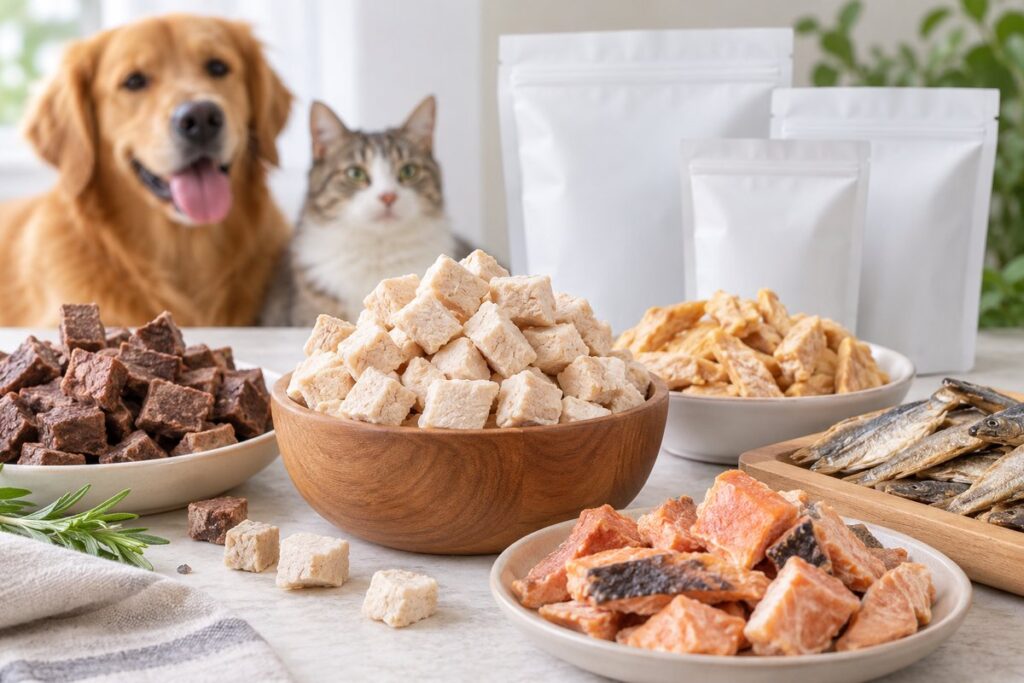
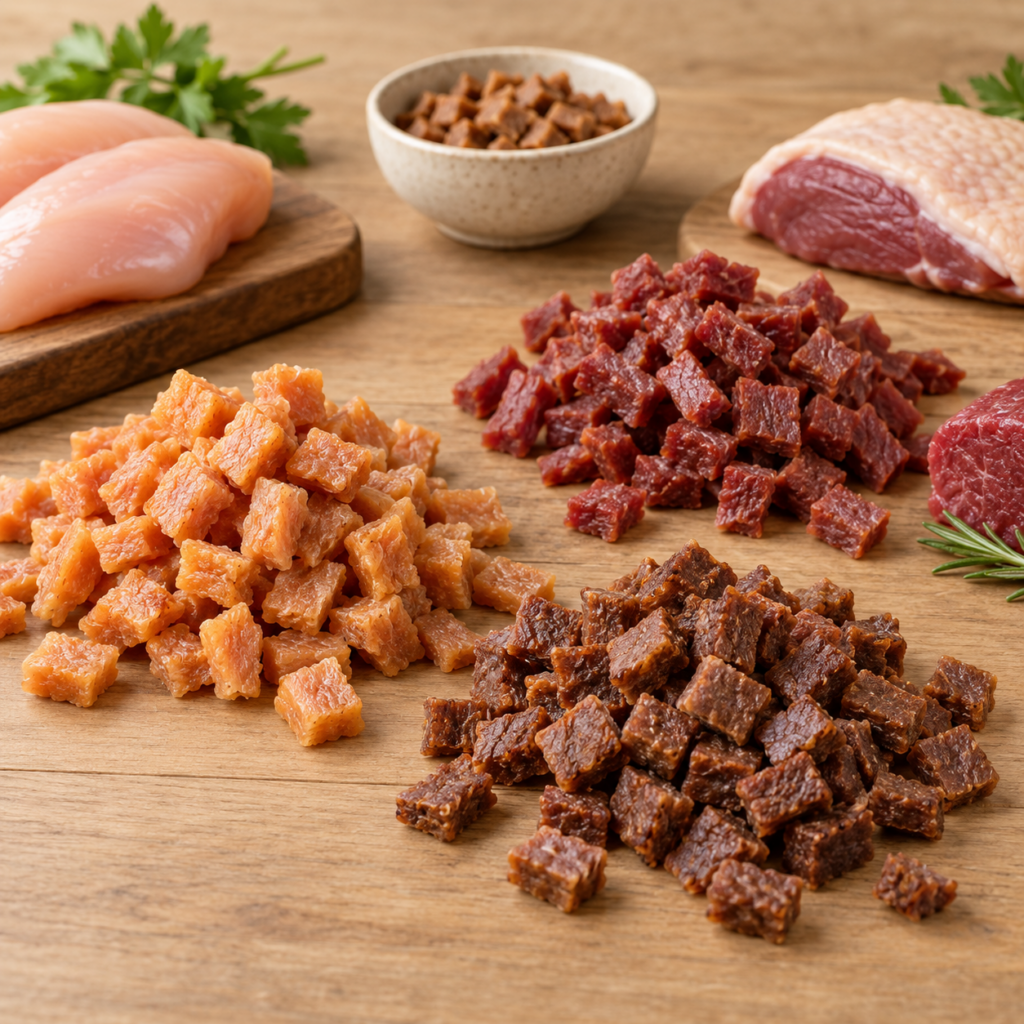
Freeze-dried dog treats have become increasingly attractive for premium pet product ranges.
These products are often made from recognizable meat ingredients and can support simple, protein-focused positioning.
For training applications, freeze-dried cubes can be especially convenient because they are lightweight and easy to portion.
Popular concepts may include:
- Freeze-dried chicken cubes
- Freeze-dried duck
- Freeze-dried beef
- Freeze-dried liver
- Single-protein training treats
- Mixed-protein reward packs
For retailers and private label brands, freeze-dried treats can help create a higher-value product tier alongside more affordable soft or dried training treats.
A range containing both everyday and premium products can also help serve customers with different budgets.
What Affects Wholesale Dog Training Treat Pricing?
When requesting quotations from a dog training treat manufacturer, buyers should understand that price depends on more than total order weight.
Several factors can influence the final quotation.
Protein Type
Chicken-based products may have a different cost structure from duck, beef, fish, or specialty proteins.
Meat Content
A formulation with higher meat content may cost more than a recipe using a wider combination of ingredients.
Product Size
Very small and highly consistent pieces may require additional processing or tighter production control.

Packaging
Packaging can significantly affect unit cost.
A simple bulk bag may cost much less than individually printed retail pouches.
Order Volume
Larger production runs may improve manufacturing and packaging efficiency.
Custom Formulation
Existing formulas are generally faster to quote and produce than completely new product development projects.
Destination Market
Export documentation, labelling requirements, testing, and shipping arrangements can vary between countries.
For this reason, buyers should avoid comparing quotations based only on a single price per kilogram.
A useful quotation should clearly define what is included.
Wholesale Dog Training Treats for Different Sales Channels
The ideal product may change depending on where it will be sold.
Pet Stores
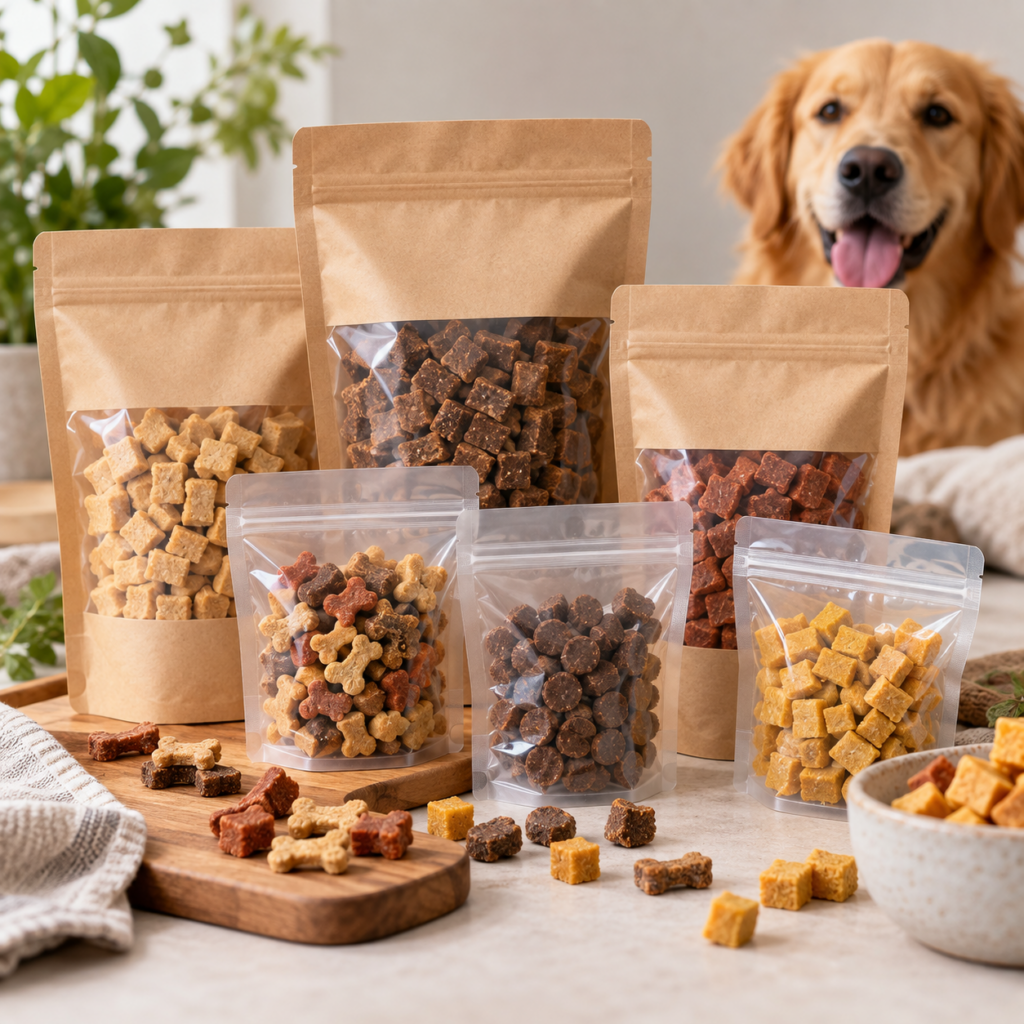
Retail pet stores usually need attractive packaging, clear product differentiation, and convenient pack sizes.
A small range of chicken, duck, and beef training treats can provide enough variety without making shelf management too complicated.
Online Pet Stores
E-commerce sellers may benefit from:
- Lightweight products
- Resealable packaging
- Multipacks
- Variety bundles
- Subscription-friendly products
Shipping efficiency should also be considered when selecting pack size.
Dog Trainers
Professional trainers often value convenience and volume.
Larger packs may be more practical because treats are consumed frequently during classes and individual training sessions.
Distributors
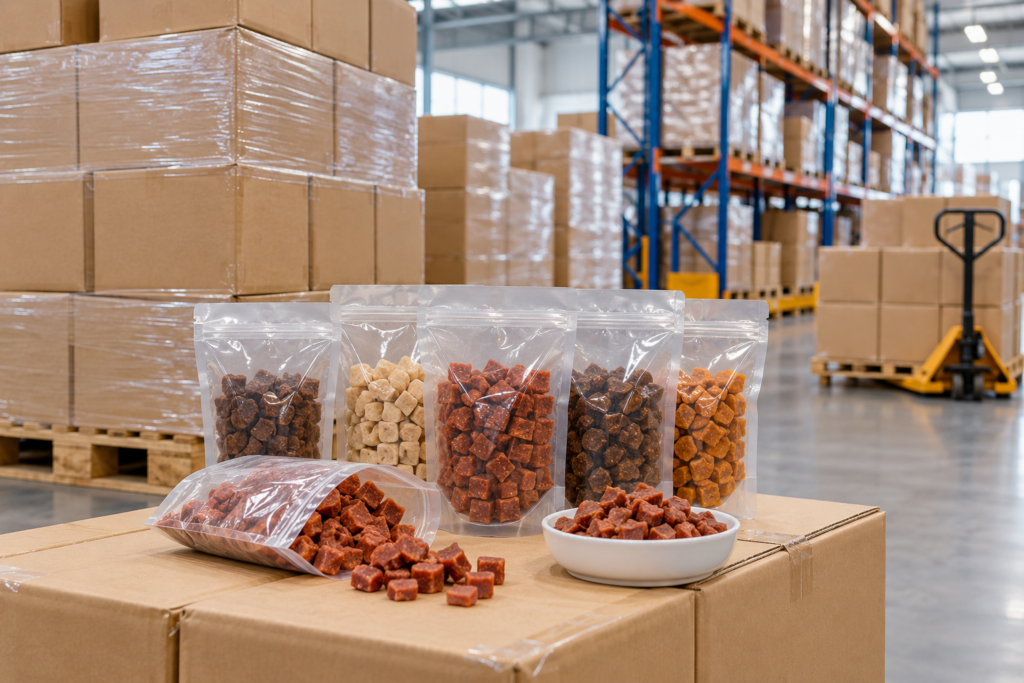
Distributors usually require stable specifications, export cartons, reliable lead times, and consistent availability across multiple orders.
Private Label Brands
Private label brands may focus more heavily on:
- Unique product positioning
- Ingredient claims
- Custom pack design
- Exclusive sizes or shapes
- Multiple SKU development
Understanding the final sales channel before requesting samples can make supplier discussions much more efficient.
Building a Wholesale Dog Treat Product Range
Dog training treats can work particularly well when combined with other dog snack categories.
Instead of selling training treats as a standalone product, retailers and distributors can create a broader range around different usage occasions.
For example:
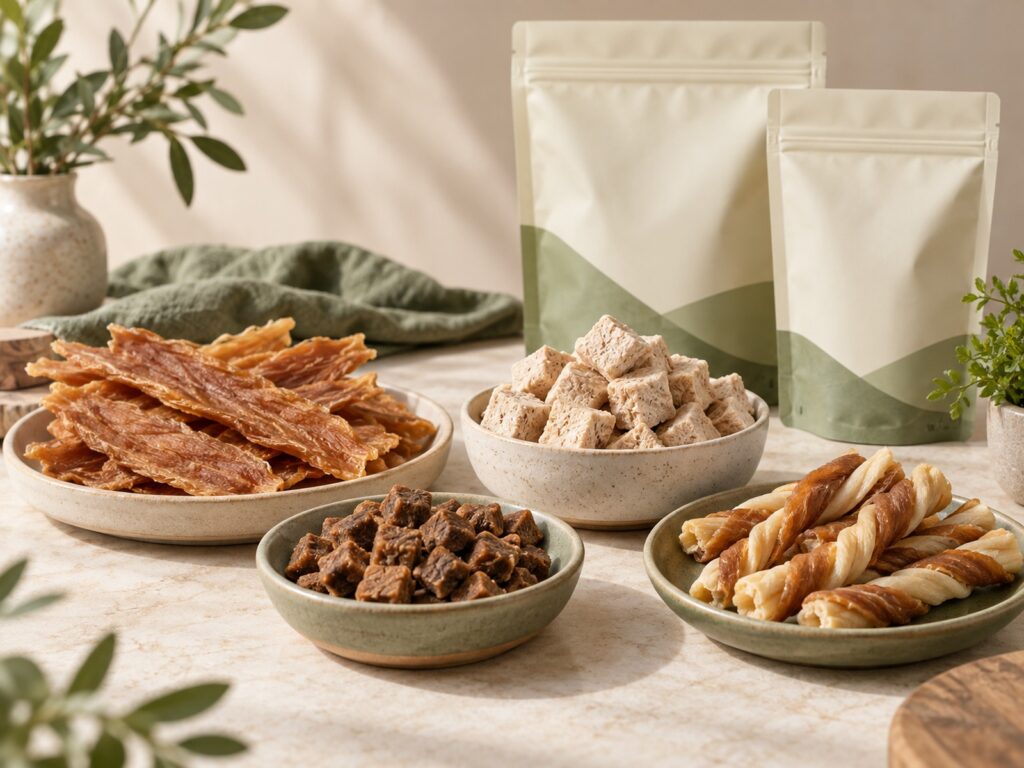
Training and Rewards
Small soft bites, meat cubes, and freeze-dried pieces.
Daily Snacks
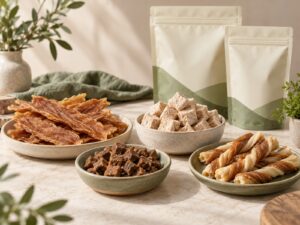
Jerky strips, chicken fillets, duck strips, and meat sticks.
Chewing
Longer-lasting chews and dental-style products.
Premium Treats
Freeze-dried meats and higher-meat-content recipes.
This type of portfolio gives customers a reason to purchase multiple products from the same brand.
For wholesalers, it can also increase the value of each order by allowing buyers to combine several product categories into one shipment.
Explore more options through Matchwell’s dog treat product range when planning a broader product portfolio.
Should You Start With One SKU or Several?
For a new brand, launching too many products at the same time can create unnecessary inventory pressure.
A simple starting range may be more practical.
For example:
SKU 1: Chicken Training Bites
A familiar everyday product with broad consumer appeal.
SKU 2: Duck Training Bites
An alternative protein for customers looking for more variety.
SKU 3: Freeze-Dried Chicken
A premium option with a simple ingredient story.
These three products already create different price points and product positions.
Once buyers understand which products perform best, additional proteins, functions, and packaging formats can be introduced.
For established distributors, a larger assortment may make more sense because existing sales channels can support greater SKU variety.
Questions to Ask Before Requesting Samples
Sampling is one of the most useful stages of the sourcing process.
Before asking a supplier to send random products, provide enough information for them to recommend suitable options.
Useful questions include:
- What proteins are available?
- What is the approximate meat content?
- What is the treat size?
- Is the product soft, semi-moist, dried, or freeze-dried?
- Can the piece size be changed?
- Can the formula be customized?
- What is the MOQ?
- What packaging options are available?
- Can the product be supplied under our own brand?
- What is the typical production lead time?
- What documents are available for our destination market?
- Can different products be combined in one order?
A more detailed sample request usually results in more relevant product recommendations.
Evaluating Samples Before a Bulk Order
When samples arrive, buyers should evaluate them systematically.
Do not focus only on whether the product looks attractive.
Check several factors.
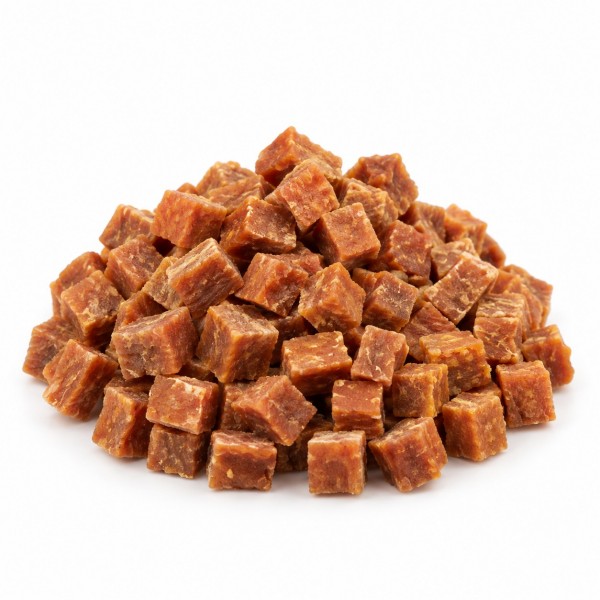
Appearance
Are the pieces reasonably consistent in size, colour, and shape?
Aroma
Does the product have a normal and appealing meat aroma?
Texture
Is it soft enough for quick rewarding, or does it match the product specification?
Piece Size
Can the product be given repeatedly during training without requiring frequent breaking?
Packaging
Is the pouch easy to open, reseal, store, and transport?
Product Positioning
Does the product fit your target customer and planned retail price?
For businesses with access to dogs for product testing, palatability feedback can also help compare several sample options.
Custom Packaging for Private Label Training Treats
Packaging can influence how consumers perceive the product before they even open the bag.
For private label dog training treats, common packaging considerations include:
- Bag dimensions
- Net weight
- Resealable zipper
- Transparent window
- Matte or glossy finish
- Printed pouch
- Sticker label
- Retail carton
- Display-ready packaging
Smaller packs may work well for trial purchases and premium products.
Larger packs may appeal to trainers, multi-dog households, and value-focused customers.
Brands should also consider how packaging will appear in online product photography.
A pouch that is easy to photograph and clearly communicates the product type can improve presentation on e-commerce platforms.
Creating a Strong B2B Product Brief
One of the fastest ways to improve supplier communication is to prepare a clear product brief before requesting a quotation.
A useful sourcing brief may look like this:
Product: Dog training treats
Protein: Chicken
Format: Small soft cubes
Target Size: Approximately 8–12 mm
Market: United States
Order Quantity: 500–1,000 kg
Packaging: 100 g resealable pouch
Branding: Private label
Target Positioning: High-meat daily training reward
Purchase Timeline: Within three months
This information allows the supplier to understand the project immediately.
It also helps avoid long email exchanges where both sides are discussing different specifications.
Common Mistakes When Buying Dog Training Treats Wholesale
Choosing Only by Lowest Price
The cheapest product may not provide the best combination of consistency, packaging, service, or product quality.
Ordering Before Testing Samples
Photos cannot accurately show texture, aroma, or real piece size.
Samples reduce uncertainty before commercial production.
Ignoring Treat Size
A treat that is too large may not work well for frequent training rewards.
Launching Too Many SKUs
A focused range is usually easier to sell, stock, and evaluate.
Not Confirming Packaging Specifications
Small differences in bag size, material, zipper quality, or carton quantity can affect final cost and customer experience.
Failing to Share the Destination Market
Labelling, documentation, and product requirements may vary by country.
The destination market should be discussed early in the sourcing process.
How to Request a Wholesale Quote From Matchwell
If you are looking for a wholesale dog training treats supplier, preparing a short RFQ can help accelerate the sourcing process.
Include:
- Your company name
- Country or target market
- Product type
- Preferred protein
- Estimated quantity
- Packaging requirements
- Private label requirements
- Expected purchase date
If you are still deciding which product format to use, you can also ask the Matchwell team to recommend suitable options based on your market and target price.
Wholesale Dog Training Treats for Your Brand or Distribution Business
Training treats are a relatively simple product concept, but successful sourcing depends on many details.
Size, texture, palatability, formulation, packaging, MOQ, documentation, and product consistency all influence whether a product will work commercially.
For retailers and distributors, an existing wholesale range can provide a faster route to market.
For brands that want more control over positioning, private label dog training treats provide opportunities to customize protein, format, packaging, and branding.
Matchwell supports B2B buyers looking for dog treats for retail, wholesale, distribution, and private label projects.
If you are currently sourcing wholesale dog training treats, contact Matchwell with your target market, estimated order quantity, preferred product type, and packaging requirements to discuss suitable options and samples.
Additional FAQ
What size should dog training treats be?
Training treats are generally smaller than standard dog snacks because they are given repeatedly. The ideal size depends on the dog, product format, and target market.
Are soft treats better for dog training?
Soft treats can be convenient because dogs can eat them quickly, helping maintain attention during training. Dry and freeze-dried treats can also work well depending on the application.
Can I order wholesale dog training treats with my own logo?
Private label programs may allow buyers to use their own branding and customized packaging, depending on order quantity and project requirements.
Are freeze-dried treats suitable for training?
Yes. Small freeze-dried meat pieces can be used as high-value rewards during training and may be particularly suitable for premium product ranges.
What is the MOQ for wholesale dog training treats?
MOQ varies depending on the formula, packaging, and customization requirements. Buyers should provide their estimated quantity when requesting a quotation.
Can I combine several dog treat products in one order?
This depends on production and order requirements. Distributors interested in multiple products should discuss mixed-SKU purchasing with the supplier during quotation.
How should I choose between chicken, duck, and beef training treats?
Chicken is a familiar mainstream option, while duck and beef can help create variety or premium positioning. The best choice depends on local customer preferences and your product strategy.
Should I use retail packaging or bulk packaging?
Retail packaging is better suited to consumer-facing sales, while larger or bulk packs may be more practical for trainers, distributors, or repacking operations.
Can dog training treats be customized for different markets?
Depending on the manufacturer, product size, protein, recipe, packaging, and other specifications may be adjusted to suit different markets.
What information should I send when asking for a quotation?
Provide your destination market, product type, protein, expected quantity, packaging requirements, branding requirements, and purchase timeline.