
Dog Treat Label
If you sell dog treats online, place them in retail stores, or build your own private label line, the label is not a minor packaging detail. It is one of the first things buyers notice, one of the fastest ways to communicate quality, and one of the easiest places to create problems if it is done poorly.
For wholesalers, Amazon sellers, supermarket buyers, distributors, and OEM/ODM customers, a strong dog treats label needs to do three jobs at once: stay compliant, make the product easy to understand, and support the brand story. In the U.S., pet food and pet treat labeling must be truthful, and ingredients generally need to be listed by common or usual name in descending order by weight. FDA also treats labeling broadly, which can include not just the package itself but related written and promotional materials.
Why Dog Treat Labels Matter More Than Many Buyers Expect
A dog treat may be small, but the label carries a lot of commercial weight. A buyer reviewing ten similar products often compares packaging before anything else. They want to know who the treat is for, what it is made from, whether the claims are believable, and whether the product looks retail-ready.
A clear label can also reduce friction during sourcing. Importers and retailers often ask the same questions: Is the ingredient deck clear? Is the feeding purpose obvious? Does the pack look compliant for the target market? Can the supplier customize the design for different channels? Those questions matter because pet food and treat labels are not just branding tools; they are part of regulatory and commercial readiness. FDA states animal food must be safe, produced under sanitary conditions, contain no harmful substances, and be truthfully labeled.
What a Dog Treat Label Usually Needs
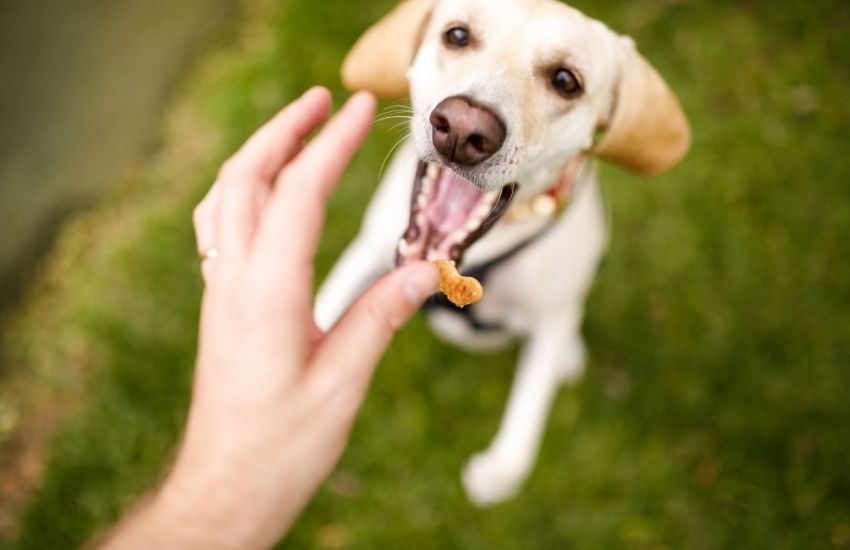
In the U.S., AAFCO explains that pet food labels, including pet treats, have required labeling elements. These typically include the brand or product name, the species the food is intended for, the quantity statement, guaranteed analysis, ingredient statement, nutritional adequacy statement when applicable, feeding directions when applicable, and the manufacturer or distributor name and address. AAFCO also notes that if a label uses front and back panels, certain core items must appear on the principal display panel.
For practical B2B use, a dog treats label should usually cover:
1. Product identity
The label should make it instantly clear that the item is a dog treat, not dog food, cat food, or a supplement with vague positioning. A picture of a dog alone is not enough; the species should be clearly stated.
Examples:
- Chicken Jerky Dog Treats
- Freeze-Dried Salmon Dog Treats
- Training Treats for Dogs
This sounds simple, but it matters. Clear naming improves buyer confidence and helps prevent confusion in retail, marketplace listings, and customs paperwork.
2. Ingredient statement
FDA says ingredients generally must be listed by their common or usual name and in descending order of predominance by weight.
This is especially important for modern buyers because they scan ingredient lists quickly. Short, recognizable ingredient decks often support a stronger premium impression. On the other hand, vague or cluttered ingredient statements can weaken trust even before a sample is tested.
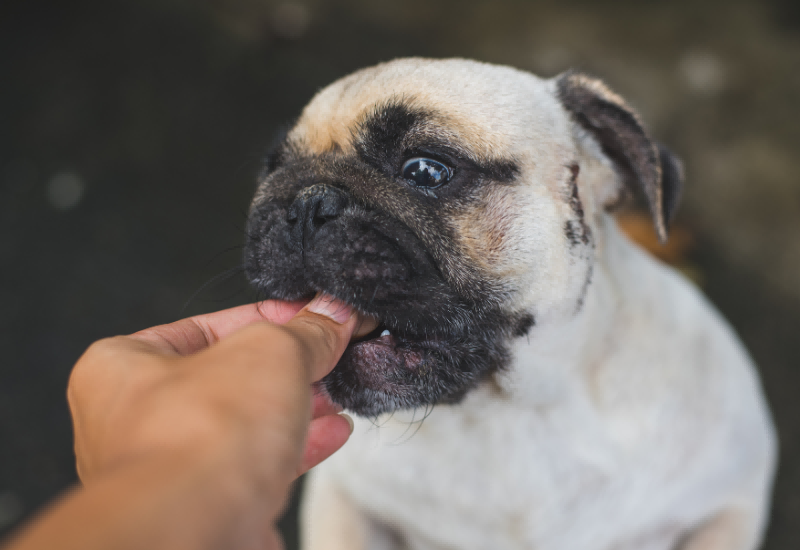
For private label customers, this is where customization often begins. Some buyers want grain-free positioning. Others want single-protein recipes, limited-ingredient formulas, or market-specific ingredient stories such as duck, salmon, rabbit, or beef liver.
3. Guaranteed analysis and treat-specific expectations
AAFCO notes that labels for pet food and pet treats generally include a guaranteed analysis. At the same time, AAFCO’s consumer guidance explains that some treats and chews are not required to carry full pet food labeling unless they make certain nutritional or descriptive claims.
That creates an important real-world point for buyers: not all treats on the market present information the same way. A sophisticated supplier should help clarify what is required for the product type and market, rather than copying a competitor label blindly.
4. Net quantity statement
The pack should clearly state how much product is inside, using the required format and units for the destination market. AAFCO’s labeling overview highlights the quantity statement as one of the front-panel essentials.
For wholesalers, this matters because pack size is not only a compliance issue. It affects freight cost, shelf placement, pricing strategy, and margin structure.

5. Responsible company information
The label should identify the manufacturer or distributor clearly. This is a basic trust signal for both buyers and end customers and is part of standard labeling structure under AAFCO’s framework.
For OEM/ODM projects, many buyers also want flexibility here:
- their own brand on the front
- their company details on the back
- contract manufacturing information handled correctly
- barcode, QR code, lot coding, and traceability support
Claims Need to Be Chosen Carefully
One of the biggest label mistakes is adding marketing claims too casually. Terms such as “natural,” “human grade,” “high protein,” or “low fat” are not decoration. They can trigger scrutiny.
AAFCO’s labeling guidance says descriptive information must not be false or misleading. Its human-grade standard also says every use of “human grade” must be tied to the intended use, such as “human grade dog food” or “human grade cat treats,” and the manufacturer must be able to support that claim through appropriate facility and handling standards.
For that reason, serious private label buyers usually prefer a supplier that reviews label claims before printing, not after the goods are packed.

Good Label Design Is Also Good Sales Strategy
Compliance keeps a product on the market. Good design helps it move.
For wholesale dog treats, strong labels usually share a few traits:
- easy-to-read product name
- clean ingredient presentation
- benefit-led but believable claims
- packaging size matched to the sales channel
- visual style aligned with the buyer’s target market
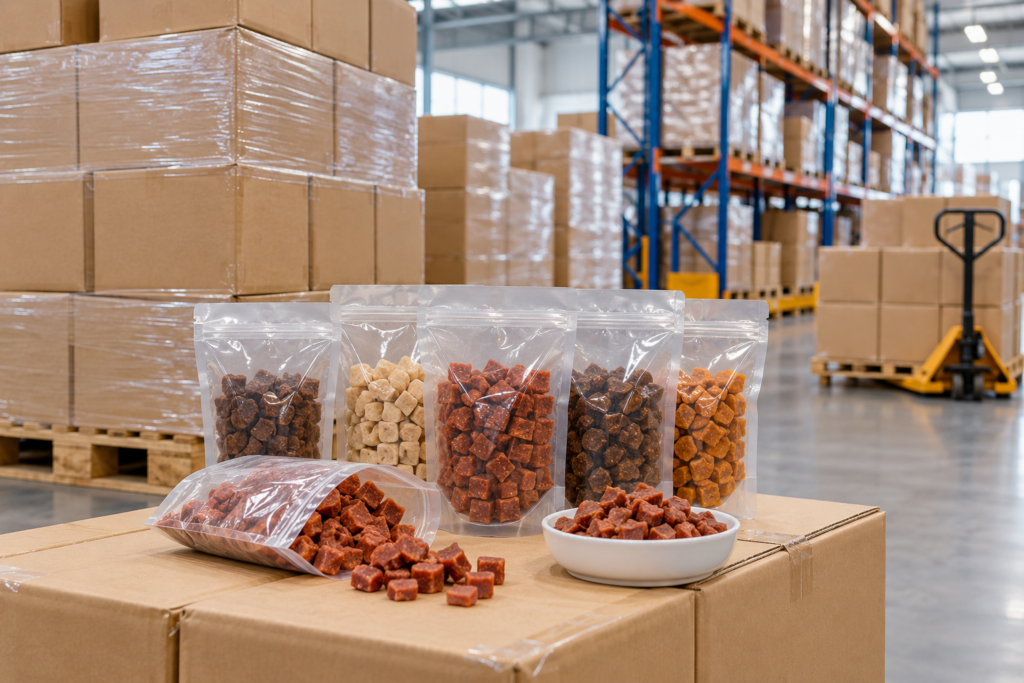
Amazon sellers often want labels that look sharp in thumbnails and make key features readable fast. Supermarket and pet retail buyers usually care more about shelf visibility, category fit, and repeat-purchase appeal. Distributors may prioritize broad market acceptability and fewer claim-related risks.
That is why private label dog treat packaging should not start with “What looks nice?” It should start with “Which channel are we building for?”
Export and Multi-Market Labeling Need Extra Planning
If a product will be sold outside one market, label planning becomes even more important. FDA notes that U.S.-marketed animal food labels must comply with federal and state requirements, while EU-market sales follow their own legal framework.
In other words, one label does not always fit all. A supplier supporting export business should be ready to discuss:
- bilingual or multilingual layouts
- country-specific claim adjustments
- barcode and case mark needs
- importer information
- packaging artwork adaptation for different retail channels
For growing brands, building a label system that can scale across markets is often smarter than redesigning every SKU from scratch later.
What Wholesale Buyers Should Ask a Supplier Before Approving a Label
Before placing a dog treats order, smart buyers usually confirm:
- Can you provide label review support?
- Can the recipe and claim set be adjusted for my market?
- Can you customize pack size, format, and language?
- Can you match our private label branding guidelines?
- Can you support Amazon, retail, and distributor packaging versions?
- Can you keep ingredient and claim wording consistent across cartons, listings, and product sheets?
These questions help prevent the most common problem in private label projects: a good product delayed by packaging confusion.
Final Thought
A dog treats label is not just a legal panel on the back of a pouch. It is a product summary, a trust signal, a retail tool, and a brand decision all in one. For wholesalers and private label buyers, the best labels are not overloaded. They are clear, credible, market-aware, and built for the channel they serve.
If you are planning a wholesale or customized dog treats project, it helps to work with a manufacturer that understands both product development and label execution. Matchwell can support dog treat projects for wholesalers, retailers, Amazon sellers, supermarkets, and OEM/ODM buyers looking for tailored packaging and private label solutions. Explore more at matchwellpets.com.